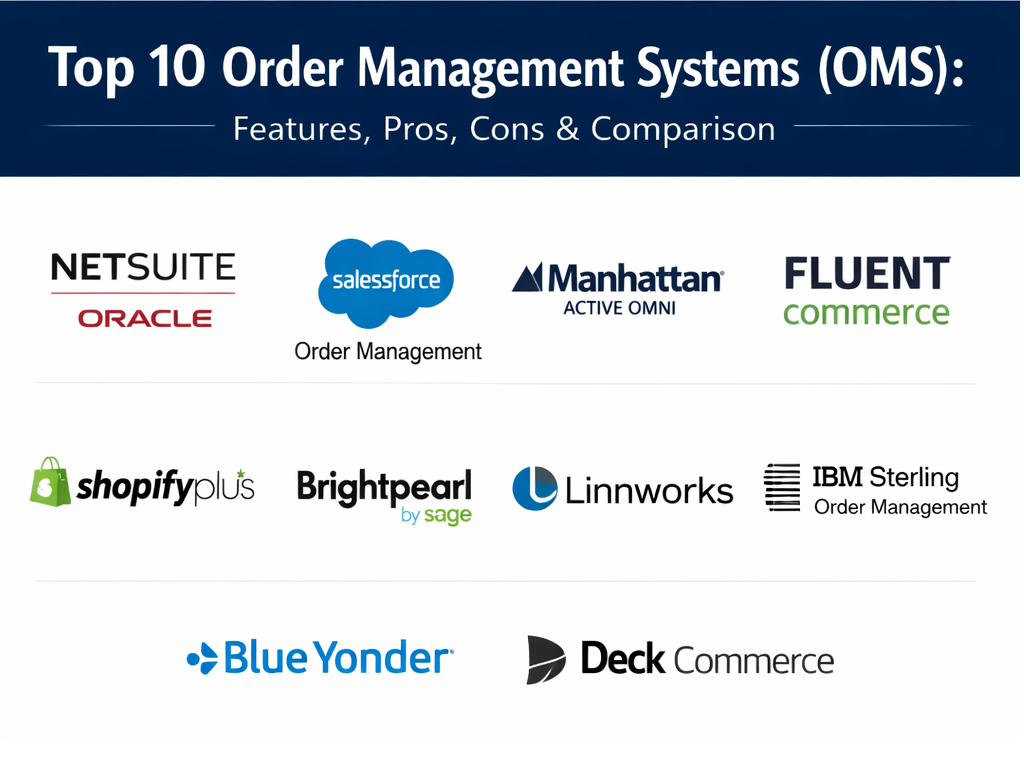
Introduction
An Order Management System (OMS) is the digital brain of a modern retail or distribution operation. In plain English, it is a centralized software platform that tracks an order from the moment a customer clicks buy until the package is delivered to their doorstep. It bridges the gap between front-end sales channels and back-end fulfillment centers, ensuring that inventory levels are accurate and customers receive their products quickly.
In the current landscape, an OMS is no longer a luxury but a survival requirement. As we navigate a world where buy online, pick up in store and same-day delivery are standard expectations, businesses face immense pressure to manage complex, fragmented supply chains. A robust OMS prevents overselling, optimizes shipping costs by choosing the best fulfillment location, and automates the once-manual headache of returns and exchanges.
Real-world use cases:
- Omnichannel Fulfillment: Allowing a customer to buy an item on an app and return it to a local brick-and-mortar store seamlessly.
- Global Expansion: Managing multiple currencies, tax regulations, and international warehouses through a single dashboard.
- Drop-shipping: Automatically routing specific orders to third-party suppliers without the retailer ever touching the physical product.
- Flash Sales: Handling massive spikes in transaction volume during promotional events without system crashes or inventory errors.
What buyers should evaluate:
- Inventory Visibility: Does it provide real-time updates across all nodes?
- Scalability: Can it handle a massive increase in orders during peak seasons?
- Integration Depth: Does it play well with existing ERP, CRM, and logistics systems?
- AI Orchestration: Does it use machine learning to suggest the most cost-effective shipping routes?
- User Interface: Is the dashboard intuitive for both warehouse staff and customer service reps?
- Security: Does it meet modern standards like SOC 2 or GDPR?
- Automation Engine: Can you build custom rules for order routing without writing code?
- Post-Purchase Support: How well does it handle complex returns and partial refunds?
Best for: Medium-to-enterprise level retailers, high-volume e-commerce brands, and multi-channel wholesalers who need to unify fragmented inventory and fulfillment processes.
Not ideal for: Solo entrepreneurs or very small businesses with a single sales channel and low order volume, where a simple spreadsheet or basic e-commerce plugin is sufficient.
Key Trends in Order Management Systems (OMS)
- Hyper-Automated AI Routing: Modern systems use Adaptive AI to analyze shipping rates, carrier performance, and carbon footprints in real-time to decide which warehouse should fulfill an order.
- Headless Commerce Compatibility: OMS platforms are moving toward API-first architectures, allowing brands to change their front-end look without disrupting the backend order flow.
- Sustainability-Driven Fulfillment: Tools are now offering eco-friendly route options, helping brands meet environmental goals by consolidating shipments.
- Self-Governing AI Agents: The emergence of AI agents that can automatically resolve shipping delays or communicate with carriers without human intervention.
- Enhanced Cybersecurity: A shift toward Zero Trust architecture within OMS to protect sensitive customer personal information during the high-risk fulfillment phase.
- Modular Microservices: Instead of monolithic software, companies are choosing modular OMS components that can be swapped out as the business grows.
- Predictive Stock Leveling: Moving beyond real-time to predictive status, where the system anticipates demand spikes and moves stock to closer regional hubs before orders are even placed.
- Cross-Border Automation: Built-in compliance engines that handle fluctuating international duties, taxes, and localized shipping regulations automatically.
How We Selected These Tools (Methodology)
The selection of these top tools was based on a rigorous evaluation of the current market and future-readiness.
- Market Adoption: We prioritized platforms with a high mindshare and a proven track record of handling high transaction volumes.
- Feature Completeness: Evaluation was based on the presence of core pillars: inventory visibility, order orchestration, and reverse logistics.
- Reliability Signals: We looked for platforms with high uptime records and the ability to scale during seasonal peaks.
- Security Posture: Preference was given to tools with documented compliance and robust data encryption.
- Ecosystem Depth: The strength of the marketplace and the availability of well-documented APIs was a major factor.
- Customer Fit: We ensured a mix of enterprise-grade powerhouses and agile, mid-market solutions.
- Innovation Velocity: Tools that have proactively integrated AI and machine learning for predictive analytics were prioritized.
Top 10 Order Management Systems (OMS) Tools
1.NetSuite (Oracle)
NetSuite provides a comprehensive ERP-integrated OMS designed for businesses that want their financial, inventory, and order data in a single, unified database.
Key Features
- Unified Data Model: Eliminates the need for complex integrations between CRM and fulfillment.
- Real-Time Global Inventory: Provides a single source of truth across multiple warehouses and stores.
- Automated Order-to-Cash: Streamlines everything from the initial sale to the final payment and revenue recognition.
- Intelligence Fulfillment: Rules-based routing to reduce shipping costs and delivery times.
- Built-in Returns Management: Centralized processing of exchanges and refunds to improve the customer experience.
Pros
- Extreme depth of features covering almost every aspect of business operations.
- Highly scalable for companies growing from mid-market to global enterprise.
Cons
- High implementation costs and long setup times compared to standalone tools.
- The user interface can feel overwhelming for non-technical users.
Platforms / Deployment
- Web / iOS / Android
- Cloud
Security & Compliance
- SSO/SAML, MFA, Role-based Access (RBAC), Audit logs.
- SOC 1 Type II, SOC 2 Type II, ISO 27001, PCI DSS.
Integrations & Ecosystem
NetSuite boasts one of the largest enterprise ecosystems via its specialized marketplace. It offers deep connectivity to major carriers and global marketplaces.
- Common E-commerce Platforms.
- Major Shipping Carriers.
- Leading CRM Systems.
Support & Community
Extensive documentation is available through internal learning portals. Support ranges from standard ticketing to dedicated premium account managers for enterprise clients.
2.Salesforce Order Management
Salesforce offers a cloud-native solution that leverages the power of CRM to provide a customer-centric view of the order lifecycle.
Key Features
- Visual Flow Builder: Allows users to create complex order routing logic with a drag-and-drop interface.
- Einstein AI Integration: Uses predictive intelligence to optimize inventory and predict potential delivery delays.
- Omnichannel Inventory: Real-time visibility across digital and physical storefronts.
- Service Cloud Synergy: Empowers customer service reps to modify orders or process returns within the CRM.
- App Marketplace: Access to thousands of pre-built connectors for shipping and payments.
Pros
- Seamless experience for companies already using the broader ecosystem for sales or service.
- Highly flexible and customizable without requiring deep coding knowledge.
Cons
- Pricing can escalate quickly as order volumes and add-ons increase.
- Requires a specialized administrator to manage effectively.
Platforms / Deployment
- Web / iOS / Android
- Cloud
Security & Compliance
- SSO/SAML, MFA, Encryption at rest and in transit.
- SOC 2, ISO 27001, GDPR, HIPAA.
Integrations & Ecosystem
Part of a massive software ecosystem, providing native connections to virtually any modern business tool.
- Native Commerce Cloud connection.
- Integration hubs for legacy systems.
- Global Payment Gateways.
Support & Community
Robust community through dedicated training paths and user groups. Support is available via various success plans.
3.Manhattan Active Omni
Manhattan Active Omni is an enterprise-grade, versionless cloud platform that specializes in complex, high-volume retail environments.
Key Features
- Versionless Cloud: Automatic updates ensure the software is always on the latest version without downtime.
- Advanced Fulfillment Logic: Highly sophisticated algorithms for store fulfillment and pickup.
- Unified Commerce POS: Combines point-of-sale and OMS for a single store associate experience.
- Contact Center Tools: Specialized UI for service agents to handle complex omnichannel inquiries.
- Inventory Orchestration: Optimizes stock across the entire network to minimize markdowns.
Pros
- Top-tier performance for massive retailers with hundreds of locations.
- Continuous innovation with no manual upgrade cycles needed.
Cons
- Too complex and expensive for mid-market or smaller retailers.
- Steep learning curve for administrative staff.
Platforms / Deployment
- Web / Windows / iOS
- Cloud
Security & Compliance
- RBAC, MFA, Audit trails.
- SOC 2, ISO 27001.
Integrations & Ecosystem
Focuses on enterprise-level supply chain and logistics partners.
- Major ERP Systems.
- Global 3PLs and shipping aggregators.
- Advanced Warehouse Management.
Support & Community
Enterprise-level support with dedicated account teams. Offers specialized certification programs for power users.
4.Fluent Commerce
Fluent Commerce is a developer-friendly, cloud-native Distributed Order Management System (DOM) built for flexibility and rapid deployment.
Key Features
- SDK and API-First: Designed for developers to build custom fulfillment logic quickly.
- Rule-Based Orchestration: High-speed engine for routing orders based on distance or cost.
- Multi-Node Inventory: Supports unlimited fulfillment locations including stores and warehouses.
- Zero-Downtime Rollouts: Allows for continuous integration and delivery of new features.
- Global Architecture: Built to handle multiple languages, currencies, and regional tax laws natively.
Pros
- Incredibly fast deployment times for such a powerful system.
- Extremely agile; easy to adapt as business models shift.
Cons
- Requires technical resources or a partner agency for initial setup.
- Does not include its own POS or ERP, requiring a best-of-breed stack.
Platforms / Deployment
- Web
- Cloud (SaaS)
Security & Compliance
- MFA, API Key management, RBAC.
- SOC 2 (Varies by region).
Integrations & Ecosystem
Broad connectivity through a robust API layer and pre-built adapters.
- Major E-commerce Engines.
- Enterprise CRM and ERP.
- Global Payment and Logistics.
Support & Community
Growing developer community with detailed API documentation. Professional services are provided through certified implementation partners.
5.IBM Sterling Order Management
IBM Sterling is a leader in the space, modernized for the cloud, known for its ability to handle the world’s most complex supply chains.
Key Features
- Cognitive Sourcing: Uses AI to optimize fulfillment based on cost and inventory health.
- Order Hub: A modern, visual dashboard for managing orders and inventory at scale.
- Reverse Logistics: Industry-leading returns and repair management capabilities.
- Call Center Integration: Deep integration for phone-based sales and support.
- Supplier Collaboration: Tools for managing the relationship and data flow with external suppliers.
Pros
- Unrivaled for handling multi-tier supply chains and global logistics.
- Extremely robust and stable during peak traffic periods.
Cons
- Certain interface elements can feel dated compared to newer SaaS tools.
- Often requires a significant professional services budget.
Platforms / Deployment
- Web / Windows / Linux
- Cloud / Hybrid / On-premise
Security & Compliance
- MFA, Encryption, FedRAMP options.
- ISO 27001, SOC 2, HIPAA.
Integrations & Ecosystem
Strongest in enterprise environments where legacy systems are still in use.
- AI-driven analytics.
- Major Enterprise ERP.
- Warehouse and Transportation Management Systems.
Support & Community
Standardized enterprise support. Extensive academic and professional documentation available through central portals.
6.Shopify Plus (OMS Features)
Shopify Plus offers robust native order management tools specifically for high-growth and direct-to-consumer brands.
Key Features
- Automation Logic: A powerful engine for order tagging and routing.
- Native POS: Seamless integration between online sales and physical retail.
- Global Markets: Handles multi-currency and localized shipping rules easily.
- Inventory Allocations: Simple rules for managing stock across multiple locations.
- Launch Tools: Specialized features for managing flash sales and high-traffic product drops.
Pros
- Extremely user-friendly and fast to go live.
- Massive application marketplace for extending functionality.
Cons
- Lacks the advanced distributed routing logic of enterprise-only tools.
- Can be limiting for very complex, multi-warehouse global conglomerates.
Platforms / Deployment
- Web / iOS / Android
- Cloud
Security & Compliance
- MFA, SSO, RBAC.
- PCI DSS Level 1, SOC 2 Type II.
Integrations & Ecosystem
One of the largest commerce ecosystems in the world.
- Leading Marketing Automation.
- Popular Shipping and Fulfillment apps.
- Connectors for major accounting and ERP tools.
Support & Community
Priority support for merchants. Comprehensive learning resources are available through online academies.
7.Brightpearl by Sage
Brightpearl is a specialized OMS and ERP solution designed specifically for multi-channel retailers and wholesalers.
Key Features
- Automation Engine: Strong focus on automating the standard parts of fulfillment.
- Integrated Accounting: Real-time financial data tied directly to every order.
- Inventory Planner: Advanced demand forecasting to prevent stockouts.
- Supplier Management: Automated purchase orders based on stock thresholds.
- Warehouse Management: Native tools for pick, pack, and ship operations.
Pros
- All-in-one feel for businesses that do not want to manage multiple platforms.
- Excellent reporting on channel-specific profitability.
Cons
- Not a full manufacturing ERP (focused primarily on retail/wholesale).
- Can feel rigid for highly unique or custom fulfillment workflows.
Platforms / Deployment
- Web
- Cloud
Security & Compliance
- MFA, RBAC.
- Not publicly stated.
Integrations & Ecosystem
Excellent native connectors for major sales channels.
- Major E-commerce Platforms.
- Shipping and Logistics partners.
- Accounting software connections.
Support & Community
Dedicated implementation consultants and ongoing regional support teams.
8.Linnworks
Linnworks is an agile, multi-channel growth platform that excels at connecting disparate sales channels to a central inventory hub.
Key Features
- Channel Integration: Connects to many marketplaces out of the box.
- Automated Shipping: Rules-based carrier selection and label printing.
- Stock Syncing: Rapid inventory updates across all connected channels.
- Reporting & Insights: Deep dive into which products and channels are most profitable.
- Warehouse Management: Support for barcode scanning and digital picklists.
Pros
- One of the best tools for marketplace-heavy businesses.
- Relative ease of use compared to legacy enterprise tools.
Cons
- The user interface can feel less modern than some cloud competitors.
- Support response times can vary during peak periods.
Platforms / Deployment
- Web / Windows
- Cloud
Security & Compliance
- MFA, SSL Encryption.
- Not publicly stated.
Integrations & Ecosystem
Incredible breadth of marketplace and carrier integrations.
- Leading Global Marketplaces.
- Major National and International Carriers.
- Popular E-commerce Front-ends.
Support & Community
Extensive video training and a healthy community forum for users.
9.Blue Yonder
Blue Yonder is a high-end supply chain platform that uses machine learning to manage complex, global order flows.
Key Features
- Omnichannel Fulfillment Suite: A specialized group of tools for retail fulfillment.
- Demand Sensing: Uses external data to predict inventory needs.
- Dynamic Routing: Real-time adjustments to fulfillment based on logistics disruptions.
- Micro-fulfillment Support: Optimized for small, urban fulfillment centers.
- Workforce Management: Integration to ensure enough staff are available for peak fulfillment.
Pros
- Cutting-edge machine learning capabilities for predictive logistics.
- Highly resilient for global-scale operations.
Cons
- High entry price point.
- Requires a specialized internal team to manage effectively.
Platforms / Deployment
- Web / Windows
- Cloud / Hybrid
Security & Compliance
- SSO/SAML, MFA, RBAC.
- ISO 27001, SOC 2.
Integrations & Ecosystem
Part of a broader supply chain operating system with deep enterprise ties.
- Major Cloud Infrastructure.
- Global Logistics Providers.
- Enterprise ERP.
Support & Community
Enterprise-grade support with a global footprint.
10.Deck Commerce
Deck Commerce is a consumer-focused OMS that specializes in automating the order lifecycle for growing brands.
Key Features
- Order Orchestration: Specialized workflows for pre-orders and back-orders.
- Transaction Processing: Automates complex payment captures and fraud reviews.
- Customer Service Portal: A unified view for agents to manage cancellations and returns.
- Inventory Aggregation: Real-time stock levels across various nodes.
- Smart Sourcing: Logic to minimize split shipments and reduce shipping costs.
Pros
- Specifically built for the needs of modern retail brands.
- Great balance of power and ease of implementation.
Cons
- Less general-purpose than a full-scale ERP.
- Ecosystem is smaller than the major global enterprise players.
Platforms / Deployment
- Web
- Cloud
Security & Compliance
- MFA, RBAC, Audit logs.
- Not publicly stated.
Integrations & Ecosystem
Focuses on the modern commerce technology stack.
- Leading E-commerce Platforms.
- Payment and Tax Automation.
- Customer Support and Helpdesk tools.
Support & Community
Hands-on implementation and a responsive support team focused on brand growth.
Comparison Table (Top 10)
| Tool Name | Best For | Platform(s) Supported | Deployment | Standout Feature | Public Rating |
|---|---|---|---|---|---|
| NetSuite | Enterprise ERP | Web/Mobile | Cloud | Unified Finance & OMS | N/A |
| Salesforce OMS | Customer-centricity | Web/Mobile | Cloud | AI-Driven Flows | N/A |
| Manhattan Active | High-volume Retail | Web/Mobile | Cloud | Versionless Architecture | N/A |
| Fluent Commerce | Agile Developers | Web | Cloud | API-First Flexibility | N/A |
| IBM Sterling | Global Supply Chains | Web/Win/Lin | Hybrid | Cognitive Sourcing | N/A |
| Shopify Plus | High-growth DTC | Web/Mobile | Cloud | App Marketplace | N/A |
| Brightpearl | Multi-channel SMB | Web | Cloud | Integrated Accounting | N/A |
| Linnworks | Marketplace Sellers | Web/Win | Cloud | Broad Marketplace Sync | N/A |
| Blue Yonder | AI-driven Supply | Web/Win | Cloud | Demand Sensing | N/A |
| Deck Commerce | High-growth Brands | Web | Cloud | Pre-order Automation | N/A |
Evaluation & Scoring of Order Management Systems (OMS)
| Tool Name | Core (25%) | Ease (15%) | Integrations (15%) | Security (10%) | Performance (10%) | Support (10%) | Value (15%) | Weighted Total |
|---|---|---|---|---|---|---|---|---|
| NetSuite | 10 | 4 | 9 | 10 | 9 | 8 | 6 | 8.20 |
| Salesforce OMS | 9 | 7 | 10 | 10 | 9 | 9 | 6 | 8.35 |
| Manhattan Active | 10 | 3 | 8 | 9 | 10 | 8 | 5 | 7.75 |
| Fluent Commerce | 8 | 6 | 9 | 8 | 9 | 7 | 8 | 7.70 |
| IBM Sterling | 10 | 2 | 7 | 10 | 10 | 8 | 5 | 7.40 |
| Shopify Plus | 7 | 10 | 10 | 9 | 9 | 9 | 8 | 8.60 |
| Brightpearl | 8 | 8 | 8 | 7 | 8 | 8 | 9 | 8.05 |
| Linnworks | 8 | 7 | 10 | 6 | 8 | 7 | 9 | 7.75 |
| Blue Yonder | 9 | 3 | 7 | 9 | 10 | 8 | 5 | 7.20 |
| Deck Commerce | 8 | 8 | 8 | 7 | 8 | 8 | 8 | 7.90 |
How to interpret these scores:
- Weighted Total: This is a calculated average based on business priorities.
- High Ease + High Value: These tools are ideal for rapid growth.
- High Core + High Performance: These tools are for massive stability needs.
- Scoring is comparative: A lower score in ease of use means it requires specialized training compared to more intuitive apps.
Which Order Management Systems (OMS) Tool Is Right for You?
Solo / Freelancer
If you are running a small shop alone, you likely do not need a standalone OMS. Stick with the native order management inside your chosen commerce platform. If you sell on multiple marketplaces and need to sync stock, Linnworks is an accessible and powerful entry point.
SMB (Small to Medium Business)
For businesses with a small warehouse or a few retail stores, Brightpearl or Shopify Plus are the standout choices. They offer a system that does not require a large IT department but provides the automation needed to scale without hiring excessive staff.
Mid-Market
Growing brands with complex fulfillment needs should look at Deck Commerce or Fluent Commerce. These tools offer more customized fulfillment logic without the massive price tag of the largest enterprise suites.
Enterprise
If you are a household name with hundreds of stores and a global presence, NetSuite, Salesforce, Manhattan Active, or IBM Sterling are the tools with the proven capacity to handle your volume. These are long-term investments that become the foundation of your business.
Budget vs Premium
- Budget: Tools like Linnworks and Brightpearl offer high utility for a lower total cost.
- Premium: Solutions like Manhattan and Blue Yonder offer cutting-edge AI features but at a higher price.
Feature Depth vs Ease of Use
- Feature Depth: IBM Sterling and NetSuite win on complexity and customization.
- Ease of Use: Shopify Plus and Brightpearl win on user experience and training speed.
Integrations & Scalability
If your strategy involves using many different specialized apps, Fluent Commerce or Salesforce provide the best connectivity to hold everything together.
Security & Compliance Needs
Regulated industries should prioritize IBM Sterling or NetSuite, as they have a long history of meeting stringent global compliance standards.
Frequently Asked Questions (FAQs)
What is the average pricing model for an OMS?
Most modern platforms use a per-order fee or a tiered subscription based on annual volume. Enterprise systems may also require a significant upfront implementation fee.
How long does a typical OMS implementation take?
For SMB-focused tools, you can be live in a few months. For enterprise-level transformations, expect a longer timeline depending on the complexity of your existing data.
Can an OMS replace my ERP?
Not exactly. An OMS focuses on the movement of orders and inventory, while an ERP handles broader business functions like HR and deep financial manufacturing. Some tools combine both.
What is the most common mistake when buying an OMS?
The most common mistake is buying for today’s needs rather than future goals. Switching an OMS is a major operation; it is better to choose a tool that allows for significant growth.
Do I need an OMS if I only sell on one channel?
Probably not. Most commerce platforms have sufficient order management for single-channel sellers. An OMS becomes valuable once you have multiple warehouses or sales channels.
How does an OMS handle security for customer data?
Modern tools use encryption for data in transit and at rest. They typically offer access controls so that staff only see the information necessary for their specific role.
Can an OMS help with in-store pickup?
Yes, this is one of the primary reasons to get an OMS. It validates local stock and sends a notification to store associates to prepare the item for the customer.
What is Distributed Order Management?
This is an advanced feature that looks at the entire network and uses logic to decide the best place to ship from based on cost and inventory levels.
How do integrations work with shipping carriers?
Most tools have pre-built connections for major carriers. For more specialized or regional carriers, you may need an aggregator or a custom connection.
Is AI actually useful in an OMS?
Yes. AI is currently used to predict when stock will run out based on trends and to orchestrate fulfillment routes that minimize costs or environmental impact.
Conclusion
Selecting the right Order Management System is a pivot point for any growing business. The best system is no longer just about tracking a package—it is about using intelligence to optimize costs, ensuring security for customer data, and providing the flexibility to sell anywhere. Your choice should align with your long-term growth strategy.
To move forward, we suggest shortlisting a few tools that fit your business size, requesting a demo focused on your most complex scenarios, and validating integration capabilities with your existing technology.

Best Cardiac Hospitals Near You
Discover top heart hospitals, cardiology centers & cardiac care services by city.
Advanced Heart Care • Trusted Hospitals • Expert Teams
View Best Hospitals