Introduction
Food safety compliance software helps food businesses digitize their HACCP program so critical checks, monitoring logs, corrective actions, and verification evidence are consistent, complete, and audit-ready. HACCP is a management system where food safety is addressed by analyzing and controlling biological, chemical, and physical hazards.
Common use cases include: building and maintaining HACCP plans, capturing temperature logs and sanitation records, managing deviations with corrective actions, running internal audits and inspections, training staff on SOPs, tracking supplier approvals, and producing evidence packs for customers, regulators, or third-party auditors.
What to evaluate before buying:
- HACCP plan management (hazards, CCPs, critical limits, monitoring, verification)
- Ease of capturing records (mobile, offline, rapid data entry)
- Corrective action workflows (deviation, root cause, CAPA, closeout)
- Audit and inspection tooling (checklists, scoring, nonconformances)
- Traceability and recall readiness (varies by tool category)
- Multi-site governance (roles, approvals, templates, location rollups)
- Evidence and reporting (audit packs, dashboards, trend views)
- Integration fit (ERP, inventory, QMS, lab results, identity access)
- Data integrity (time stamps, edit history, approvals, audit logs)
- Total cost and adoption risk (training, change management, ongoing admin)
Best: food manufacturers, processors, distributors, central kitchens, restaurant groups, and quality teams that need consistent records, faster audits, and fewer compliance gaps.
Not ideal for: very small operations that do not run formal monitoring programs, or teams that only need a basic checklist app without structured HACCP planning.
Key trends in food safety compliance software
- Compliance programs are moving from paper binders to controlled digital records with approval flows and audit trails.
- Corrective action management is becoming central, not optional, because deviations without closure create audit risk.
- Mobile-first capture is critical for plant-floor and kitchen adoption, especially where gloves, speed, and shift handoffs matter.
- Multi-site standardization is increasingly important, with controlled local exceptions and shared templates.
- Supplier compliance and inbound controls are being connected more tightly to internal food safety programs.
- Evidence packaging is improving: teams want fast, consistent exportable proof for audits and customer requests.
- Broader quality management capabilities are being bundled into food safety workflows in some platforms.
- Adoption metrics matter: teams measure completion rates, late checks, repeat deviations, and training compliance.
How we selected these tools (methodology)
- Included a balanced mix of specialized food safety platforms, HACCP-focused apps, inspection/audit tools, and quality-management-style systems that can support HACCP workflows.
- Prioritized tools that support monitoring records, corrective actions, reporting, and multi-site rollout.
- Focused on practical operational fit: speed of logging, exception handling, and evidence quality.
- Avoided guessing on certifications, public ratings, or pricing; when unclear, used “Not publicly stated” or “Varies / N/A”.
- Kept the list to exactly ten tools and used the same fixed list across sections and tables.
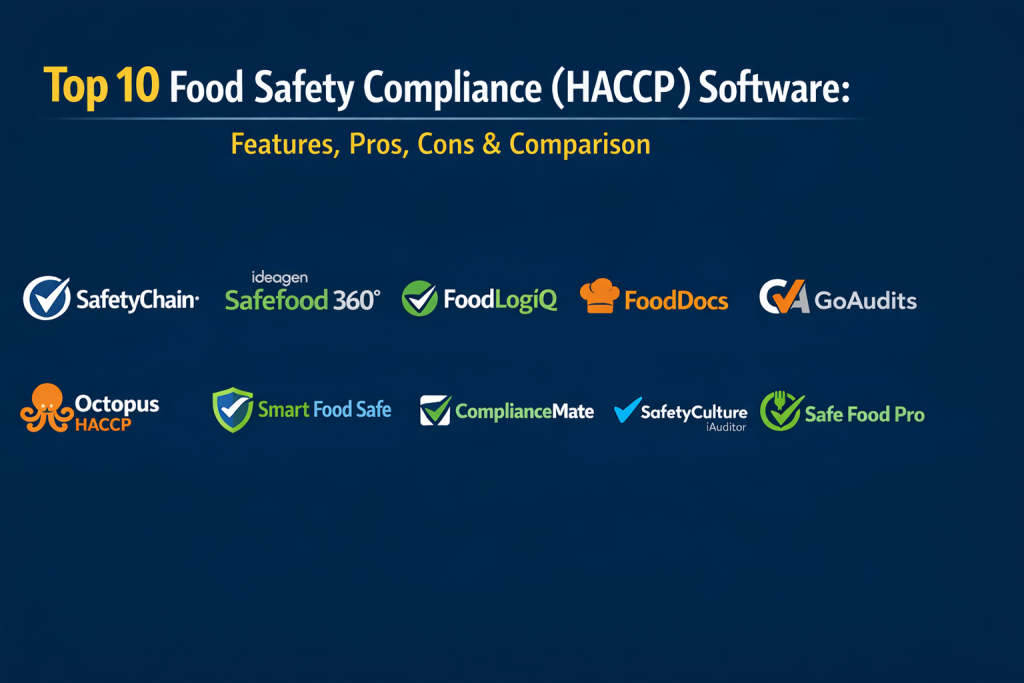
Top 10 Food Safety Compliance (HACCP) Software
Tool 1 — SafetyChain
SafetyChain is designed for food safety and quality operations that need structured programs across sites, with workflows for monitoring, exceptions, and evidence.
Key features
- HACCP program support with controlled records and standardized workflows (varies)
- Digital check execution for CCP monitoring and prerequisite programs (varies)
- Deviation and corrective action workflows to drive closure (varies)
- Audit readiness support with centralized evidence and reporting (varies)
- Multi-site templates, roles, and governance controls (varies)
- Analytics dashboards for trends, repeat issues, and performance (varies)
Pros
- Strong for teams that want a single operational system for compliance execution
- Useful in multi-site environments where standardization matters
Cons
- Setup can be significant if your master data and SOPs are not clean
- May be more than needed for a single small site with simple checks
Platforms / deployment
- Varies / N/A
Security & compliance
- Not publicly stated
Integrations & ecosystem
Often used alongside ERP, inventory, and quality workflows so compliance data is not isolated.
- ERP and production systems (varies)
- Lab and specification data (varies)
- Identity access and roles (varies)
- Data exports to BI tools (varies)
Support & community
Varies by plan; confirm onboarding, configuration support, and escalation paths.
Tool 2 — Ideagen Safefood 360°
Ideagen Safefood 360° focuses on digitizing food safety programs with structured plans, audits, and compliance management in a controlled system.
Key features
- HACCP plan creation and management workflows (varies)
- Audit management, scheduling, findings, and closure processes (varies)
- CAPA and deviation management style workflows (varies)
- Dashboards and reporting for compliance status and trends (varies)
- Supplier and standard management capabilities (varies)
- Role-based controls and multi-site visibility (varies)
Pros
- Strong for organizations needing structured governance and audit readiness
- Helpful for teams aligning food safety with broader quality processes
Cons
- Implementation and configuration can require dedicated ownership
- Smaller teams may prefer lighter tools for basic logging
Platforms / deployment
- Varies / N/A
Security & compliance
- Not publicly stated
Integrations & ecosystem
Commonly paired with operational systems that provide inputs (production, specs) and consume outputs (reports, evidence).
- ERP and supply chain tools (varies)
- Audit and documentation workflows (varies)
- Data export and reporting pipelines (varies)
Support & community
Typically vendor-led support; validate training resources for site teams and auditors.
Tool 3 — FoodLogiQ
FoodLogiQ is often used for food supply chain compliance and traceability workflows that can support food safety programs with supplier-facing and visibility capabilities.
Key features
- Supplier compliance and documentation workflows (varies)
- Traceability and recall readiness support (varies)
- Standardized document collection and verification processes (varies)
- Reporting for supplier status, gaps, and expirations (varies)
- Data organization for faster audits and customer requests (varies)
- Multi-entity visibility for complex supply chains (varies)
Pros
- Strong when supplier compliance is a major risk area
- Useful for traceability-oriented operating models
Cons
- For plant-floor HACCP monitoring, you may still need a dedicated execution tool
- Depth of HACCP plan management varies by how you implement the tool
Platforms / deployment
- Varies / N/A
Security & compliance
- Not publicly stated
Integrations & ecosystem
Often connected to supplier portals, internal quality workflows, and enterprise systems.
- ERP and procurement systems (varies)
- Data exchange with partners (varies)
- Export and reporting integrations (varies)
Support & community
Varies; confirm onboarding support for supplier rollout and data governance.
Tool 4 — FoodDocs
FoodDocs is often selected by teams that want guided food safety management with a focus on generating and maintaining food safety documentation and checks.
Key features
- Digitized food safety plans and recordkeeping workflows (varies)
- Monitoring logs for key controls and prerequisites (varies)
- Corrective action handling for failed checks (varies)
- Audit-ready reporting and evidence management (varies)
- Team collaboration with task assignment (varies)
- Multi-location support depending on plan (varies)
Pros
- Practical for teams moving from paper to digital compliance
- Helpful for keeping documentation current and accessible
Cons
- Advanced enterprise governance may require heavier platforms
- Integration depth varies by environment and plan
Platforms / deployment
- Varies / N/A
Security & compliance
- Not publicly stated
Integrations & ecosystem
Often used with operational tools and simple exports for reporting.
- Import/export workflows (varies)
- Integration with operational systems (varies)
- Reporting and evidence outputs (varies)
Support & community
Varies by plan; confirm response times and implementation assistance.
Tool 5 — GoAudits
GoAudits is designed for inspections and audits, making it useful for internal food safety audits, hygiene checks, and compliance verification activities.
Key features
- Mobile inspections and audit checklists (varies)
- Issue tracking and task assignment for findings (varies)
- Standardized templates for repeatable audits (varies)
- Evidence capture (photos, notes) and reporting (varies)
- Analytics for compliance trends across locations (varies)
- Role-based access and multi-site reporting (varies)
Pros
- Strong for audit execution and consistency across sites
- Useful for operational checks beyond HACCP monitoring logs
Cons
- HACCP plan management depth depends on how you structure templates and workflows
- May need pairing with specialized HACCP plan tooling for complex programs
Platforms / deployment
- Varies / N/A
Security & compliance
- Not publicly stated
Integrations & ecosystem
Often paired with helpdesk workflows, reporting, and document storage practices.
- Data exports for reporting (varies)
- Workflow integration for corrective actions (varies)
- Template governance processes (varies)
Support & community
Varies; confirm template design support and admin training.
Tool 6 — Octopus HACCP
Octopus HACCP is typically used by hospitality and food service operators that need mobile-friendly HACCP recordkeeping for daily operations.
Key features
- Digital HACCP records for routine checks (varies)
- Temperature monitoring workflows and alerts (varies)
- Cleaning plans and sanitation checklists (varies)
- Traceability-style recordkeeping features (varies)
- Rapid reporting for inspections and audits (varies)
- Multi-site visibility depending on setup (varies)
Pros
- Strong for front-line adoption in kitchens and food service environments
- Helps reduce missing logs and inconsistent paper records
Cons
- For complex manufacturing HACCP plans, you may need deeper risk management tooling
- Integration options vary, so evaluate fit with your existing systems
Platforms / deployment
- Varies / N/A
Security & compliance
- Not publicly stated
Integrations & ecosystem
Best when aligned to your operating rhythm: shifts, stations, and manager review.
- Data export for audits (varies)
- Workflow alignment with training and SOPs (varies)
- Optional connections to monitoring devices (varies)
Support & community
Varies; confirm onboarding for multi-site rollout and template setup.
Tool 7 — Smart Food Safe
Smart Food Safe is typically positioned as food safety management software aimed at simplifying compliance documentation and operational checks.
Key features
- Digital checklists and monitoring records (varies)
- HACCP program documentation support (varies)
- Corrective action workflows for missed or failed checks (varies)
- Audit-ready reporting and evidence packaging (varies)
- Template-based standardization across sites (varies)
- Role-based workflows for managers and staff (varies)
Pros
- Practical for teams that want a structured but approachable compliance tool
- Useful when the biggest gap is consistent daily execution
Cons
- Enterprise-scale integrations and advanced analytics may be limited
- Depth of supplier and traceability functions varies by plan
Platforms / deployment
- Varies / N/A
Security & compliance
- Not publicly stated
Integrations & ecosystem
Often works as a compliance execution layer with exports to reporting and governance.
- Reporting exports (varies)
- Template governance workflows (varies)
- Integration with operational systems (varies)
Support & community
Varies by plan; confirm responsiveness and training materials.
Tool 8 — ComplianceMate
ComplianceMate is commonly used by restaurants, healthcare food service, and multi-site operators for structured food safety tasks, logs, and accountability workflows.
Key features
- Scheduled food safety tasks and log capture (varies)
- Temperature and sanitation workflows (varies)
- Corrective action prompts and escalation paths (varies)
- Multi-site dashboards and compliance visibility (varies)
- Evidence capture for inspections and internal reviews (varies)
- Training reinforcement and accountability features (varies)
Pros
- Strong for operational compliance across many locations
- Helpful for reducing missed checks and improving manager follow-through
Cons
- Deep manufacturing-style HACCP planning may require specialized systems
- Integration depth varies by environment
Platforms / deployment
- Varies / N/A
Security & compliance
- Not publicly stated
Integrations & ecosystem
Best when connected to how managers run shifts and reviews across locations.
- Reporting exports (varies)
- Optional integration with operational systems (varies)
- Workflow alignment with SOP and training (varies)
Support & community
Varies; validate rollout support for multi-location deployment.
Tool 9 — SafetyCulture (iAuditor)
SafetyCulture (iAuditor) is a flexible inspections and checklist platform frequently used for audits, SOP checks, and corrective actions across many industries, including food operations.
Key features
- Mobile inspections with customizable templates (varies)
- Evidence capture with issues and follow-up tasks (varies)
- Analytics for pass rates, repeat findings, and trends (varies)
- Standardization through template libraries and governance (varies)
- Team collaboration for findings and closeout (varies)
- Exportable reports for internal reviews and audits (varies)
Pros
- Very flexible for building inspection and verification workflows
- Good for fast rollout of standardized checklists across sites
Cons
- HACCP plan management is not always native; often implemented via templates and process design
- Requires governance to avoid inconsistent templates across locations
Platforms / deployment
- Varies / N/A
Security & compliance
- Not publicly stated
Integrations & ecosystem
Often used as an operational audit layer that feeds tasks, reporting, and documentation.
- Export to reporting tools (varies)
- Workflow integration for corrective actions (varies)
- Integration with document systems (varies)
Support & community
Large user base; support and advanced admin help vary by plan.
Tool 10 — Safe Food Pro
Safe Food Pro is commonly considered by food service teams that need operational HACCP-style checks, training reinforcement, and inspection readiness support.
Key features
- Digital checklists and monitoring logs (varies)
- HACCP-oriented workflows for daily compliance (varies)
- Corrective action handling for failures and exceptions (varies)
- Task scheduling and accountability (varies)
- Audit and inspection reporting support (varies)
- Multi-location support depending on plan (varies)
Pros
- Practical for teams that want a compliance-focused operational tool
- Helpful for improving consistency and documentation quality
Cons
- Advanced manufacturing, supplier, or traceability capabilities may require other platforms
- Integration depth varies by environment
Platforms / deployment
- Varies / N/A
Security & compliance
- Not publicly stated
Integrations & ecosystem
Most effective when aligned to daily routines, manager verification, and evidence exports.
- Reporting exports (varies)
- Template governance (varies)
- Optional integration patterns (varies)
Support & community
Varies; confirm onboarding and template setup assistance.
Comparison table (Top 10)
| Tool Name | Best For | Platform(s) Supported | Deployment | Standout Feature | Public Rating |
|---|---|---|---|---|---|
| SafetyChain | Multi-site food safety and quality execution programs | Varies / N/A | Varies / N/A | Structured compliance execution and visibility | N/A |
| Ideagen Safefood 360° | Governance-heavy HACCP, audits, and CAPA workflows | Varies / N/A | Varies / N/A | HACCP program management with audit readiness | N/A |
| FoodLogiQ | Supplier compliance and traceability-oriented programs | Varies / N/A | Varies / N/A | Supplier documentation and visibility focus | N/A |
| FoodDocs | Guided food safety documentation and monitoring | Varies / N/A | Varies / N/A | Plan and record digitization for teams | N/A |
| GoAudits | Internal audits, inspections, and verification checks | Varies / N/A | Varies / N/A | Mobile audits with issue tracking | N/A |
| Octopus HACCP | Kitchen and hospitality HACCP recordkeeping | Varies / N/A | Varies / N/A | Operational logs for food service teams | N/A |
| Smart Food Safe | Simplified compliance documentation and checks | Varies / N/A | Varies / N/A | Standardized daily compliance execution | N/A |
| ComplianceMate | Multi-site operational food safety accountability | Varies / N/A | Varies / N/A | Tasking and compliance visibility across locations | N/A |
| SafetyCulture (iAuditor) | Flexible inspections and audit workflows | Varies / N/A | Varies / N/A | Template-driven inspections and analytics | N/A |
| Safe Food Pro | Operational HACCP-style checks and inspection readiness | Varies / N/A | Varies / N/A | Daily compliance workflow focus | N/A |
Evaluation and scoring
Weights:
- Core features – 25%
- Ease of use – 15%
- Integrations and ecosystem – 15%
- Security and compliance – 10%
- Performance and reliability – 10%
- Support and community – 10%
- Price and value – 15%
| Tool Name | Core (25%) | Ease (15%) | Integrations (15%) | Security (10%) | Performance (10%) | Support (10%) | Value (15%) | Weighted Total |
|---|---|---|---|---|---|---|---|---|
| SafetyChain | 9 | 7 | 8 | 7 | 8 | 7 | 6 | 7.55 |
| Ideagen Safefood 360° | 9 | 6 | 7 | 7 | 8 | 7 | 6 | 7.20 |
| FoodLogiQ | 7 | 7 | 8 | 7 | 8 | 7 | 6 | 7.15 |
| FoodDocs | 7 | 8 | 6 | 7 | 7 | 7 | 8 | 7.35 |
| GoAudits | 6 | 8 | 6 | 7 | 7 | 7 | 8 | 7.10 |
| Octopus HACCP | 6 | 8 | 5 | 7 | 7 | 6 | 8 | 6.95 |
| Smart Food Safe | 7 | 8 | 5 | 7 | 7 | 6 | 8 | 7.10 |
| ComplianceMate | 7 | 8 | 5 | 7 | 7 | 7 | 7 | 7.05 |
| SafetyCulture (iAuditor) | 6 | 9 | 7 | 7 | 7 | 8 | 8 | 7.55 |
| Safe Food Pro | 6 | 8 | 5 | 7 | 7 | 6 | 8 | 6.95 |
How to interpret the scores:
- Use the weighted total to shortlist tools, then validate with a pilot using your real checks and audit expectations.
- If your main gap is HACCP plan governance, prioritize higher Core scores and multi-site controls.
- If your main gap is daily execution, prioritize Ease and adoption with front-line staff.
- Treat Security and compliance as a due-diligence gate; request vendor documentation before rollout.
Which tool is right for you?
Solo operator or single site
Choose a tool that makes daily logs fast and consistent, with simple corrective action prompts. Focus on adoption, because incomplete logs are worse than basic logs done correctly.
Small and growing multi-location
Standardize templates and manager verification first. A good fit here is a system that supports scheduling, accountability, and location rollups, without requiring a heavy enterprise implementation.
Mid-market
Prioritize governance plus repeatability: standardized HACCP elements, controlled document updates, and consistent corrective action closeout. Also validate reporting quality so audits and customer requests do not become fire drills.
Enterprise
Choose platforms that support structured programs across plants or regions, with strong roles, audit readiness, evidence packaging, and integration pathways. Make sure you have dedicated ownership for template governance and data quality.
Budget vs premium
Budget path: pick a lightweight tool that drives consistent execution and clear evidence. Premium path: invest in platforms that connect supplier compliance, audits, CAPA, and enterprise reporting so risk is managed systematically.
Feature depth vs ease of use
If staff adoption is your biggest risk, choose simpler workflows and fewer screens. If audit complexity is your biggest risk, invest in deeper governance, but plan training and change management.
Integrations and scalability
If your audits require linking checks to lots, batches, or production runs, verify how the tool handles identifiers and exports. Also validate how it supports multi-site rollups, role-based approvals, and consistent version control for SOPs.
Security and compliance needs
Ask for RBAC, audit logs, encryption, data retention controls, and access management options. If anything is unclear, treat it as “Not publicly stated” until verified.
Frequently asked questions
- What does HACCP software actually do?
It digitizes HACCP plans and the daily records needed to prove you monitored controls, handled deviations, and verified the system. It reduces missing logs and improves audit readiness. - What should I digitize first?
Start with the checks that fail audits most often: temperature monitoring, sanitation records, allergen controls, and corrective action documentation. Then expand into audits and supplier documents. - Is a checklist app enough for HACCP?
It can be enough for simple programs if templates are controlled and corrective actions are enforced. For complex plants, you may need deeper plan management and governance. - How do I handle corrective actions properly?
Use a consistent workflow: detect deviation, contain product, record root cause, apply corrective action, verify effectiveness, and document closure with manager review. - What makes audits easier with software?
Centralized evidence, consistent templates, timestamps, and an easy way to export records by site, time period, process, or product category. - How do I ensure staff actually uses the system?
Keep data entry fast, align checks to shift routines, require manager verification, and track completion rates. Adoption improves when the tool reduces work instead of adding it. - Do these tools replace training?
No. Software supports training with reminders and documentation, but food safety outcomes still depend on people following SOPs consistently. - How do I avoid bad data and useless reports?
Standardize your item and location naming, lock templates, and define what each status means. Also review trends regularly so staff see that data leads to action. - Can one tool cover HACCP, audits, and supplier compliance?
Sometimes, but it depends on your scope. Many teams use a primary compliance platform and add specialized tools for audits, traceability, or supplier workflows when needed. - What should I measure after rollout?
Track completion rate of required checks, time-to-close corrective actions, repeat deviations by station, audit findings trend, and how quickly you can assemble an evidence pack.
Conclusion
HACCP software succeeds when it makes daily compliance easy, deviations impossible to ignore, and audits predictable. The right choice depends on whether you need plant-grade governance or kitchen-grade speed, how many sites you manage, and how strict your audit expectations are. Start with a shortlist of two or three tools, pilot them on a real set of monitoring logs and corrective actions, and verify that managers can review and close issues consistently. When adoption is strong, expand templates carefully and standardize reporting across locations.

Best Cardiac Hospitals Near You
Discover top heart hospitals, cardiology centers & cardiac care services by city.
Advanced Heart Care • Trusted Hospitals • Expert Teams
View Best Hospitals