Introduction
An influencer affiliate platform is a specialized digital ecosystem that bridges the gap between consumer brands and content creators. Unlike traditional affiliate marketing, which often relies on anonymous link-sharing, these platforms focus on the power of personality-driven endorsements. They provide the technical infrastructure for tracking sales, managing unique discount codes, and automating commission payments across various social media channels. By utilizing these tools, businesses can scale their word-of-mouth marketing efforts while providing creators with a transparent way to monetize their audience through performance-based rewards.
In the current digital economy, these platforms have become essential for managing the sheer volume of data generated by multi-channel campaigns. Real-time attribution and advanced fraud detection ensure that marketing budgets are spent effectively, while creators gain access to professional dashboards to monitor their conversion rates. Modern systems now prioritize long-term relationship management over one-off transactions, offering sophisticated tools for tiered commissions and exclusive brand gifting. Selecting the right platform requires a deep understanding of your specific niche, the geographical reach of your audience, and the technical compatibility with your existing e-commerce storefront.
Best for: Direct-to-consumer brands, lifestyle influencers, digital marketers, and e-commerce founders looking to automate their performance-based creator partnerships.
Not ideal for: B2B companies with extremely long sales cycles, strictly local brick-and-mortar shops without an online store, or creators who prefer flat-fee sponsorships over performance-based income.
Key Trends in Influencer Affiliate Platforms
- Automated Attribution Models: Platforms are moving toward multi-touch attribution, ensuring creators get credit for their influence even if the final click happens on a different device.
- Social Commerce Integration: Direct “swipe-up” and “in-app” purchasing capabilities are becoming standard, reducing friction between the influencer’s content and the checkout page.
- AI-Powered Matchmaking: Advanced algorithms now analyze creator content and audience demographics to suggest the most profitable brand partnerships automatically.
- Instant Payout Systems: The shift toward real-time digital wallets allows creators to access their commissions faster, moving away from traditional net-30 or net-60 payment cycles.
- Micro-Influencer Focus: Data shows that smaller, highly engaged audiences often yield higher conversion rates, leading platforms to build tools specifically for creators with under fifty thousand followers.
- First-Party Data Reliance: With the decline of third-party cookies, affiliate platforms are developing proprietary tracking methods to ensure accurate sales data without infringing on privacy.
How We Selected These Tools (Methodology)
- Ease of Integration: We prioritized platforms that offer one-click installations for major e-commerce engines like Shopify, WooCommerce, and Adobe Commerce.
- Reporting Granularity: Selection was based on the depth of data provided, including click-through rates, conversion transparency, and audience geographic insights.
- Commission Flexibility: We looked for tools that allow brands to set varied rates based on product categories, new vs. returning customers, or specific creator tiers.
- Payment Reliability: A major factor was the platform’s history of timely, automated payments across multiple currencies and regions.
- Creator Experience: We evaluated the ease of use for the influencer, focusing on how quickly they can generate links and view their earnings.
- Scalability: The tools must be able to handle a handful of partners as effectively as a global network of thousands.
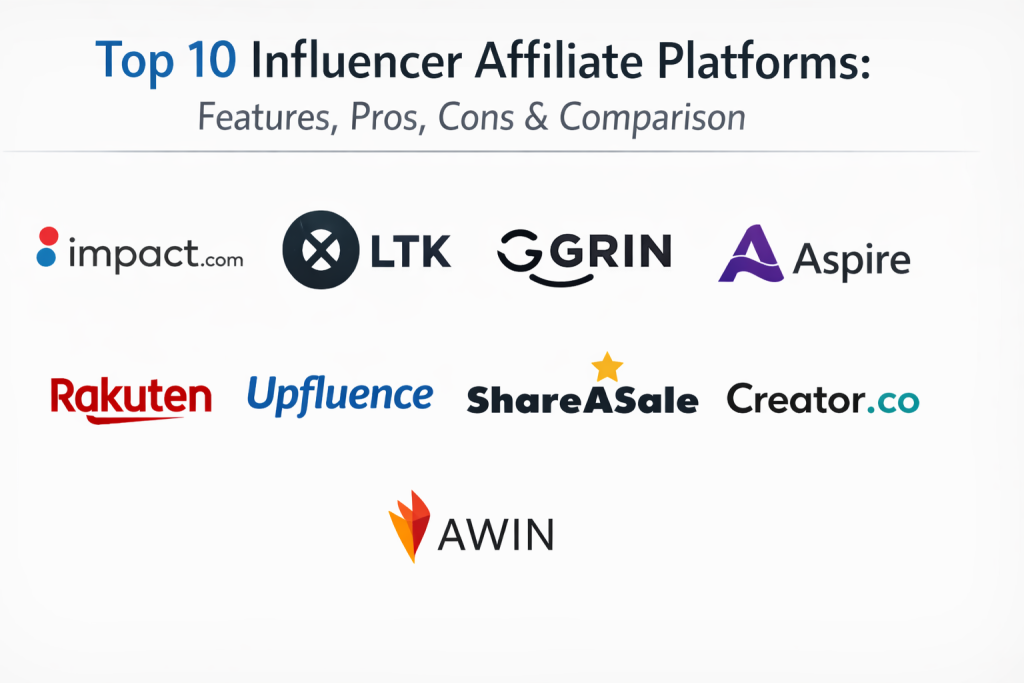
Top 10 Influencer Affiliate Platforms
1. Impact.com
Impact is a leading global partnership management platform that handles the entire lifecycle of influencer and affiliate relationships. It is known for its robust automation and advanced tracking capabilities, making it a favorite for enterprise-level brands.
Key Features
- Discovery tool to find and recruit new global creators.
- Automated contracting and customized payout scheduling.
- Cross-device tracking to capture sales accurately.
- Detailed fraud detection to protect marketing spend.
- Comprehensive reporting suite with customizable dashboards.
Pros
- Highly scalable for massive global campaigns.
- Exceptional data transparency and reporting depth.
Cons
- The interface can be overwhelming for small business owners.
- Higher entry price point compared to entry-level tools.
Platforms / Deployment
- Web / Cloud-based
- Global
Security & Compliance
- SSO/SAML, MFA, and SOC 2 compliance.
- GDPR and CCPA data privacy alignment.
Integrations & Ecosystem
Strong connections to major e-commerce and CRM systems.
- Shopify
- BigCommerce
- Salesforce
- Google Ads
Support & Community
Professional account management for enterprise tiers and extensive online documentation.
2. LTK (RewardStyle)
LTK is a creator-centric platform that has built its own consumer-facing shopping app. It is the dominant force in fashion, home decor, and lifestyle influencer marketing, providing a seamless path from social post to purchase.
Key Features
- A dedicated shopping app with millions of active users.
- High-conversion “Shop the Look” image tagging.
- Historical performance data to help brands choose creators.
- End-to-end campaign management for premium brand partners.
- Automated link generation for all major social channels.
Pros
- Unmatched influence in the fashion and lifestyle niches.
- Provides creators with a built-in audience via the LTK app.
Cons
- Extremely selective application process for influencers.
- High commission overrides for brand participants.
Platforms / Deployment
- iOS / Android / Web
- Global
Security & Compliance
- Secure payment processing and data encryption.
- Standard consumer privacy protections.
Integrations & Ecosystem
Directly connected to thousands of global retailers.
- Major Department Stores
- Niche Fashion Brands
- High-end Home Goods
- Beauty Retailers
Support & Community
Dedicated representative support for top-tier creators and brands.
3. Grin
Grin is often cited as the top choice for e-commerce brands that want to manage their influencer relationships like a private CRM. It integrates deeply with storefronts to track everything from product gifting to affiliate sales.
Key Features
- Direct e-commerce integration for automated product fulfillment.
- Relationship management tools to track all communications.
- Content library for repurposing influencer-generated content.
- Automated affiliate link and discount code creation.
- Real-time ROI tracking for every individual partner.
Pros
- Feels like a specialized CRM rather than a cold marketplace.
- Simplifies the logistics of sending physical products to creators.
Cons
- Pricing is generally geared toward mid-market and enterprise.
- Focuses more on relationship management than discovery.
Platforms / Deployment
- Web / Cloud-based
- US / Global
Security & Compliance
- Enterprise-grade data security and encryption.
- Privacy-compliant data handling.
Integrations & Ecosystem
Designed to sit at the center of your e-commerce stack.
- Shopify / Magento
- Gmail / Slack
- SMS Marketing Tools
- Klaviyo
Support & Community
High-touch customer success and a robust educational blog.
4. Aspire (formerly AspireIQ)
Aspire provides a dual-sided marketplace that allows brands to run large-scale affiliate programs while also managing community-led growth. It is built for speed and high-volume influencer interactions.
Key Features
- Workflow automation for high-volume creator outreach.
- Customizable application pages for brand ambassadors.
- Performance-based tracking for links and promo codes.
- Content management for licensing creator assets.
- Integrated payment processing for global teams.
Pros
- Excellent for building long-term brand ambassador programs.
- User-friendly interface for both brands and creators.
Cons
- Can be expensive for startups just testing the waters.
- Discovery features occasionally yield high volumes of low-quality leads.
Platforms / Deployment
- Web / Cloud-based
- Global
Security & Compliance
- Standard enterprise security features.
- GDPR compliant.
Integrations & Ecosystem
Broad support for the modern marketing tech stack.
- Shopify
- WooCommerce
- Meta Ads Manager
Support & Community
Strong community forums and regular industry webinars.
5. Refersion
Refersion is a dedicated affiliate marketing platform that prioritizes simplicity and technical reliability. It is specifically built for e-commerce owners who want to launch an influencer program quickly without complex overhead.
Key Features
- Simplified dashboard for tracking affiliate conversions.
- Professional portal for creators to track their own stats.
- Automated coupon code tracking for Instagram and TikTok.
- Customized commission structures for different products.
- Direct “Buy Now” link capabilities.
Pros
- Extremely easy to set up for Shopify and Amazon stores.
- Transparent and predictable pricing models.
Cons
- Lacks the deep “discovery” features of larger marketplaces.
- Basic reporting compared to enterprise competitors.
Platforms / Deployment
- Web / Cloud-based
- Global
Security & Compliance
- Secure automated payouts via various gateways.
- Data protection standards followed.
Integrations & Ecosystem
Built to work natively with nearly every major storefront.
- Amazon Marketplace
- Shopify / Recharge
- Stripe / PayPal
- Yotpo
Support & Community
Responsive email support and extensive self-help documentation.
6. Rakuten Advertising
As one of the oldest and most established affiliate networks, Rakuten provides a massive global footprint and high-level security for enterprise brands and professional influencers.
Key Features
- Access to a vast global network of publishers and creators.
- Advanced performance monitoring and optimization tools.
- Multi-currency and multi-language support.
- Patented tracking technology for high accuracy.
- Integrated influencer marketing services.
Pros
- Unrivaled global reach for international brands.
- Extremely high technical standards and reliability.
Cons
- The interface feels dated compared to modern SaaS tools.
- Approval process for the network can be rigorous.
Platforms / Deployment
- Web / Cloud-based
- Global
Security & Compliance
- SOC 2, ISO certifications, and high-level encryption.
- Strict global compliance adherence.
Integrations & Ecosystem
Deep institutional integrations with global banking and retail.
- Major Global Retailers
- Financial Services
- Travel Networks
- Enterprise CRMs
Support & Community
Institutional-level support with dedicated account managers for large brands.
7. Upfluence
Upfluence combines a powerful influencer search engine with robust affiliate tracking. It is particularly strong in its ability to analyze a brand’s own customer base to find influential buyers.
Key Features
- Database of millions of influencers with deep filters.
- Tool to identify influential customers in your CRM.
- Automated campaign management and outreach.
- Performance tracking for affiliate links and codes.
- Native Shopify integration for direct ROI measurement.
Pros
- Excellent for “customer-to-influencer” marketing strategies.
- Very powerful search and filtering capabilities.
Cons
- Learning curve for the database filters can be steep.
- Subscription costs are on the higher side for small businesses.
Platforms / Deployment
- Web / Cloud-based
- Global
Security & Compliance
- Encrypted data handling and secure payments.
- Standard privacy compliance.
Integrations & Ecosystem
Focused on connecting social data with sales data.
- Shopify / Adobe Commerce
- Klaviyo
- Zapier
- Outlook / Gmail
Support & Community
Dedicated project managers and a helpful technical knowledge base.
8. ShareASale (Part of Awin)
ShareASale is a staple in the affiliate industry, offering a massive marketplace where influencers can find thousands of products to promote. It is known for its accessibility to smaller creators.
Key Features
- Real-time tracking of clicks and commissions.
- Simple tools for generating affiliate links and banners.
- Grouping features to manage different tiers of influencers.
- Automated recruitment tools based on niche.
- Transparent merchant ratings and historical data.
Pros
- Very easy for new influencers to join and start earning.
- Diverse range of merchants across all possible categories.
Cons
- The user interface is functional but not visually modern.
- Some manual effort required to vet high volumes of partners.
Platforms / Deployment
- Web / Cloud-based
- Primarily North America / Global
Security & Compliance
- Reliable payment cycles and standard web security.
- Part of the Awin group’s compliance framework.
Integrations & Ecosystem
Compatible with all standard e-commerce platforms.
- WordPress / WooCommerce
- Shopify
- BigCommerce
- Custom APIs
Support & Community
Large library of educational webinars and a responsive support team.
9. Creator.co
Creator.co focuses on automation and “hands-free” campaign management. It is designed for brands that want to run affiliate programs without a dedicated full-time manager.
Key Features
- Automated “Deep Insights” for creator audience data.
- Marketplace where creators apply to join brand campaigns.
- Unified dashboard for affiliate and sponsorship tracking.
- Social media automated posting and verification.
- Direct integration with Shopify for sales attribution.
Pros
- Great for small teams looking for high levels of automation.
- Focuses on building community and long-term brand fans.
Cons
- Smaller influencer database compared to the giants.
- Less control over the granular details of outreach.
Platforms / Deployment
- Web / Cloud-based
- Global
Security & Compliance
- Standard secure payment gateways.
- General data protection compliance.
Integrations & Ecosystem
Streamlined for the most popular social and sales tools.
- Shopify
- Instagram / TikTok
- YouTube
Support & Community
Strong emphasis on “concierge” service for managed plans.
10. Awin
Awin is a global affiliate giant that caters to everyone from massive enterprises to small startups. It offers a sophisticated technical foundation for professional influencer marketing at scale.
Key Features
- Intuitive “Opportunity Marketplace” for partnership discovery.
- Advanced tracking for cross-device conversions.
- Specialized tools for influencer “micro-conversion” tracking.
- Comprehensive global payment system in multiple currencies.
- Browser extension for quick link generation.
Pros
- Massive global reach with localized expertise.
- Stable, high-performance tracking technology.
Cons
- There is a small sign-up fee for some accounts.
- The vastness of the network can be daunting for beginners.
Platforms / Deployment
- Web / Cloud-based
- Global / Strong in EU and US
Security & Compliance
- ISO 27001, GDPR, and enterprise-grade security.
- High transparency in data and tracking.
Integrations & Ecosystem
Extensive third-party tool support and API access.
- Adobe Commerce
- Salesforce
- Shopify
- Custom Enterprise Solutions
Support & Community
Exceptional industry research reports and global support teams.
Comparison Table
| Tool Name | Best For | Platform(s) Supported | Deployment | Standout Feature | Public Rating |
| 1. Impact.com | Enterprise Scalability | Web | Cloud | Fraud Detection | N/A |
| 2. LTK | Fashion & Lifestyle | iOS, Android, Web | Global | In-App Shopping | N/A |
| 3. Grin | E-commerce CRM | Web | Cloud | Gifting Logistics | N/A |
| 4. Aspire | Ambassador Programs | Web | Cloud | Asset Management | N/A |
| 5. Refersion | Quick Setup | Web | Cloud | Coupon Tracking | N/A |
| 6. Rakuten | Global Reach | Web | Cloud | Institutional Scale | N/A |
| 7. Upfluence | Finding Customers | Web | Cloud | CRM Search Engine | N/A |
| 8. ShareASale | Budget Entry | Web | Cloud | Massive Marketplace | N/A |
| 9. Creator.co | Small Teams | Web | Cloud | Managed Automation | N/A |
| 10. Awin | Global Growth | Web | Cloud | Tracking Accuracy | N/A |
Evaluation & Scoring of Influencer Affiliate Platforms
| Tool Name | Core (25%) | Ease (15%) | Integrations (15%) | Security (10%) | Performance (10%) | Support (10%) | Value (15%) | Weighted Total |
| 1. Impact.com | 10 | 5 | 10 | 10 | 10 | 9 | 7 | 8.60 |
| 2. LTK | 9 | 8 | 7 | 8 | 10 | 8 | 6 | 8.05 |
| 3. Grin | 9 | 7 | 10 | 9 | 9 | 9 | 7 | 8.55 |
| 4. Aspire | 9 | 8 | 9 | 8 | 9 | 8 | 7 | 8.25 |
| 5. Refersion | 7 | 10 | 9 | 8 | 8 | 8 | 9 | 8.30 |
| 6. Rakuten | 8 | 4 | 8 | 10 | 10 | 8 | 8 | 7.85 |
| 7. Upfluence | 8 | 6 | 9 | 8 | 9 | 8 | 7 | 7.75 |
| 8. ShareASale | 7 | 9 | 8 | 8 | 8 | 7 | 10 | 8.10 |
| 9. Creator.co | 6 | 9 | 8 | 7 | 8 | 9 | 8 | 7.70 |
| 10. Awin | 9 | 6 | 9 | 9 | 10 | 8 | 8 | 8.35 |
The scores above reflect a tool’s performance relative to its target audience. While an enterprise tool like Impact.com scores lower on ease of use, its core features and performance are unmatched for large-scale operations. Conversely, Refersion offers high value and ease for smaller merchants but lacks the depth of search found in specialized influencer marketplaces.
Which Influencer Affiliate Platform Is Right for You?
Solo / Freelancer
For creators just starting out, ShareASale and LTK (if you are in the lifestyle niche) are the best options. They provide immediate access to a wide range of brands without requiring you to build your own technical infrastructure.
SMB
Small businesses should prioritize Refersion or Creator.co. These platforms offer the best balance of automation and cost, allowing you to run a professional program without needing a full-time affiliate manager on staff.
Mid-Market
For companies with a steady revenue stream, Grin or Aspire are the gold standards. They provide the CRM-like capabilities needed to nurture hundreds of relationships while keeping logistics like product gifting organized.
Enterprise
Global organizations with high security requirements and massive partner networks should look to Impact.com or Rakuten Advertising. These platforms offer the fraud protection and institutional-grade reporting necessary for large budgets.
Budget vs Premium
If you are budget-conscious, ShareASale is the most accessible. If you have the capital to invest in a premium, relationship-first experience, Grin is the superior choice for high-growth e-commerce.
Feature Depth vs Ease of Use
Refersion is the easiest to use but has less feature depth. Impact.com has the most feature depth but requires significant time to master.
Integrations & Scalability
Awin and Impact.com lead the market in scalability, offering robust APIs and global support that can grow alongside your business.
Security & Compliance Needs
For brands in highly regulated industries or those with strict data requirements, Rakuten and Impact.com offer the most comprehensive security certifications and compliance frameworks.
Frequently Asked Questions
How do influencer affiliate platforms track sales?
They use tracking pixels, unique affiliate links, and specialized discount codes to attribute sales to specific creators, often using “last-click” or “multi-touch” logic.
What is the difference between an influencer and an affiliate?
An influencer focuses on building an audience and brand awareness, while an affiliate focuses on driving direct sales. These platforms combine both by rewarding influencers for the sales they generate.
How much do these platforms cost?
Pricing varies from free entry levels with commission overrides (like ShareASale) to thousands of dollars per month for enterprise SaaS solutions (like Impact or Grin).
Do I need a large following to join these platforms?
Some, like LTK, are very selective. Others, like ShareASale and Awin, are open to micro-influencers and beginners as long as they have quality content.
How are creators paid?
Most platforms offer automated payouts via PayPal, Direct Deposit, or Wire Transfer once a certain earnings threshold is met and the return period for the sale has passed.
Can I track sales from Instagram and TikTok?
Yes, most platforms allow for discount code tracking, which is essential for platforms where clickable links are restricted to bio sections.
What is a “Commission Override”?
This is a small fee paid to the platform itself (on top of what you pay the influencer) to cover the costs of the tracking technology and payment processing.
Is product gifting included in these tools?
Specialized platforms like Grin and Aspire include modules to manage the shipping and tracking of free products sent to influencers for review.
What is fraud detection in affiliate marketing?
It is a set of tools that identify “fake” clicks or automated bot traffic to ensure brands only pay commissions for genuine human purchases.
Can I use multiple platforms at once?
Yes, many large brands use a specialized influencer CRM (like Grin) for relationships and a large network (like Awin) for broader affiliate reach.
Conclusion
Selecting the right influencer affiliate platform is a strategic decision that ultimately dictates how effectively you can scale your brand’s digital presence and sales. In a market where consumer trust is the primary currency, the ability to manage performance-based partnerships with transparency and technical accuracy is non-negotiable. Whether you are a solo creator looking for your first brand deal or an enterprise executive managing a global network of partners, the tools listed here provide the essential infrastructure for modern commerce. To begin, evaluate your current technical stack and budget, then shortlist two or three platforms for a demonstration to ensure their workflow aligns with your team’s specific needs and long-term growth objectives.

Best Cardiac Hospitals Near You
Discover top heart hospitals, cardiology centers & cardiac care services by city.
Advanced Heart Care • Trusted Hospitals • Expert Teams
View Best Hospitals