Introduction
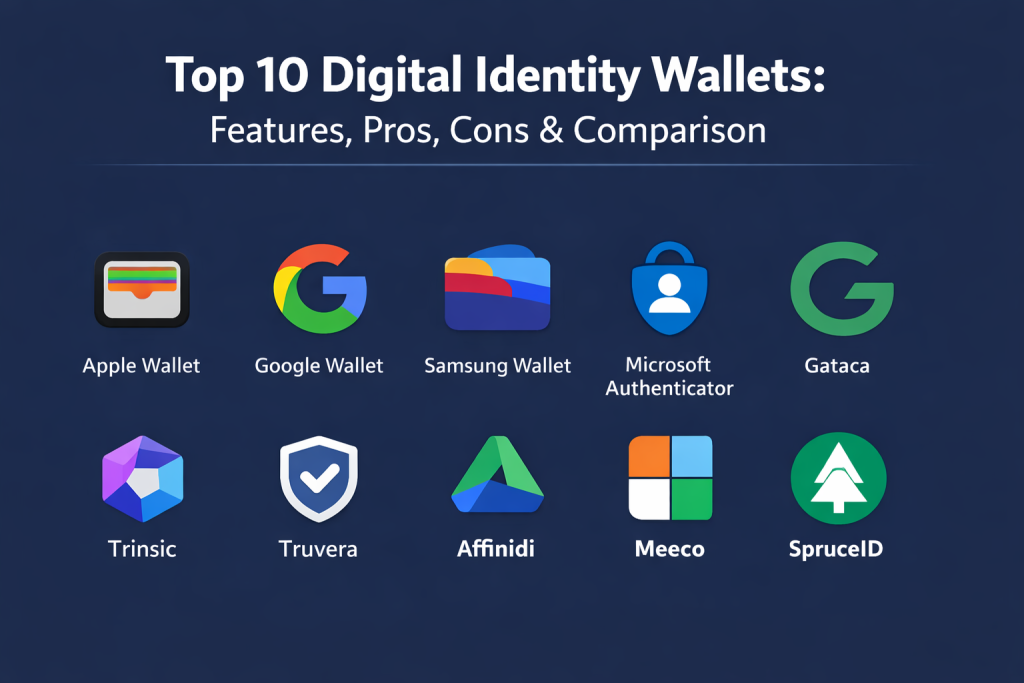
Digital identity wallets are tools that let people store, manage, and share verified identity data in digital form. That can include government IDs, driver’s licenses, work IDs, student IDs, verifiable credentials, and other proofs that can be presented online or in person. In the consumer world, wallet adoption is growing through phone-native products such as Apple Wallet, Google Wallet, and Samsung Wallet. In the enterprise and verifiable credentials space, platforms such as Microsoft Authenticator, Trinsic, Gataca Wallet, Affinidi Vault, Meeco Wallet, SpruceID, and Truvera Wallet focus on privacy-preserving credential exchange, embedded wallet experiences, and standards-based interoperability.
These wallets matter because buyers now want reusable identity, selective data sharing, lower onboarding friction, and better control over what gets shared and when. Common use cases include mobile IDs for travel and age checks, business and employee credentials, reusable onboarding, education credentials, professional certifications, and secure access to digital services. Buyers should evaluate credential support, interoperability, mobile experience, privacy controls, issuer and verifier ecosystem, deployment flexibility, standards support, developer tools, security model, and fit for their real use case.
Best for: governments, large enterprises, digital public services, fintechs, education and workforce platforms, regulated onboarding teams, and product teams building reusable identity flows.
Not ideal for: organizations that only need traditional document upload, teams without a clear credential ecosystem, or buyers who want basic login tools rather than portable identity credentials.
Key Trends in Digital Identity Wallets
- Phone-native wallets are making digital identity more mainstream by supporting government IDs and other digital credentials directly on consumer devices.
- Standards such as Verifiable Credentials, SD-JWT VC, mdoc, and OpenID credential exchange flows are becoming more important for interoperability.
- Embedded and white-label wallet experiences are becoming more attractive for enterprises that do not want users to install a separate wallet app.
- Privacy-preserving data sharing is becoming a major selling point, especially when only selected attributes need to be shared.
- Public-sector digital wallet programs are expanding and pushing the broader ecosystem forward.
- Buyers increasingly want one wallet strategy that can support both human identity and wider verifiable credential use cases.
- Developer tooling and wallet APIs matter more as organizations embed credential flows into their own products.
- Wallet trust, certification, and ecosystem governance are becoming bigger decision factors as adoption grows.
How We Selected These Tools
- We prioritized wallets or wallet platforms with clear digital identity relevance.
- We included both consumer-facing and enterprise-facing products because the category now spans both.
- We looked for visible support for digital IDs, verifiable credentials, or identity data sharing.
- We favored tools with official product documentation or clear wallet capability.
- We considered usability, ecosystem fit, and likely adoption across real-world scenarios.
- We included a mix of OEM wallets, enterprise wallet infrastructure, and standards-based wallet platforms.
- We avoided guessing certifications, ratings, or deployment options where details were unclear.
- We kept the list focused on recognizable and credible products rather than niche experiments.
1. Apple Wallet
Apple Wallet is one of the most visible consumer digital identity wallets. It supports eligible driver’s licenses, state IDs, and newer digital ID flows on iPhone and Apple Watch, making it a strong choice for users already inside the Apple ecosystem.
Key Features
- Mobile driver’s license and state ID support
- Digital ID presentation in person
- Sharing identity information in participating apps and websites
- Support on iPhone and Apple Watch
- Device-based authentication
- Strong consumer familiarity
- Tight hardware and software integration
Pros
- Very strong user experience for Apple users
- High consumer trust and visibility
- Good fit for mobile government ID use cases
Cons
- Ecosystem is tied to Apple devices
- Availability depends on participating issuers and regions
- Less flexible for custom enterprise wallet workflows
Platforms / Deployment
iOS, watchOS
Cloud / Device-based wallet experience
Security & Compliance
Device authentication is clearly part of the experience. Other detailed compliance certifications are not publicly stated.
Integrations & Ecosystem
Apple Wallet is strongest where issuers and service providers want to meet users inside a familiar consumer wallet experience.
- Participating government IDs
- In-app and in-person presentation support
- Strong consumer hardware integration
- Good for mainstream mobile identity flows
Support & Community
Support is strong for end users through Apple’s support ecosystem. Developer and issuer flexibility is more controlled than open wallet platforms.
2. Google Wallet
Google Wallet has become a major Android-based digital identity wallet, supporting digital IDs and related verification flows. It is a strong option for organizations and users that want identity credentials inside the Android ecosystem.
Key Features
- Digital ID support in Google Wallet
- Identity sharing with apps and websites
- Google Account linking support
- Android ecosystem reach
- Passport-based ID pass support in some flows
- User consent before sharing data
- Strong mobile-first experience
Pros
- Broad Android relevance
- Good fit for app-based identity sharing
- Familiar and practical for mainstream users
Cons
- Availability depends on supported IDs and locations
- Less enterprise-custom than white-label wallet platforms
- Exact support can vary by credential type
Platforms / Deployment
Android
Cloud / Device-based wallet experience
Security & Compliance
Authentication and consent-based sharing are clearly part of the flow. Further detailed certifications are not publicly stated.
Integrations & Ecosystem
Google Wallet is useful when organizations want digital identity embedded into Android-native user journeys.
- Google Account integration
- App and website identity sharing
- Digital ID management inside Wallet
- Good ecosystem reach on Android
Support & Community
User support is strong through Google help resources. The platform is widely relevant, though issuer-level customization is more limited than dedicated enterprise wallet products.
3. Samsung Wallet
Samsung Wallet supports digital IDs along with other wallet functions such as keys, passes, and credentials. It is a strong choice for users and organizations targeting Samsung device ecosystems and mobile ID use cases.
Key Features
- Digital ID support
- Driver’s license and state ID support in supported cases
- Student ID and company ID positioning
- Wallet support on Galaxy devices
- Quick access wallet interface
- Support for more than identity items
- Watch-related wallet support in some functions
Pros
- Strong fit for Samsung mobile users
- Practical multi-purpose wallet design
- Good support for identity plus access use cases
Cons
- Best value depends on Samsung device adoption
- Availability varies by credential type and region
- Less open than developer-led identity wallet platforms
Platforms / Deployment
Android, Galaxy devices
Cloud / Device-based wallet experience
Security & Compliance
Samsung clearly describes identity verification and wallet setup controls, but detailed compliance certifications are not publicly stated.
Integrations & Ecosystem
Samsung Wallet is attractive where identity, device access, and other wallet items need to live together in one experience.
- Digital IDs
- Student and company ID positioning
- Device and watch ecosystem fit
- Broader daily-use wallet model
Support & Community
Strong consumer support for Samsung users. Community depth for custom identity use cases is lower than dedicated verifiable credential platforms.
4. Microsoft Authenticator
Microsoft Authenticator acts as the user wallet for Microsoft Entra Verified ID and supports decentralized identifiers and verifiable credentials. It is especially relevant for enterprises already invested in Microsoft identity infrastructure.
Key Features
- Verifiable credential storage and presentation
- DID user agent functionality
- Microsoft Entra Verified ID integration
- Enterprise identity ecosystem fit
- Encrypted wallet file backup model
- Support for issuance and presentation requests
- Useful for organizational trust workflows
Pros
- Strong enterprise identity fit
- Good for Microsoft-centric environments
- Clear relevance for verifiable credentials
Cons
- Best value often depends on Microsoft ecosystem use
- Consumer-facing wallet experience is less broad than OEM wallets
- Public cross-wallet interoperability detail is not always simple
Platforms / Deployment
iOS, Android
Cloud / Enterprise identity-linked wallet experience
Security & Compliance
Microsoft documentation clearly references encrypted wallet backup and credential presentation support. Other product-specific compliance claims were not relied on here.
Integrations & Ecosystem
This wallet is most compelling when tied to Microsoft identity workflows.
- Microsoft Entra Verified ID
- Enterprise credential issuance flows
- Useful for organizational identity scenarios
- Strong developer and admin documentation
Support & Community
Support and documentation are strong. Community reach is best among Microsoft enterprise teams and developers.
5. Gataca Wallet
Gataca Wallet is a dedicated digital identity wallet designed for secure storage and sharing of digital documents and verifiable credentials. It is a strong fit for public-sector, enterprise, and standards-based identity programs.
Key Features
- Secure storage of digital identity documents
- ID wallet app for credential sharing
- Open standards positioning
- Public-sector relevance
- EUDI wallet readiness messaging
- Useful for authentication and verification flows
- Mobile-first credential control
Pros
- Clear digital identity focus
- Good standards-based positioning
- Strong fit for government and regulated use cases
Cons
- Less mainstream consumer awareness than OEM wallets
- Pricing is not publicly stated
- Some buyers may need a broader platform around the wallet
Platforms / Deployment
Mobile wallet
Varies / N/A
Security & Compliance
Gataca emphasizes secure storage, privacy, and standards-based design. Detailed named certifications are not publicly stated.
Integrations & Ecosystem
Gataca works well in ecosystems built around verifiable credentials and regulated identity exchange.
- Open standards support
- Public-sector and EUDI relevance
- Authentication and verification fit
- Good interoperability positioning
Support & Community
Good market visibility in the digital identity space. Community relevance is strongest among credential and public-sector identity programs.
6. Trinsic
Trinsic provides identity wallets that can be white-labeled, embedded, or cloud-hosted as part of a reusable identity platform. It is a strong option for product teams building custom identity experiences.
Key Features
- White-label identity wallet
- Embedded wallet support
- Cloud-hosted wallet options
- Wallet SDK
- Reusable identity focus
- Verifiable credential support
- Strong developer platform orientation
Pros
- Very flexible for product builders
- Good for branded wallet experiences
- Strong fit for reusable identity workflows
Cons
- May require more design and implementation work
- Pricing is not publicly stated
- Less plug-and-play for basic consumer ID storage use cases
Platforms / Deployment
Web, mobile, embedded experiences
Cloud / Embedded / White-label
Security & Compliance
Trinsic clearly focuses on privacy-preserving wallet experiences and credential workflows. Detailed named compliance certifications are not publicly stated.
Integrations & Ecosystem
Trinsic is attractive when buyers want wallet capability integrated into their own product rather than forcing users into a separate generic wallet app.
- Wallet SDK
- Embedded experiences
- White-label support
- Strong reusable identity ecosystem fit
Support & Community
Strong developer positioning and clear product documentation. Good fit for technical teams building custom identity products.
7. Truvera Wallet
Truvera Wallet is positioned around secure digital ID wallet functionality through a cloud wallet and wallet SDK model. It is useful for organizations that want wallet capability without forcing a traditional standalone mobile-wallet-only experience.
Key Features
- Wallet SDK
- Cloud wallet experience
- Secure digital ID storage
- Credential presentation support
- Easier identity reuse
- Integration with existing identity systems
- Useful for embedded deployment models
Pros
- Good for embedded and cloud-based wallet experiences
- Useful for organizations wanting faster wallet rollout
- Strong fit for identity reuse scenarios
Cons
- Brand awareness is lower than some larger platforms
- Pricing is not publicly stated
- Buyers may need to evaluate surrounding ecosystem depth carefully
Platforms / Deployment
Web, SDK-based experiences
Cloud / Embedded
Security & Compliance
The reviewed product material emphasizes secure digital ID storage and controlled presentation, but detailed named certifications are not publicly stated.
Integrations & Ecosystem
Truvera Wallet is most attractive for teams that want wallet capability added to current systems with less disruption.
- Identity system integration
- SDK-led deployment
- Cloud wallet support
- Good for verification reuse
Support & Community
Commercial product orientation is clear. Public community visibility appears more limited than some larger ecosystem players.
8. Affinidi Vault
Affinidi Vault is a secure wallet for verified credentials and user-controlled data. It supports web and mobile onboarding into a broader trust ecosystem and is relevant for organizations that want user-controlled identity and data-sharing flows.
Key Features
- Secure storage of verified credentials
- Web Vault and Mobile Vault support
- Local storage positioning on device edge
- Data discovery and sharing model
- Identity verification support
- Good fit for trust-network use cases
- Useful for user-controlled data exchange
Pros
- Strong user-control messaging
- Good for data and credential reuse together
- Helpful for web plus mobile wallet experiences
Cons
- Broader data-sharing vision may be more than some buyers need
- Pricing is not publicly stated
- Best value depends on ecosystem fit
Platforms / Deployment
Web, Android
Local / Cloud-assisted ecosystem model
Security & Compliance
Documentation states that Web Vault and Mobile Vault store data securely on device local storage. Additional named compliance certifications are not publicly stated.
Integrations & Ecosystem
Affinidi Vault fits organizations that want wallet-led identity plus broader user-controlled data exchange.
- Verifiable credential storage
- Login and trust-network relevance
- Wallet APIs and wallet creation support
- Good trust-network fit
Support & Community
Documentation is strong and developer-oriented. Community relevance is best among teams exploring decentralized and reusable identity approaches.
9. Meeco Wallet
Meeco Wallet is part of the Meeco SVX ecosystem and is designed for holders to receive, claim, manage, and present verifiable credentials. It is a strong fit for organizations that want identity wallets with privacy-oriented data sharing and standards-based interoperability.
Key Features
- Holder wallet for verifiable credentials
- Credential claiming and management
- Standards-based interoperability
- Credential presentation for verification
- Mobile wallet availability
- Privacy-oriented positioning
- Part of a broader platform
Pros
- Clear holder-wallet focus
- Good for standards-based credential ecosystems
- Strong privacy and control story
Cons
- Less mainstream awareness than OEM wallets
- Pricing is not publicly stated
- Broader platform context may be needed for full value
Platforms / Deployment
iOS, Android
Mobile wallet / Varies / N/A
Security & Compliance
Documentation emphasizes holder control and notes that third parties do not have access to wallet information in the reviewed recovery guidance. Detailed named compliance certifications are not publicly stated.
Integrations & Ecosystem
Meeco Wallet fits best where issuers, holders, and verifiers operate in an interoperable credential ecosystem.
- Platform fit
- VC management and presentation
- Good standards alignment
- Strong privacy-oriented architecture
Support & Community
Good product documentation is available. Community visibility is more specialized than mass-market wallet products.
10. SpruceID
SpruceID offers digital wallet infrastructure focused on government and trusted digital service use cases. It is a strong option for public-sector and regulated organizations that want secure wallet experiences built on open standards.
Key Features
- Secure wallet infrastructure
- Open standards positioning
- Support for digital IDs, permits, licenses, and passes
- Government-focused wallet design
- Identity and credential ecosystem fit
- Trust and verification orientation
- Useful for public-service modernization
Pros
- Strong public-sector focus
- Clear open-standards message
- Good for trusted service delivery use cases
Cons
- Less mainstream consumer visibility
- Pricing is not publicly stated
- Best fit is often government or regulated sectors
Platforms / Deployment
Varies / N/A
Varies / N/A
Security & Compliance
SpruceID emphasizes secure wallet infrastructure and trust, but detailed named certifications are not publicly stated.
Integrations & Ecosystem
SpruceID is compelling where agencies or regulated organizations need wallet experiences connected to trusted credentials and service workflows.
- Government identity fit
- Open standards positioning
- Wallet and credential infrastructure
- Good modernization relevance
Support & Community
Support appears commercial and project-oriented. Community visibility is strongest among government digital identity and credential modernization teams.
Comparison Table
| Tool Name | Best For | Platform(s) Supported | Deployment | Standout Feature | Public Rating |
|---|---|---|---|---|---|
| Apple Wallet | Consumer mobile IDs in Apple ecosystem | iOS, watchOS | Cloud / Device-based | Native digital ID experience on iPhone and Apple Watch | N/A |
| Google Wallet | Consumer digital IDs on Android | Android | Cloud / Device-based | Strong Android-based identity sharing | N/A |
| Samsung Wallet | Samsung device identity and access use cases | Android, Galaxy devices | Cloud / Device-based | Digital ID plus broader wallet utility | N/A |
| Microsoft Authenticator | Enterprise verifiable credentials | iOS, Android | Cloud / Enterprise-linked | Verified ID wallet inside Microsoft ecosystem | N/A |
| Gataca Wallet | Standards-based digital identity programs | Mobile wallet | Varies / N/A | Dedicated ID wallet for verifiable credentials | N/A |
| Trinsic | White-label and embedded identity wallets | Web, mobile | Cloud / Embedded / White-label | Flexible branded wallet experiences | N/A |
| Truvera Wallet | Embedded and cloud identity wallet rollout | Web, SDK-based | Cloud / Embedded | Wallet SDK plus cloud wallet model | N/A |
| Affinidi Vault | User-controlled credentials and data sharing | Web, Android | Local / Cloud-assisted | Secure vault for verified credentials and data | N/A |
| Meeco Wallet | Privacy-oriented credential holder wallet | iOS, Android | Mobile wallet / Varies / N/A | Standards-based holder wallet model | N/A |
| SpruceID | Government and trusted service wallet infrastructure | Varies / N/A | Varies / N/A | Open-standards wallet infrastructure for public services | N/A |
Evaluation & Scoring Table
| Tool Name | Core (25%) | Ease (15%) | Integrations (15%) | Security (10%) | Performance (10%) | Support (10%) | Value (15%) | Weighted Total (0–10) |
|---|---|---|---|---|---|---|---|---|
| Apple Wallet | 8 | 9 | 7 | 9 | 9 | 8 | 8 | 8.20 |
| Google Wallet | 8 | 9 | 8 | 8 | 9 | 8 | 8 | 8.20 |
| Samsung Wallet | 7 | 8 | 7 | 8 | 8 | 7 | 8 | 7.55 |
| Microsoft Authenticator | 8 | 8 | 8 | 9 | 8 | 9 | 8 | 8.15 |
| Gataca Wallet | 8 | 7 | 8 | 8 | 8 | 7 | 8 | 7.80 |
| Trinsic | 9 | 7 | 9 | 8 | 8 | 8 | 7 | 8.00 |
| Truvera Wallet | 8 | 7 | 8 | 8 | 8 | 7 | 7 | 7.55 |
| Affinidi Vault | 8 | 7 | 8 | 8 | 8 | 8 | 8 | 7.85 |
| Meeco Wallet | 8 | 7 | 8 | 8 | 8 | 7 | 7 | 7.65 |
| SpruceID | 8 | 7 | 8 | 8 | 8 | 7 | 7 | 7.65 |
These scores are comparative editorial scores, not vendor ratings. They are useful for building a shortlist, not for making a final buying decision on their own. Higher scores usually reflect broader fit, stronger usability, or better ecosystem positioning. A lower-scoring product can still be the better choice if it matches your deployment model, regulatory environment, or product strategy more closely.
Which Digital Identity Wallet Is Right for You?
Solo / Freelancer
Most solo users do not need an enterprise digital identity wallet platform. A consumer wallet such as Apple Wallet, Google Wallet, or Samsung Wallet is usually enough when the goal is storing and presenting supported IDs on a phone.
SMB
SMBs often need something practical and simple. If you just want digital identity support for users, mainstream consumer wallets can be enough. If you want branded credential experiences for customers or members, Gataca Wallet or Affinidi Vault may be more relevant.
Mid-Market
Mid-market teams usually need better workflow control, credential issuance support, and more integration flexibility. Microsoft Authenticator, Trinsic, and Affinidi Vault stand out here depending on whether your environment is Microsoft-centered, developer-led, or trust-network-oriented.
Enterprise
Enterprises should focus on interoperability, deployment flexibility, issuer-verifier ecosystem fit, and operational control. Trinsic and SpruceID are strong for custom identity programs. Microsoft Authenticator is especially relevant for organizations already invested in Microsoft identity architecture.
Budget vs Premium
If budget matters most, start with the wallet ecosystem your users already have. Consumer wallets reduce adoption friction. Premium and custom wallet platforms make more sense when you need branding, embedded flows, issuer control, or long-term ecosystem ownership.
Feature Depth vs Ease of Use
Consumer wallets are easier for end users but offer less customization. Enterprise wallet platforms give more control, more standards flexibility, and better integration options, but they often require more planning and implementation effort.
Integrations & Scalability
If your strategy includes issuing credentials, embedding wallet experiences, and connecting multiple systems, integration quality matters more than surface-level features. Trinsic, Affinidi Vault, and Microsoft Authenticator deserve extra attention in those cases.
Security & Compliance Needs
If you operate in regulated sectors or public services, focus on user consent, privacy-preserving sharing, standards support, auditability, and trust governance. SpruceID, Gataca Wallet, Microsoft Authenticator, and standards-based platforms are stronger candidates in those environments.
FAQs
1. What is a digital identity wallet?
It is a digital tool that stores identity credentials such as IDs, licenses, certificates, or other verifiable proofs and lets users present them securely when needed.
2. How is it different from a password manager?
A password manager stores login secrets. A digital identity wallet stores verified identity credentials and lets users present trusted claims about themselves.
3. Are digital identity wallets only for government IDs?
No. They can also hold work credentials, education credentials, memberships, permits, and other verifiable claims.
4. Do all wallets support the same credentials?
No. Support depends on the wallet, issuer ecosystem, standards used, and local availability. Interoperability is improving, but it is not identical across all products.
5. Are these wallets only for mobile phones?
Not always. Some are mobile-first, while others support web wallets, cloud wallets, embedded wallets, or wallet SDKs.
6. What is selective disclosure in this category?
It means a user can share only the data needed for a transaction, such as proving age without exposing a full ID record.
7. What should buyers test in a pilot?
Test credential issuance, presentation flow, wallet usability, recovery model, standards support, verifier compatibility, and integration effort with real user journeys.
8. Is a consumer wallet enough for enterprise use?
Sometimes, but not always. Consumer wallets are useful for mainstream adoption, while enterprises often need branded experiences, issuer control, and deeper workflow integration.
9. What is the biggest buying mistake in this category?
A common mistake is choosing a wallet based only on interface quality. Ecosystem fit, credential support, verifier readiness, and deployment model matter just as much.
10. Which type of buyer benefits most from digital identity wallets?
The biggest value usually appears for governments, regulated industries, large digital platforms, and organizations that repeatedly verify users or share trusted digital credentials.
Conclusion
The best digital identity wallet depends on what you are trying to solve. If your goal is mainstream mobile identity for end users, Apple Wallet, Google Wallet, and Samsung Wallet are the most natural starting points. If your goal is reusable identity, verifiable credentials, embedded wallet experiences, or public-service modernization, then enterprise-oriented platforms such as Microsoft Authenticator, Trinsic, Gataca Wallet, Affinidi Vault, Meeco Wallet, Truvera Wallet, and SpruceID deserve closer attention. Start with your use case first, not the brand name. Then shortlist two or three options, test real credential flows, validate interoperability, and choose the wallet that best matches your users, systems, and trust model.

Best Cardiac Hospitals Near You
Discover top heart hospitals, cardiology centers & cardiac care services by city.
Advanced Heart Care • Trusted Hospitals • Expert Teams
View Best Hospitals