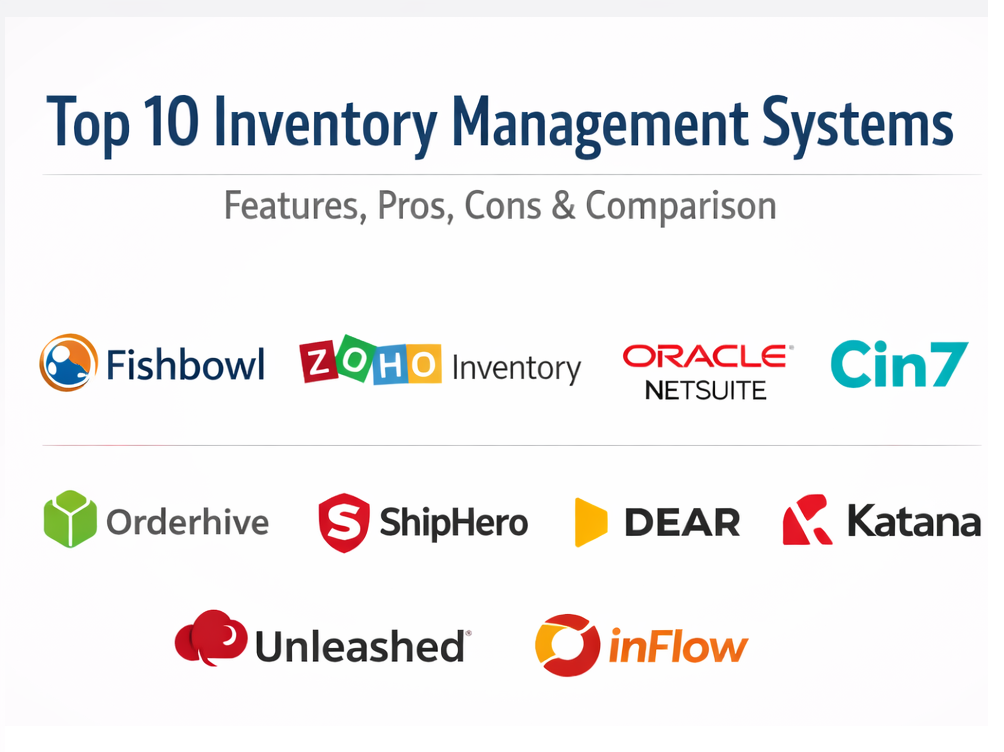
Introduction
An Inventory Management System (IMS) is the foundational technology that allows businesses to track goods throughout the entire supply chain. In plain English, it is the digital ledger that monitors stock levels, orders, sales, and deliveries. By providing a clear picture of what is in stock, what is running low, and what is overstocked, an IMS ensures that a business can meet customer demand without tying up excessive capital in unused inventory.
In the current landscape, effective inventory management is a critical requirement for maintaining profitability. As global supply chains face increasing complexity, businesses must move away from manual tracking to avoid human error and stockouts. A robust IMS prevents the financial loss associated with dead stock, optimizes warehouse space, and provides the data necessary for accurate demand forecasting.
Real-world use cases:
- Stock Optimization: Automatically identifying slow-moving items to trigger promotions before the stock becomes obsolete.
- Multi-Warehouse Coordination: Synchronizing stock levels across various geographical locations to fulfill orders from the nearest point.
- Raw Material Tracking: Managing components and assemblies for manufacturers to ensure production lines never stop due to missing parts.
- Inventory Auditing: Conducting digital cycle counts that reconcile physical stock with digital records without pausing business operations.
What buyers should evaluate:
- Real-time Tracking: Does the system update instantly across all sales channels?
- Barcoding and Tagging: Does it support hardware for rapid scanning and digital identification?
- Demand Forecasting: Can it predict future stock needs based on historical sales patterns?
- Vendor Management: Does it track supplier performance and automate purchase orders?
- Mobile Accessibility: Can staff manage inventory on the warehouse floor via handheld devices?
- Reporting Accuracy: Does it provide deep insights into inventory turnover and carrying costs?
- Scalability: Can the system grow as the number of SKUs and locations increases?
- Security Measures: Does it offer robust access controls to prevent inventory shrinkage and data breaches?
Best for: Wholesale distributors, large-scale retailers, manufacturers, and growing e-commerce brands that handle physical products across multiple locations.
Not ideal for: Service-based businesses or digital product sellers who do not maintain physical stock, where a simple project management tool would be more appropriate.
Key Trends in Inventory Management Systems
- AI-Powered Demand Sensing: Systems now use machine learning to analyze external factors like market trends and consumer behavior to suggest stock adjustments.
- Internet of Things (IoT) Integration: Using connected sensors and smart shelving to provide literal real-time visibility into physical bin locations.
- Predictive Maintenance for Perishables: Specialized tracking for goods with expiration dates to ensure the first-in, first-out method is strictly followed.
- Automated Cycle Counting: Utilizing robotics and drones to perform stock counts in large warehouses with minimal human intervention.
- Unified Inventory Pools: Moving toward a model where store stock and warehouse stock are viewed as a single pool for any fulfillment type.
- Cloud-Native Resilience: A shift toward platforms that offer high availability and data redundancy to prevent system downtime during peak periods.
- Eco-Friendly Stocking: Tools that help reduce waste by optimizing order quantities and reducing the carbon footprint of returns.
- Blockchain for Provenance: Integrating distributed ledger technology to verify the origin and movement of high-value or regulated goods.
How We Selected These Tools (Methodology)
The selection of these top inventory management tools was based on a rigorous evaluation of the current technological landscape.
- Market Presence: Priority was given to platforms with significant industry mindshare and proven stability.
- Feature Breadth: Evaluation was based on the presence of core pillars like stock tracking, order management, and reporting.
- Reliability: We looked for platforms with high uptime records and the ability to process high transaction volumes.
- Security Standards: Preference was given to tools with documented security protocols and data encryption.
- Connectivity: The availability of robust APIs and the strength of the integration ecosystem were major factors.
- Versatility: We ensured a mix of tools that cater to different industries, including retail, manufacturing, and wholesale.
- Innovation Support: Tools that have proactively integrated advanced analytics and automation were prioritized.
Top 10 Inventory Management Systems Tools
1.Fishbowl Inventory
Fishbowl is a leading inventory management solution specifically designed for businesses that require deep integration with accounting platforms and manufacturing workflows.
Key Features
- Manufacturing Tools: Advanced support for work orders, bills of materials, and production stages.
- Asset Tracking: Detailed monitoring of equipment and tools alongside sellable inventory.
- Barcode Integration: Full compatibility with scanning hardware for rapid receiving and picking.
- Multi-Location Support: Centralized management of stock across several warehouses or storefronts.
- Automated Reordering: Logic that triggers purchase orders when stock hits a pre-defined threshold.
Pros
- Exceptional depth for businesses with complex manufacturing needs.
- Seamless synchronization with popular financial software.
Cons
- The setup process can be complex and requires dedicated time for training.
- The interface can feel technical for users used to modern consumer apps.
Platforms / Deployment
- Web / Windows / Linux
- Cloud / Self-hosted
Security & Compliance
- MFA, RBAC, Audit trails.
- Not publicly stated.
Integrations & Ecosystem
Fishbowl is known for its ability to act as the inventory hub for a best-of-breed tech stack.
- Leading Accounting Software.
- Popular E-commerce Platforms.
- Major Shipping Carriers.
Support & Community
Offers a range of support options including live training, a detailed knowledge base, and a dedicated support team.
2.Zoho Inventory
Zoho Inventory is a cloud-native platform that helps growing businesses manage their sales and stock across multiple channels.
Key Features
- Multi-Channel Selling: Syncs inventory across marketplaces like Amazon, eBay, and Etsy automatically.
- Order Management: Tracks every stage of the order from packaging to final delivery.
- Shipping Integrations: Real-time shipping rates and label generation for major carriers.
- Serial and Batch Tracking: Detailed tracking of individual items or groups for warranty and expiration management.
- Mobile App: Fully functional mobile version for managing stock on the go.
Pros
- Highly affordable and easy to set up for smaller businesses.
- Part of a wider suite of business tools that work together natively.
Cons
- Some advanced reporting features require a higher-tier subscription.
- May hit performance limits for extremely high-volume enterprise operations.
Platforms / Deployment
- Web / iOS / Android
- Cloud
Security & Compliance
- SSO/SAML, MFA, Encryption at rest.
- SOC 2, ISO 27001, GDPR.
Integrations & Ecosystem
Integrates seamlessly with the broader product family and various third-party sales channels.
- Native CRM and Books connection.
- Leading Payment Gateways.
- Global Marketplaces.
Support & Community
Comprehensive online documentation, user forums, and 24/7 email support are available.
3.Oracle NetSuite (Inventory)
NetSuite offers an enterprise-grade inventory solution that is fully integrated into its broader cloud ERP platform.
Key Features
- Demand Planning: Uses historical data and trends to predict future inventory requirements.
- Traceability: Full lot and serial tracking from the supplier through to the end customer.
- Inventory Visualization: Real-time dashboards showing stock status across the entire global network.
- Warehouse Management: Integrated tools for optimizing picking paths and storage bins.
- Cycle Counting: Automated logic for scheduling and conducting stock audits.
Pros
- Unmatched scalability for global companies with thousands of SKUs.
- All-in-one platform eliminates the need for third-party integrations.
Cons
- Significant cost and time required for implementation.
- Requires specialized staff or consultants to manage and customize.
Platforms / Deployment
- Web / iOS / Android
- Cloud
Security & Compliance
- MFA, SSO, Audit logs, RBAC.
- SOC 1, SOC 2, ISO 27001, PCI DSS.
Integrations & Ecosystem
Has its own massive marketplace for extending functionality into any business area.
- Global Logistics Providers.
- Enterprise E-commerce Engines.
- Specialized Industry Add-ons.
Support & Community
Enterprise-level support with dedicated account management and a massive global user base.
4.Cin7
Cin7 is an inventory and supply chain platform that specializes in connecting every part of a modern retail business.
Key Features
- Built-in EDI: Native Electronic Data Interchange for communicating with big-box retailers.
- Direct 3PL Integration: Connects directly to third-party logistics providers for seamless fulfillment.
- POS Integration: Bridges the gap between physical retail sales and online inventory.
- Automated Workflow: Rules-based engine for routing orders and managing stock transfers.
- B2B E-commerce: Allows wholesalers to create private portals for their business customers.
Pros
- Excellent for brands that sell both to consumers and large retail chains.
- Very strong automation capabilities for complex supply chains.
Cons
- The onboarding process is rigorous and requires a dedicated implementation lead.
- Pricing can be higher than simple retail-focused tools.
Platforms / Deployment
- Web
- Cloud
Security & Compliance
- MFA, RBAC.
- Not publicly stated.
Integrations & Ecosystem
Specializes in connecting to the retail and wholesale world.
- Leading Marketplace Platforms.
- Major Accounting Software.
- Global 3PL Networks.
Support & Community
Provides structured onboarding and ongoing support via specialized regional teams.
5.Katana
Katana is a modern, visual inventory platform built specifically for manufacturers and makers who need to track raw materials and finished goods.
Key Features
- Live Inventory Management: Real-time view of raw materials, sub-assemblies, and final products.
- Master Planning: Visual scheduling for production runs and resource allocation.
- Contract Manufacturing: Tools for managing inventory held at external production sites.
- Shop Floor App: Digital tools for workers on the factory floor to update progress.
- Costing Engine: Automatic calculation of manufacturing costs based on materials and labor.
Pros
- The most intuitive interface in the manufacturing inventory space.
- Very fast to implement compared to traditional manufacturing software.
Cons
- Lacks some of the deep financial features found in full ERPs.
- Not designed for pure retail businesses without a manufacturing element.
Platforms / Deployment
- Web / iOS / Android
- Cloud
Security & Compliance
- MFA, SSL Encryption.
- SOC 2.
Integrations & Ecosystem
Designed to work with the modern stack of e-commerce and accounting tools.
- Shopify, WooCommerce, BigCommerce.
- QuickBooks, Xero.
- Hubspot, Salesforce.
Support & Community
Known for a high level of customer service and very clear, visual documentation.
6.Orderhive
Orderhive is a multi-channel inventory and order management solution focused on speed and automation for e-commerce.
Key Features
- Instant Sync: High-speed inventory updates across many sales channels.
- Shipping Automation: Automatically selects carriers and prints labels based on rules.
- Purchase Order Management: Simple tools for managing suppliers and incoming stock.
- Returns Management: Centralized portal for handling customer returns and exchanges.
- Analytics Dashboard: Real-time reporting on inventory value and turnover rates.
Pros
- Very fast sync speeds which are critical for high-volume sellers.
- Highly customizable automation rules for almost any workflow.
Cons
- Support response times can be inconsistent during peak periods.
- The feature set can feel cluttered for very simple businesses.
Platforms / Deployment
- Web
- Cloud
Security & Compliance
- MFA, RBAC.
- Not publicly stated.
Integrations & Ecosystem
Offers a massive library of connectors for the e-commerce world.
- 300+ Marketplace integrations.
- Major Shipping carriers globally.
- Leading Payment Gateways.
Support & Community
Online help center and email support, with dedicated managers for higher tiers.
7.ShipHero
ShipHero is a specialized warehouse and inventory management system designed for high-growth e-commerce brands and 3PLs.
Key Features
- Mobile Warehouse Picking: Uses specialized mobile apps to guide workers through the fastest picking routes.
- Replenishment Logic: Automatically suggests when to move stock from bulk storage to picking bins.
- Multi-Warehouse Orchestration: Intelligent routing to ship from the warehouse closest to the customer.
- Post-Purchase Tools: Built-in customer portal for tracking and returns.
- Batch Picking: High-efficiency tools for processing hundreds of orders simultaneously.
Pros
- Industry-leading efficiency for physical warehouse operations.
- Very strong at preventing picking and packing errors.
Cons
- Primarily focused on shipping and warehousing; less on manufacturing.
- Requires a certain volume of orders to justify the cost.
Platforms / Deployment
- Web / iOS
- Cloud
Security & Compliance
- MFA, RBAC, Audit logs.
- Not publicly stated.
Integrations & Ecosystem
Built for the e-commerce ecosystem.
- Shopify Plus, BigCommerce.
- Major 3PL and Shipping partners.
- Return management platforms.
Support & Community
Provides extensive training videos and a dedicated implementation specialist for new clients.
8.Dear Systems (7shifts)
Dear Systems offers a cloud-based inventory management system that provides enterprise-level features for mid-sized businesses.
Key Features
- Advanced Manufacturing: Comprehensive support for complex production and assembly.
- Warehouse Management: Support for directed picking and multi-bin locations.
- Financial Integration: Deep, two-way sync with leading cloud accounting tools.
- Sales Portals: Specialized interfaces for B2B sales teams and wholesalers.
- Consolidated Reporting: Powerful data visualization across all business branches.
Pros
- Offers features usually only found in much more expensive ERPs.
- Very robust for businesses that have both retail and manufacturing needs.
Cons
- The depth of the tool means a steep learning curve for new users.
- Pricing has increased as the product has matured.
Platforms / Deployment
- Web
- Cloud
Security & Compliance
- MFA, SSL, RBAC.
- SOC 2.
Integrations & Ecosystem
Focuses on creating a unified business backend.
- Xero, QuickBooks.
- Shopify, Amazon, eBay.
- ShipStation, Starshipit.
Support & Community
Extensive online documentation and a responsive ticketing system.
9.Unleashed
Unleashed is an inventory platform that focuses on providing powerful, real-time stock control for manufacturers and wholesalers.
Key Features
- Production Management: Simple and effective tools for assembly and kitting.
- Batch and Serial Tracking: Essential for food, beverage, and electronics industries.
- Mobile Sales App: Allows sales teams to check stock and place orders in the field.
- Advanced Reporting: Focused on product margins and supplier performance.
- Inventory Accuracy: High-precision tracking of stock movements and adjustments.
Pros
- Excellent for businesses that need precise control over margins.
- Very strong in the food and beverage industry due to batch tracking.
Cons
- Lacks a native POS system (requires an integration).
- Can be less flexible for pure e-commerce brands compared to Orderhive.
Platforms / Deployment
- Web / iOS / Android
- Cloud
Security & Compliance
- MFA, Encryption, RBAC.
- ISO 27001.
Integrations & Ecosystem
Part of a wider ecosystem of business productivity tools.
- Xero, QuickBooks.
- Shopify, Amazon.
- Salesforce, Prospect CRM.
Support & Community
Offers a range of training through its own academy and provides proactive customer support.
10.Inflow Inventory
Inflow is a user-friendly inventory system that balances power and simplicity, making it a favorite for small to mid-sized teams.
Key Features
- Barcoding: Easy setup for printing labels and using scanners.
- Purchase Orders: Streamlined process for buying stock and managing vendors.
- Customer Portals: Simple B2B showrooms for wholesale clients to order online.
- Product Variations: Easily manage different sizes, colors, and types of a single item.
- Cost Tracking: Monitors the landing cost of items including shipping and duties.
Pros
- One of the easiest platforms to learn and use daily.
- Very flexible and works well across many different industries.
Cons
- May lack some of the deepest manufacturing features found in Katana or Fishbowl.
- Reporting is good but not as customizable as enterprise platforms.
Platforms / Deployment
- Web / Windows / iOS / Android
- Cloud
Security & Compliance
- MFA, RBAC.
- Not publicly stated.
Integrations & Ecosystem
Integrates with the most common business software.
- Shopify, Amazon, WooCommerce.
- QuickBooks, Xero.
- ShipStation.
Support & Community
Well-regarded for its responsive customer support team and clear “how-to” guides.
Comparison Table (Top 10)
| Tool Name | Best For | Platform(s) Supported | Deployment | Standout Feature | Public Rating |
|---|---|---|---|---|---|
| Fishbowl | Manufacturing | Web/Win | Cloud/Self | Advanced Work Orders | N/A |
| Zoho Inventory | SMB Growth | Web/Mobile | Cloud | Ecosystem Synergy | N/A |
| NetSuite | Global Enterprise | Web/Mobile | Cloud | Enterprise Demand Planning | N/A |
| Cin7 | Retail/Wholesale | Web | Cloud | Native EDI Connectors | N/A |
| Katana | Modern Makers | Web/Mobile | Cloud | Visual Master Planning | N/A |
| Orderhive | High-speed E-comm | Web | Cloud | Automation Rules | N/A |
| ShipHero | Warehouse Efficiency | Web/iOS | Cloud | Directed Mobile Picking | N/A |
| Dear Systems | Mid-market ERP | Web | Cloud | Deep Accounting Sync | N/A |
| Unleashed | Wholesalers | Web/Mobile | Cloud | Batch & Serial Control | N/A |
| Inflow | Ease of Use | Web/Win/Mobile | Cloud | B2B Sales Portals | N/A |
Evaluation & Scoring of Inventory Management Systems
| Tool Name | Core (25%) | Ease (15%) | Integrations (15%) | Security (10%) | Performance (10%) | Support (10%) | Value (15%) | Weighted Total |
|---|---|---|---|---|---|---|---|---|
| Fishbowl | 10 | 4 | 8 | 8 | 9 | 8 | 7 | 7.85 |
| Zoho Inventory | 7 | 9 | 10 | 9 | 8 | 9 | 10 | 8.55 |
| NetSuite | 10 | 3 | 9 | 10 | 10 | 8 | 5 | 7.75 |
| Cin7 | 9 | 6 | 9 | 8 | 9 | 8 | 7 | 7.85 |
| Katana | 8 | 10 | 9 | 8 | 9 | 10 | 8 | 8.85 |
| Orderhive | 8 | 7 | 10 | 7 | 10 | 7 | 9 | 8.20 |
| ShipHero | 9 | 7 | 8 | 8 | 10 | 8 | 7 | 8.05 |
| Dear Systems | 9 | 5 | 9 | 8 | 9 | 8 | 8 | 7.90 |
| Unleashed | 8 | 8 | 8 | 9 | 8 | 9 | 8 | 8.15 |
| Inflow | 7 | 10 | 8 | 7 | 8 | 9 | 9 | 8.15 |
How to interpret these scores:
- Weighted Total: A comparative measure of overall suitability for modern business.
- High Core + Performance: Ideal for complex manufacturing and massive warehouses.
- High Ease + Support: Perfect for businesses that need to get started quickly without a large IT team.
- Scoring Logic: Values are assigned based on how well the tool meets industry expectations for its target segment.
Which Inventory Management Systems Tool Is Right for You?
Solo / Freelancer
If you are managing a small amount of physical stock alone, you should prioritize Zoho Inventory or Inflow. These tools are affordable and do not require days of training to understand. They provide just enough power to keep your stock accurate without the complexity of an enterprise system.
SMB
For small to medium businesses that are scaling fast, Katana (if you make things) or Orderhive (if you sell them) are the best bets. They offer high-speed syncing and automation that allows a small team to act like a much larger operation.
Mid-Market
Businesses with multiple warehouses or complex international supply chains should look at Dear Systems or Cin7. These platforms bridge the gap between simple inventory apps and massive ERPs, providing enterprise-level logic at a fraction of the cost.
Enterprise
For global organizations, NetSuite is the industry standard. It provides the security, reporting, and global visibility that a multinational company needs to maintain compliance and profitability across different regions and languages.
Budget vs Premium
- Budget: Zoho Inventory offers a free tier and low-cost entry points that are hard to beat.
- Premium: NetSuite and ShipHero represent a higher investment but deliver unmatched operational efficiency.
Feature Depth vs Ease of Use
- Feature Depth: Fishbowl and Dear Systems provide the most granular control over inventory and manufacturing stages.
- Ease of Use: Katana and Inflow are designed with modern UI principles, making them very accessible for non-technical staff.
Integrations & Scalability
If your business strategy relies on using specialized software for every department, Orderhive and Fluent Commerce (from our previous category) offer the best API-first connectivity.
Security & Compliance Needs
Companies in the food, medical, or chemical industries must choose tools with robust batch and serial tracking, such as Unleashed or Fishbowl, to ensure they can handle a product recall or audit perfectly.
Frequently Asked Questions (FAQs)
What is the difference between inventory management and warehouse management?
Inventory management focuses on the levels and values of stock across the entire business. Warehouse management (WMS) focuses specifically on the physical movement and optimization of stock inside a specific building.
How do I know when to switch from a spreadsheet to an IMS?
If you are spending more than 5 hours a week updating records, or if you have experienced more than two stockouts or overselling incidents in a month, it is time to move to an automated system.
Can these tools handle multiple currencies?
Yes, most enterprise and mid-market tools like NetSuite, Cin7, and Dear Systems natively handle multiple currencies and localized tax rates for international sales.
Is barcoding necessary for a small business?
While not strictly necessary at the start, barcoding significantly reduces human error. Most modern IMS tools allow you to start with simple smartphone-based scanning before investing in professional hardware.
How does an IMS help with taxes?
An IMS provides accurate data on the value of your inventory (asset) and the cost of goods sold (expense). This data is essential for accurate financial reporting and tax calculations at year-end.
What is “dead stock”?
Dead stock refers to items that haven’t sold for a long period and are unlikely to sell in the future. An IMS identifies these items so you can liquidate them and free up warehouse space.
Can I manage raw materials and finished goods in the same system?
Yes, tools designed for manufacturing like Katana and Fishbowl are specifically built to track the conversion of raw materials into finished products via work orders.
Does an IMS help with supplier relationships?
Absolutely. By tracking lead times and quality issues, an IMS gives you the data needed to negotiate better terms with suppliers or find more reliable alternatives.
What is a “safety stock” level?
Safety stock is the “buffer” inventory you keep on hand to prevent stockouts caused by unexpected demand spikes or supplier delays. An IMS automates the calculation of these levels.
Is cloud-based inventory software safe?
Modern cloud providers use bank-level encryption and regular security audits. For most businesses, a cloud-based IMS is more secure than an on-premise system that might not be regularly patched.
Conclusion
Selecting an Inventory Management System is one of the most important decisions for a product-based business. The right tool acts as the single source of truth for your physical assets, allowing you to scale without the chaos of manual tracking. Whether you are a small maker using Katana or a global distributor on NetSuite, the goal is the same: visibility, accuracy, and efficiency.
To move forward, we suggest choosing two tools from this list that align with your business model, preparing a list of your most common “inventory headaches,” and running a pilot with your actual SKU data to see which interface fits your team best.

Best Cardiac Hospitals Near You
Discover top heart hospitals, cardiology centers & cardiac care services by city.
Advanced Heart Care • Trusted Hospitals • Expert Teams
View Best Hospitals