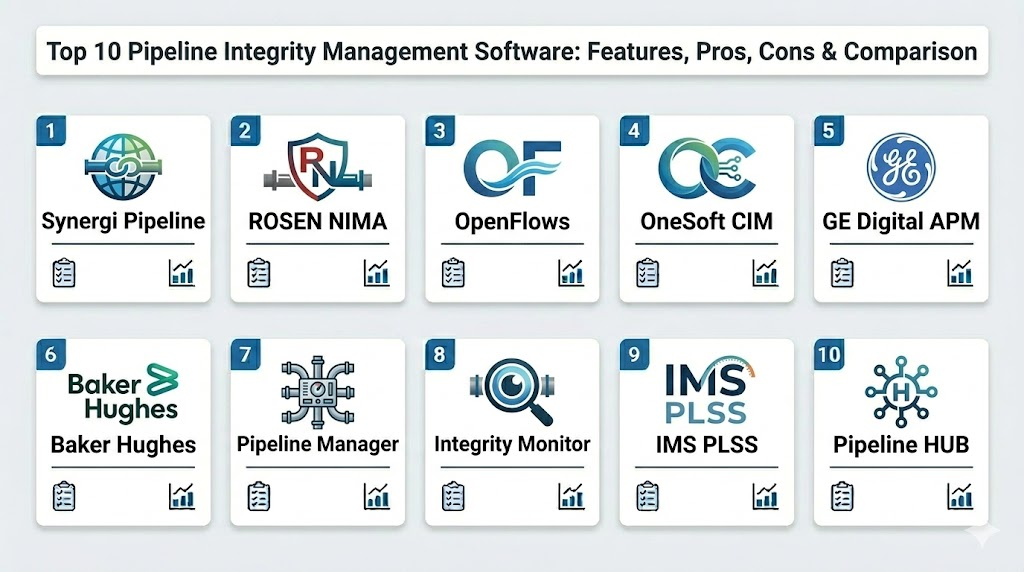
Introduction
Pipeline Integrity Management Software represents a sophisticated class of industrial solutions designed to ensure the safety, reliability, and structural soundness of pipeline networks. These platforms serve as a centralized intelligence hub, integrating vast streams of data from inline inspections, corrosive surveys, and real-time sensor feeds. By applying advanced engineering algorithms and risk-based methodologies, these tools allow operators to predict structural failures before they occur. In the current industrial landscape, maintaining the physical health of midstream assets is no longer just a maintenance task; it is a critical requirement for environmental protection, public safety, and regulatory adherence.
Modern pipeline management has moved beyond simple spreadsheet tracking into a world of digital twins and predictive analytics. Today’s software environments must handle immense datasets—often millions of data points from “intelligent pigs”—and translate them into actionable maintenance schedules. The focus is on moving from reactive “fix-on-failure” models to proactive, risk-based inspection strategies. This transition is essential for managing aging infrastructure while meeting the high-stakes transparency requirements of modern energy and utility markets.
Best for: Pipeline operators, integrity engineers, and compliance officers in the oil, gas, water, and chemical industries who manage extensive transmission or distribution networks and require high-precision risk modeling.
Not ideal for: Small-scale local plumbing services, residential water management, or organizations with very short, simple piping systems that do not require complex regulatory reporting or inline inspection data analysis.
Key Trends in Pipeline Integrity Management Software
- Machine Learning for Anomaly Classification: Advanced algorithms are now used to automatically categorize defects from inspection data, drastically reducing the time spent on manual data cleansing.
- Digital Twin Integration: The creation of 3D virtual replicas of pipeline networks allows for real-time simulation of pressure changes and environmental impacts on structural integrity.
- Universal Data Standards: A significant industry push toward standardized data formats ensures that information from different inspection vendors can be seamlessly integrated into a single platform.
- Probabilistic Risk Modeling: Moving beyond simple “high/low” ranking, software now uses complex probability math to predict exactly when a pipeline segment is likely to reach its limit.
- Cloud-Native Collaboration: Modern suites allow field technicians and office-based engineers to share live “dig sheets” and inspection results through secure cloud portals.
- Geohazard Monitoring: Integration of satellite and seismic data to track how land movement, erosion, and climate events are affecting buried pipeline assets.
- Predictive Corrosion Growth: Utilizing historical data to model how fast a specific metal-loss area will expand based on fluid composition and soil conditions.
- Regulatory Automation: Built-in reporting modules that automatically format data for major national and international safety agencies.
How We Selected These Tools
- Engineering Depth: We prioritized tools that offer high-level engineering calculations, such as Fitness-for-Service and Burst Pressure analysis.
- Data Integration Capabilities: A primary focus was placed on software that can handle “vendor-neutral” data from various inline inspection providers.
- Regulatory Alignment: Each tool was evaluated on its ability to support major industry standards such as API 1160 and ASME B31.8S.
- Scalability & Performance: We looked for platforms capable of managing thousands of miles of pipeline data without performance degradation.
- Risk-Based Methodology: Priority was given to software that effectively implements Risk-Based Inspection (RBI) cycles.
- Industry Mindshare: The selection includes the most trusted names used by major global energy companies and infrastructure operators.
Top 10 Pipeline Integrity Management Software Tools
1. DNV Synergi Pipeline
An enterprise-level solution that provides a comprehensive “Plan-Do-Check-Act” cycle for pipeline assets. It is widely recognized for its robust risk assessment models and ability to handle both gathering and transmission networks.
Key Features
- Comprehensive Inline Inspection data management and automated alignment.
- Whitebox risk modeling that allows engineers to see exactly how scores are calculated.
- High Consequence Area (HCA) and class location assessment modules.
- Built-in “What-If” scenarios to determine the most effective repair strategies.
- Full support for managing corrosion, cracks, and geohazard threats in one spot.
Pros
- Exceptionally transparent risk models that are easy to audit.
- Supports a wide range of assets from offshore to local distribution.
Cons
- The high level of customization can lead to a longer initial setup time.
- Pricing is geared toward large-scale enterprise operations.
Platforms / Deployment
Windows / Web
Cloud / On-premises
Security & Compliance
ISO/IEC 27001 certified development with full audit trails.
Not publicly stated.
Integrations & Ecosystem
Deeply integrated with Esri ArcGIS for spatial analysis and provides flexible APIs for connecting to ERP systems like SAP.
Support & Community
Professional support is provided through a global network of integrity experts, supported by the DNV Academy for technical training.
2. ROSEN NIMA
Developed by a leading inspection service provider, this platform excels in transforming raw sensor data into actionable integrity knowledge through a highly modular and flexible framework.
Key Features
- Modular architecture that allows users to build custom integrity workflows.
- Advanced algorithms for crack detection, sizing, and growth prediction.
- Direct integration with high-resolution inline inspection hardware data.
- Automated defect assessment based on various international standards.
- Interactive dashboards for visual data alignment and threat prioritization.
Pros
- Seamless workflow from physical inspection to digital management.
- Excellent handling of complex geometric and material anomalies.
Cons
- Can feel proprietary if you are not using their hardware services.
- Technical complexity requires specialized engineering knowledge to fully utilize.
Platforms / Deployment
Windows / Web
Cloud / Hybrid
Security & Compliance
Secure data handling protocols aligned with international oil and gas standards.
Not publicly stated.
Integrations & Ecosystem
Strongest integration with ROSEN’s own sensor technologies but maintains open standards for third-party data imports.
Support & Community
Backed by the ROSEN Group’s global engineering consulting services and specialized technical forums.
3. Bentley OpenFlows Pipeline
Combining hydraulic modeling with integrity management, this tool is ideal for operators who need to understand how operational flow dynamics impact structural health.
Key Features
- Integrated hydraulic simulation for both steady-state and transient analysis.
- Automated leak detection and localization through pressure wave analysis.
- GIS-based visualization for spatial tracking of integrity threats.
- Condition-based risk assessment linked to real-time operational data.
- Reporting tools optimized for regulatory compliance and safety audits.
Pros
- Unique ability to link hydraulic stress directly to integrity risks.
- Exceptional GIS mapping and spatial intelligence capabilities.
Cons
- Primarily focused on flow-related integrity rather than organic sculpting of data.
- Requires a solid understanding of both hydraulics and integrity management.
Platforms / Deployment
Windows
Local / Hybrid
Security & Compliance
Standard Bentley enterprise security and identity management.
Not publicly stated.
Integrations & Ecosystem
Part of the broader Bentley infrastructure suite, connecting easily to project management and CAD environments.
Support & Community
Comprehensive support through the Bentley Communities portal and extensive professional documentation.
4. OneSoft CIM
A cloud-native solution that leverages big data and machine learning to provide predictive insights into pipeline health, specifically focusing on corrosion growth.
Key Features
- Machine learning algorithms for predictive corrosion and crack growth analysis.
- Automated data alignment that correlates multiple inspection runs.
- Web-based interface accessible from any location without local installs.
- Customizable “Dig Planning” tools to optimize field maintenance costs.
- Real-time KPIs and executive dashboards for enterprise-wide visibility.
Pros
- Highly efficient at aligning years of historical data to find trends.
- Modern, intuitive user interface that reduces training time.
Cons
- Focuses heavily on data analytics rather than deep physical modeling.
- Requires a clean historical dataset to get the most out of the machine learning.
Platforms / Deployment
Web
Cloud (SaaS)
Security & Compliance
SOC 2 compliant with modern cloud encryption and MFA support.
Not publicly stated.
Integrations & Ecosystem
Designed to be an “overlay” that connects to various data repositories and GIS platforms via secure APIs.
Support & Community
Focused customer success teams and a growing user base in North American energy markets.
5. GE Digital APM (formerly Meridium)
A broad Asset Performance Management platform that treats pipelines as part of a total industrial asset lifecycle, focusing on reliability and maintenance optimization.
Key Features
- Integrated Risk-Based Inspection (RBI) modules aligned with API 580/581.
- Root Cause Analysis (RCA) tools to investigate unexpected failures.
- Comprehensive health monitoring that tracks mechanical and structural data.
- Work order integration to move from “insight” to “action” in the field.
- Advanced predictive analytics for multi-asset industrial networks.
Pros
- Excellent for companies managing pipelines alongside refineries or plants.
- Strongest link between integrity data and maintenance execution.
Cons
- Can be overly complex for organizations only managing pipelines.
- Interface is geared more toward reliability engineers than GIS specialists.
Platforms / Deployment
Windows / Web / Mobile
Cloud / Hybrid
Security & Compliance
Enterprise-grade security with support for SSO, SAML, and global data privacy.
Not publicly stated.
Integrations & Ecosystem
Native integration with GE’s industrial internet platform and major ERP systems like SAP.
Support & Community
Extensive global support network and deep industrial knowledge base.
6. Baker Hughes Pipeline Integrity
This solution offers an integrated approach by combining decades of inspection expertise with a software platform that focuses on data visualization and threat mitigation.
Key Features
- Advanced ILI data analysis with proprietary defect sizing algorithms.
- Comprehensive threat assessment for corrosion, cracking, and geohazards.
- Automated reporting for regional and international safety regulators.
- Mobile tools for field verification and data collection during repairs.
- Integrity planning tools that support long-term capital investment decisions.
Pros
- Deep expertise in the “physics” of pipeline defects built into the code.
- Reliable performance for high-stakes, high-pressure networks.
Cons
- Software updates can be slower compared to agile cloud-native startups.
- Best utilized when paired with Baker Hughes inspection services.
Platforms / Deployment
Windows
Local / Hybrid
Security & Compliance
Standard corporate security protocols for sensitive energy data.
Not publicly stated.
Integrations & Ecosystem
Connects to standard GIS systems and provides data exports for various engineering applications.
Support & Community
Professional engineering support available 24/7 for critical operations.
7. Emerson Pipeline Manager
Focused on operational integrity, this software excels in leak detection and real-time monitoring of pipeline conditions to prevent environmental incidents.
Key Features
- High-accuracy leak detection using multiple mathematical models.
- Batch tracking and composition monitoring for multi-product lines.
- Transient modeling to simulate the impact of rapid valve closures.
- Predictive monitoring for “look-ahead” operational safety.
- Automated compliance tracking for environmental reporting requirements.
Pros
- Unrivaled for real-time operational safety and leak localization.
- Excellent at managing the complexities of multi-product transport.
Cons
- Less focus on long-term structural aging like corrosion growth.
- Requires deep integration with SCADA systems to be effective.
Platforms / Deployment
Windows / Linux
Local / Hybrid
Security & Compliance
Industrial control system security standards (IEC 62443).
Not publicly stated.
Integrations & Ecosystem
Part of the Emerson automation suite, designed to work seamlessly with field sensors and controllers.
Support & Community
World-class industrial support with a focus on 24/7 operational continuity.
8. AVEVA Pipeline Integrity Monitor
A data-heavy platform that specializes in aggregating information from across the enterprise to provide a “single pane of glass” for integrity status.
Key Features
- Unified data management for all inspection, GIS, and operational data.
- Interactive dashboards that highlight high-risk segments in real-time.
- Comprehensive audit trail for every data point and assessment decision.
- Integration of environmental and social consequence data into risk scores.
- Automated generation of compliance documentation and annual reports.
Pros
- Strongest platform for breaking down data silos in large corporations.
- Highly visual and easy for executive leadership to understand.
Cons
- Requires a robust data infrastructure (like the PI System) to work effectively.
- Pricing can be complex based on the number of data tags and modules.
Platforms / Deployment
Web / Windows
Cloud / Hybrid
Security & Compliance
ISO 27001 certified development and enterprise identity management.
Not publicly stated.
Integrations & Ecosystem
Deeply integrated with the AVEVA PI System and various engineering design suites.
Support & Community
Extensive online resources and a global community of industrial software users.
9. Cenosco IMS PLSS
A specialized module within a broader integrity suite that focuses on the specific challenges of subsea and buried pipeline systems.
Key Features
- Dedicated corrosion management framework for diverse soil and water conditions.
- Fit-for-service calculations based on multiple international codes.
- Anomaly management with automated “traffic light” prioritization.
- Offline mobile functionality for field inspections in remote areas.
- Integration with cathodic protection monitoring systems.
Pros
- Excellent for managing pipelines in harsh or underwater environments.
- Streamlined workflows that guide engineers through standard assessments.
Cons
- The interface can feel more like a database than a visual modeling tool.
- Less emphasis on real-time hydraulic or transient simulations.
Platforms / Deployment
Web / Mobile
Cloud / On-premises
Security & Compliance
Modern encryption standards and secure role-based access control.
Not publicly stated.
Integrations & Ecosystem
Strong links to ERP systems and maintenance modules to ensure repairs are scheduled.
Support & Community
Dedicated customer success managers and technical support for specialized assets.
10. Cenozon Pipeline HUB
A user-friendly, cloud-based platform that focuses on simplifying regulatory compliance and risk management for mid-sized operators.
Key Features
- Automated HCA and consequence analysis for regulatory submissions.
- Intuitive GIS interface that requires minimal specialized training.
- Risk ranking based on customizable weighting and industry best practices.
- Document management that links inspection reports to specific segments.
- Cloud-based collaboration for teams working across multiple locations.
Pros
- One of the easiest platforms to learn and deploy quickly.
- Excellent value for operators looking to modernize their compliance.
Cons
- Lacks some of the “heavy” engineering depth of enterprise suites like Synergi.
- Less focus on automated machine learning for defect classification.
Platforms / Deployment
Web
Cloud (SaaS)
Security & Compliance
Standard cloud security protocols with regular data backups.
Not publicly stated.
Integrations & Ecosystem
Focuses on simple data imports and connectivity to common GIS formats.
Support & Community
Highly responsive support team with deep knowledge of North American regulatory environments.
Comparison Table
| Tool Name | Best For | Platform(s) Supported | Deployment | Standout Feature | Public Rating |
| 1. Synergi Pipeline | Enterprise Risk | Windows, Web | Hybrid | Whitebox Risk Models | N/A |
| 2. ROSEN NIMA | ILI Data Analysis | Windows, Web | Hybrid | Modular Workflows | N/A |
| 3. OpenFlows | Hydraulic Integrity | Windows | Local | Transient Analysis | N/A |
| 4. OneSoft CIM | Predictive Analytics | Web | Cloud | ML Corrosion Growth | N/A |
| 5. GE Digital APM | Total Reliability | Windows, Web | Hybrid | Maintenance Linkage | N/A |
| 6. Baker Hughes | High-Stake Networks | Windows | Local | Defect Sizing Math | N/A |
| 7. Pipeline Manager | Real-Time Leaks | Windows, Linux | Local | Transient Modeling | N/A |
| 8. Integrity Monitor | Data Aggregation | Windows, Web | Hybrid | Enterprise Hub | N/A |
| 9. IMS PLSS | Subsea Assets | Web, Mobile | Cloud | Corrosion Framework | N/A |
| 10. Pipeline HUB | Mid-Size Compliance | Web | Cloud | Ease of Deployment | N/A |
Evaluation & Scoring
| Tool Name | Core (25%) | Ease (15%) | Integrations (15%) | Security (10%) | Perf (10%) | Support (10%) | Value (15%) | Total |
| 1. Synergi Pipeline | 10 | 6 | 10 | 9 | 9 | 9 | 6 | 8.55 |
| 2. ROSEN NIMA | 10 | 5 | 8 | 8 | 9 | 8 | 7 | 7.90 |
| 3. OpenFlows | 8 | 7 | 8 | 8 | 9 | 8 | 7 | 7.75 |
| 4. OneSoft CIM | 8 | 9 | 9 | 9 | 8 | 8 | 9 | 8.55 |
| 5. GE Digital APM | 9 | 6 | 10 | 9 | 8 | 9 | 6 | 8.20 |
| 6. Baker Hughes | 10 | 6 | 8 | 8 | 9 | 9 | 6 | 8.05 |
| 7. Pipeline Manager | 9 | 5 | 9 | 9 | 10 | 9 | 6 | 8.15 |
| 8. Integrity Monitor | 8 | 8 | 10 | 9 | 9 | 8 | 7 | 8.15 |
| 9. IMS PLSS | 8 | 7 | 8 | 8 | 8 | 8 | 8 | 7.75 |
| 10. Pipeline HUB | 7 | 10 | 8 | 8 | 8 | 8 | 9 | 8.05 |
The scoring provided above represents a relative comparison of how each platform serves the diverse needs of the pipeline integrity market. A high total score usually indicates a tool that excels in modern data handling while maintaining a strong security posture. For example, Synergi Pipeline and OneSoft CIM lead the rankings because they offer a balanced mix of deep engineering transparency and modern cloud efficiency. In contrast, highly specialized tools like Pipeline Manager score slightly lower on “Total” because they focus intensely on a specific niche, like real-time leak detection, rather than general integrity management.
Which Pipeline Integrity Management Software Tool Is Right for You?
Solo / Freelancer
For independent integrity consultants, the priority is accessibility and ease of reporting. Cenozon Pipeline HUB or Blender (for visualization) often provides the quickest path to delivering professional reports without the overhead of an enterprise-wide server setup.
SMB
Small to medium-sized operators should prioritize Cenozon Pipeline HUB or OneSoft CIM. These tools offer a low barrier to entry and automate many of the complex regulatory calculations that would otherwise require a large dedicated engineering staff.
Mid-Market
Organizations in this category need to balance advanced features with budget. Cenosco IMS PLSS or AVEVA Pipeline Integrity Monitor are excellent choices, offering a scalable environment that grows with the number of pipeline miles managed.
Enterprise
For global energy majors, DNV Synergi Pipeline or GE Digital APM are the standard selections. These platforms provide the necessary audit trails, security certifications, and deep integrations with ERP systems that are required for large-scale, high-consequence operations.
Budget vs Premium
- Budget: Cenozon Pipeline HUB offers high value for straightforward compliance tasks.
- Premium: DNV Synergi Pipeline and ROSEN NIMA provide the deepest engineering toolsets at a professional price point.
Feature Depth vs Ease of Use
- Depth: Houdini-style logic in ROSEN NIMA and the transparency of Synergi Pipeline offer the most control.
- Ease of Use: OneSoft CIM and Pipeline HUB allow users to navigate their integrity data with a much shorter learning curve.
Integrations & Scalability
If your primary goal is to break down silos across a massive industrial organization, AVEVA and GE Digital offer the best integration into broader asset management ecosystems.
Security & Compliance Needs
For operators subject to intense federal scrutiny, DNV Synergi Pipeline and Emerson Pipeline Manager provide the most mature compliance reporting modules and industrial-grade security protocols.
Frequently Asked Questions (FAQs)
1. What is the primary goal of pipeline integrity software?
The main goal is to prevent leaks, ruptures, and environmental incidents by identifying structural threats through data analysis and risk-based inspection planning.
2. How does the software handle different types of inspection data?
Professional platforms use data alignment algorithms to overlay results from different inspection runs, allowing engineers to see exactly how a defect has grown over time.
3. Is real-time leak detection the same as integrity management?
No, leak detection is an operational task that monitors current flow, while integrity management is a long-term structural task focused on the physical health of the pipe.
4. What are High Consequence Areas (HCAs)?
HCAs are locations where a pipeline failure would have the most severe impact on human life or the environment, requiring more frequent and intense monitoring.
5. How long does it take to implement an enterprise integrity system?
Implementation can take anywhere from three months to over a year, depending on the volume of historical data that needs to be cleansed and migrated into the system.
6. Do these tools work for hydrogen or CO2 pipelines?
Yes, modern platforms are evolving to include material properties and risk models specifically designed for new energy products like hydrogen and carbon capture transport.
7. Can I use these tools on a mobile device in the field?
Most modern platforms offer web-based or native mobile apps that allow field technicians to access “dig sheets” and record repair data in real-time.
8. What is Fitness-for-Service (FFS) analysis?
It is a standardized engineering assessment used to determine if a pipeline with a known defect can continue to operate safely at its current pressure.
9. Why is GIS integration so important?
Pipelines are spatial assets. GIS integration allows engineers to visualize threats in relation to terrain, population centers, and environmental hazards like river crossings.
10. Do I need to be a programmer to use these tools?
No, these tools are designed for engineers and compliance officers, though a basic understanding of data logic and GIS will help you get the most out of the advanced features.
Conclusion
Navigating the complexities of pipeline integrity in the modern industrial era requires a shift from simple observation to proactive digital intelligence. The software landscape now offers a spectrum of solutions—from the predictive power of machine learning to the deep engineering transparency of risk-based modeling. Selecting the right platform depends on your network’s scale, the specific environmental threats you face, and your regulatory burden. By centralizing data and automating risk assessments, these tools empower engineers to make informed decisions that safeguard infrastructure, protect the environment, and ensure operational continuity for decades to come.

Best Cardiac Hospitals Near You
Discover top heart hospitals, cardiology centers & cardiac care services by city.
Advanced Heart Care • Trusted Hospitals • Expert Teams
View Best Hospitals