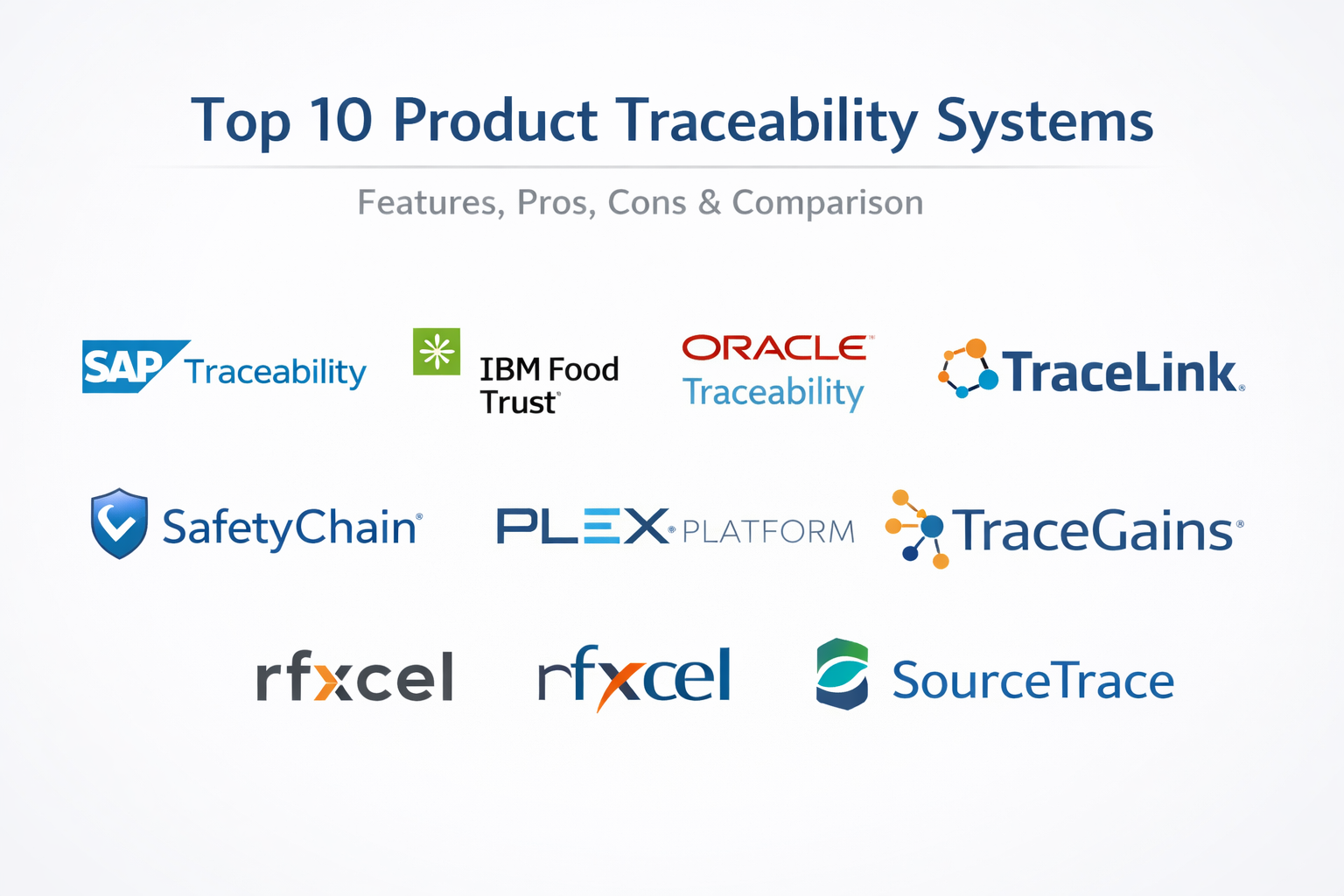
Introduction
Product traceability systems are advanced digital frameworks that allow businesses to track the history, application, and location of an item or its components throughout the entire supply chain. By utilizing a combination of identification technologies like RFID, barcodes, and blockchain, these systems create a digital thread that connects raw material sourcing to the final consumer. In today’s global market, where supply chains are increasingly fragmented, the ability to maintain a clear record of every touchpoint is essential for ensuring safety, proving authenticity, and meeting rigorous regulatory standards across industries.
Effective traceability has evolved from a simple inventory log into a sophisticated risk management and compliance engine. Modern systems provide end-to-end visibility that helps companies respond to crises with surgical precision, such as isolating a contaminated ingredient batch in seconds rather than days. Beyond risk mitigation, these platforms are now a cornerstone of sustainability initiatives, providing the verifiable data required to prove ethical sourcing and environmental stewardship. For organizations operating in highly regulated sectors, these tools are no longer optional—they are the foundation of operational integrity.
Best for: Large-scale manufacturers, food and beverage producers, pharmaceutical companies, and global logistics providers who must adhere to strict safety regulations and manage complex, multi-tier supplier networks.
Not ideal for: Small local retail shops with simple inventory needs, service-based businesses that do not handle physical goods, or companies with very low-volume, localized production where manual logs remain sufficient.
Key Trends in Product Traceability Systems
- Blockchain for Immutable Records: The shift toward decentralized ledgers ensures that once data is entered about a product’s origin, it cannot be altered, providing a “single source of truth” for all stakeholders.
- AI-Driven Predictive Recalls: Advanced algorithms now analyze supply chain data to flag potential quality issues before they reach the consumer, allowing for proactive rather than reactive management.
- Universal Scene Description Integration: Systems are increasingly adopting standardized data exchange formats that allow different platforms to communicate seamlessly across international borders.
- Digital Product Passports (DPP): A growing movement toward consumer-facing transparency where a simple scan of a QR code reveals the entire environmental and ethical journey of a product.
- IoT and Real-Time Sensor Data: Integration with hardware that tracks temperature, humidity, and shock during transit, ensuring that the “digital twin” of the product reflects its actual physical condition.
- Regulatory Convergence: New global standards are forcing traceability systems to become more interoperable, ensuring that data can follow a product from a farm in one country to a shelf in another without friction.
- Cloud-Native Scalability: The move away from on-premise servers toward cloud platforms allows even mid-sized companies to access high-level tracking capabilities without massive infrastructure investment.
- Serialization at Scale: The ability to assign a unique identity to every individual unit, rather than just a batch, which is becoming a requirement for anti-counterfeiting in luxury goods and medicine.
How We Selected These Tools
- Regulatory Compliance Strength: We prioritized systems that are built to satisfy major international standards like the FDA’s FSMA 204, GS1, and ISO frameworks.
- End-to-End Genealogy: Preference was given to tools that can track a product from the “seed” or “raw ore” stage all the way through processing and delivery.
- Enterprise Ecosystem Integration: We evaluated how well these platforms connect with existing ERP, WMS, and MES systems to prevent data silos.
- Deployment Flexibility: The selection includes a mix of cloud-native SaaS platforms and robust hybrid models suitable for diverse industrial environments.
- Proven Market Reliability: Each tool on this list has a documented history of managing large-scale recalls or securing high-value global supply chains.
- Technological Innovation: We focused on providers that are actively investing in blockchain, AI, and advanced sensor integration to stay ahead of future requirements.
Top 10 Product Traceability Software Tools
1. SAP Traceability (SAP ATTP)
This enterprise solution is designed specifically for complex, highly regulated industries like pharmaceuticals and life sciences. It excels at managing massive amounts of serialization data and ensuring compliance with global anti-counterfeiting laws.
Key Features
- Advanced serialization and aggregation management for individual units and pallets.
- Deep integration with the broader SAP S/4HANA ecosystem for unified data flow.
- Real-time monitoring of global regulatory reporting requirements.
- Scalable architecture capable of handling billions of unique serial numbers.
- Automated verification and authentication tools for supply chain partners.
Pros
- The gold standard for pharmaceutical compliance and global serialization.
- Unmatched integration with enterprise resource planning systems.
Cons
- Extremely high cost and complex implementation process.
- Requires specialized expertise to manage and configure correctly.
Platforms / Deployment
Windows / Cloud
Hybrid
Security & Compliance
Role-based access controls and detailed audit trails for FDA compliance.
Not publicly stated.
Integrations & Ecosystem
Seamlessly connects to SAP’s logistics and manufacturing modules, as well as third-party packaging line systems. It is the hub for large-scale industrial data exchange.
Support & Community
Comprehensive global support through SAP’s enterprise network and a vast ecosystem of certified consultants and partners.
2. IBM Food Trust
A leading blockchain-based platform focused on the food and beverage industry. It brings together growers, processors, and retailers to create a transparent and highly efficient food supply chain.
Key Features
- Immutable blockchain ledger for tamper-proof record-keeping.
- Rapid recall module that can trace ingredients back to the source in seconds.
- Freshness tracking tools to reduce food waste through better supply chain visibility.
- Permission-based data sharing that protects sensitive business information.
- Standardized API for connecting with various IoT and sensor devices.
Pros
- Proven results with major global retailers like Walmart and Carrefour.
- Excellent for building consumer trust through verifiable transparency.
Cons
- Requires participation from multiple supply chain partners to be fully effective.
- Pricing and complexity can be high for small-scale producers.
Platforms / Deployment
Web / Cloud
Cloud
Security & Compliance
Decentralized security architecture with encrypted data sharing protocols.
Not publicly stated.
Integrations & Ecosystem
Compatible with GS1 standards and integrates with existing ERPs through a robust set of cloud APIs and connectors.
Support & Community
Strong corporate support from IBM with a growing community of food industry leaders focusing on global safety standards.
3. Oracle Product Traceability
Part of the Oracle Supply Chain Management (SCM) Cloud, this system provides comprehensive lot and serial number tracking across the entire product lifecycle, from design to delivery.
Key Features
- Complete product genealogy tracking from raw materials to finished goods.
- Built-in analytics for identifying bottlenecks and quality issues.
- Seamless integration with Oracle’s procurement and manufacturing modules.
- Advanced recall management workflows with automated notifications.
- Support for global trade compliance and sustainability reporting.
Pros
- Strongest analytical capabilities for predicting supply chain disruptions.
- Unified data model that eliminates the need for complex third-party connectors.
Cons
- Primarily beneficial for companies already within the Oracle ecosystem.
- The user interface can be dense and requires significant training.
Platforms / Deployment
Web / Cloud
Cloud
Security & Compliance
Enterprise-grade cloud security with multi-factor authentication and encryption.
Not publicly stated.
Integrations & Ecosystem
Deeply woven into the Oracle Cloud ecosystem while offering standard connectors for third-party logistics and manufacturing systems.
Support & Community
Professional support tiers available globally, supported by Oracle University and a large network of implementation partners.
4. TraceLink
A cloud-based network specifically built for the life sciences industry. It focuses on connecting the entire pharmaceutical supply chain to ensure product integrity and patient safety.
Key Features
- Large-scale serialization and compliance for the DSCSA and EU FMD.
- Multi-enterprise network that connects manufacturers, distributors, and pharmacies.
- Integrated incident management for handling supply chain exceptions.
- Real-time visibility into inventory levels across the entire partner network.
- Dedicated tools for cold chain monitoring and temperature sensitive products.
Pros
- Largest professional network of pharmaceutical supply chain partners.
- Highly specialized for meeting the world’s most stringent medical regulations.
Cons
- Limited applicability for industries outside of life sciences.
- Onboarding smaller partners onto the network can be a slow process.
Platforms / Deployment
Web / Cloud
Cloud
Security & Compliance
Validated cloud environment designed for GxP compliance.
Not publicly stated.
Integrations & Ecosystem
Strong focus on B2B connectivity, allowing for seamless data exchange between different companies on the TraceLink network.
Support & Community
Very active industry community with specialized focus groups for navigating new global medical regulations.
5. OPTEL Group
OPTEL provides an end-to-end traceability solution that combines hardware vision systems with powerful cloud software. They are leaders in industries requiring high-speed serialization and anti-counterfeiting.
Key Features
- Integrated vision and inspection systems for high-speed production lines.
- Full-stack traceability from the production floor to the end consumer.
- Advanced anti-counterfeiting and brand protection features.
- Sustainability modules for tracking carbon footprints and ethical sourcing.
- Mobile applications for field-level data capture and verification.
Pros
- One of the few providers offering both high-end hardware and software.
- Excellent for industries with high-speed manufacturing environments.
Cons
- Hardware integration makes the initial setup more intensive than software-only tools.
- Premium pricing reflects the comprehensive nature of the system.
Platforms / Deployment
Windows / Cloud
Hybrid
Security & Compliance
Meets high standards for data integrity and pharmaceutical safety.
Not publicly stated.
Integrations & Ecosystem
Easily integrates with existing line equipment and major enterprise software through standardized communication protocols.
Support & Community
Professional engineering support for both hardware installation and software optimization, with a focus on manufacturing efficiency.
6. SafetyChain
A platform that integrates food safety, quality, and traceability into a single operational system. It is designed to help manufacturers reduce risk and ensure compliance during daily production.
Key Features
- Automated lot tracking that links quality data directly to production batches.
- Real-time compliance dashboards for monitoring safety protocols.
- One-click recall management and mock recall simulation tools.
- Mobile-first data collection for plant floor workers and quality auditors.
- Supplier compliance management for tracking certifications and documentation.
Pros
- Excellent for turning traceability into an operational quality tool.
- Highly accessible interface for frontline workers and plant managers.
Cons
- Primarily focused on food and beverage; less suited for heavy industrial use.
- Advanced analytics may require third-party tools for very large enterprises.
Platforms / Deployment
Web / iOS / Android
Cloud
Security & Compliance
Supports standard industry audits and safety certifications.
Not publicly stated.
Integrations & Ecosystem
Strong integration with MES and ERP systems, focusing on real-time data flow from the factory floor to the management office.
Support & Community
Well-regarded for its customer success team and comprehensive training resources for quality professionals.
7. Plex Smart Manufacturing Platform
Plex is a cloud-native ERP system that has traceability built into its core. It is favored by automotive and aerospace manufacturers who need rigorous genealogy for every component.
Key Features
- End-to-end material genealogy from the raw coil to the finished assembly.
- Built-in quality management and error-proofing (poka-yoke) tools.
- Real-time production tracking and warehouse management.
- Advanced reporting for compliance with high-stakes industrial standards.
- Cloud-based collaboration for multi-site manufacturing operations.
Pros
- Traceability is not an “add-on” but a fundamental part of the system.
- Exceptional for high-stakes manufacturing where failure is not an option.
Cons
- Implementing a full ERP for just traceability is a massive undertaking.
- The system is highly opinionated and may require changing business processes.
Platforms / Deployment
Web / Cloud
Cloud
Security & Compliance
Robust security for sensitive industrial data and intellectual property.
Not publicly stated.
Integrations & Ecosystem
Connects deeply with industrial IoT devices and sensors on the factory floor, as well as financial and procurement tools.
Support & Community
Strong community of manufacturers with specialized knowledge in automotive and aerospace compliance.
8. TraceGains
A network-based platform that connects food brands with their suppliers. It focuses heavily on the “upstream” part of the supply chain—tracking ingredients and documents before they reach the factory.
Key Features
- Automated document collection for supplier compliance and audits.
- Ingredient-level traceability and allergen tracking.
- Risk management dashboards that flag potential supplier issues.
- Collaborative platform for new product development and sourcing.
- Integrated labeling and nutritional data management.
Pros
- The best tool for managing the massive amount of paperwork in the food industry.
- Drastically reduces the time spent on supplier onboarding and audits.
Cons
- Less focused on the “downstream” logistics and delivery side of traceability.
- Requires suppliers to be active participants in the TraceGains network.
Platforms / Deployment
Web / Cloud
Cloud
Security & Compliance
Centralized document storage with secure access controls for auditors.
Not publicly stated.
Integrations & Ecosystem
Integrates with major PLM and ERP systems, serving as the primary gatekeeper for raw material data.
Support & Community
Extensive network of food safety professionals and a large library of regulatory training content.
9. rfxcel (by Antares Vision Group)
Specializing in pharmaceutical and food traceability, rfxcel offers a powerful software suite for serialization and global compliance management across complex supply chains.
Key Features
- Global regulatory compliance engine for over 50 different countries.
- Advanced environmental monitoring (temperature/humidity) for cold chains.
- Hierarchical serialization (item-to-case-to-pallet aggregation).
- Real-time inventory and shipment visibility dashboards.
- Fraud and diversion detection for high-value products.
Pros
- One of the most mature and reliable compliance engines in the market.
- Exceptional support for complex international shipping requirements.
Cons
- The user interface can feel more technical than modern SaaS competitors.
- Setup time can be significant for organizations with multi-country operations.
Platforms / Deployment
Web / Cloud
Hybrid
Security & Compliance
Meets global data privacy and pharmaceutical security standards.
Not publicly stated.
Integrations & Ecosystem
Part of the broader Antares Vision ecosystem, allowing for easy integration with hardware and third-party logistics platforms.
Support & Community
High-level professional support with a strong reputation for navigating evolving global regulations.
10. SourceTrace
A specialized platform focused on agricultural and sustainable supply chains. It is widely used for tracking commodities like coffee, cotton, and organic produce from smallholder farms.
Key Features
- Mobile data capture designed for use in remote, low-connectivity areas.
- Farm-to-fork traceability with a focus on ethical and organic certifications.
- Integrated GIS mapping for verifying the origin of agricultural products.
- Support for ESG reporting and fair-trade compliance.
- Digital farmer identities and payment tracking systems.
Pros
- The primary choice for companies focused on sustainability and ethical sourcing.
- Built to work in the world’s most challenging supply chain environments.
Cons
- Not designed for high-speed industrial or pharmaceutical serialization.
- Analytics are more focused on sustainability than manufacturing efficiency.
Platforms / Deployment
Web / iOS / Android
Cloud
Security & Compliance
Supports international sustainability and agricultural audit standards.
Not publicly stated.
Integrations & Ecosystem
Connects with various agricultural sensors and satellite imagery tools to verify farm-level data.
Support & Community
Global community focused on sustainable development and ethical supply chain management.
Comparison Table
| Tool Name | Best For | Platform(s) Supported | Deployment | Standout Feature | Public Rating |
| 1. SAP Traceability | Global Pharma | Windows, Cloud | Hybrid | Regulatory Reporting | N/A |
| 2. IBM Food Trust | Food Transparency | Web, Cloud | Cloud | Blockchain Ledger | N/A |
| 3. Oracle Traceability | Enterprise SCM | Web, Cloud | Cloud | Predictive Analytics | N/A |
| 4. TraceLink | Pharma Networking | Web, Cloud | Cloud | Partner Connectivity | N/A |
| 5. OPTEL Group | High-Speed Lines | Windows, Cloud | Hybrid | Vision Integration | N/A |
| 6. SafetyChain | Food Quality/Ops | Web, iOS, Android | Cloud | Real-time Dashboards | N/A |
| 7. Plex Platform | Heavy Manufacturing | Web, Cloud | Cloud | Component Genealogy | N/A |
| 8. TraceGains | Supplier Management | Web, Cloud | Cloud | Document Automation | N/A |
| 9. rfxcel | Cold Chain/Global | Web, Cloud | Hybrid | Multi-country Compliance | N/A |
| 10. SourceTrace | Agri/Sustainability | Web, iOS, Android | Cloud | Remote Data Capture | N/A |
Evaluation & Scoring
| Tool Name | Core (25%) | Ease (15%) | Integrations (15%) | Security (10%) | Perf (10%) | Support (10%) | Value (15%) | Total |
| 1. SAP Traceability | 10 | 3 | 10 | 9 | 10 | 9 | 4 | 8.00 |
| 2. IBM Food Trust | 9 | 6 | 8 | 8 | 9 | 8 | 7 | 7.95 |
| 3. Oracle Traceability | 9 | 5 | 9 | 9 | 9 | 8 | 6 | 7.75 |
| 4. TraceLink | 10 | 4 | 10 | 9 | 9 | 8 | 6 | 8.10 |
| 5. OPTEL Group | 9 | 5 | 8 | 8 | 10 | 8 | 7 | 7.85 |
| 6. SafetyChain | 8 | 9 | 8 | 7 | 8 | 9 | 8 | 8.15 |
| 7. Plex Platform | 10 | 4 | 9 | 9 | 9 | 8 | 5 | 7.80 |
| 8. TraceGains | 8 | 8 | 8 | 8 | 7 | 9 | 9 | 8.15 |
| 9. rfxcel | 10 | 4 | 9 | 8 | 9 | 8 | 6 | 7.90 |
| 10. SourceTrace | 7 | 8 | 7 | 7 | 8 | 7 | 10 | 7.45 |
The scoring model reflects the diversity of the traceability market. Tools like TraceGains and SafetyChain score high on “Total” because they offer a balanced mix of accessibility and cost-effectiveness for their specific industries. In contrast, heavyweights like SAP and Plex may have lower scores for “Ease” and “Value” due to their immense cost and complexity, yet they receive perfect scores for “Core” functionality because no other tools can match their depth in heavy industrial manufacturing.
Which Product Traceability System Is Right for You?
Solo / Freelancer
Small-scale artisans or consultants should prioritize low-cost, high-value tools that require zero infrastructure. For those in specialty food or organics, a platform like SourceTrace or a simplified version of SafetyChain provides the necessary certification data without the enterprise overhead.
SMB
Mid-sized manufacturers should look for SaaS platforms that focus on “Quality + Traceability.” SafetyChain and TraceGains are excellent here because they solve both the operational tracking and the document management burdens that often overwhelm smaller teams.
Mid-Market
For companies with multiple locations and complex logistics, rfxcel or OPTEL provide the necessary scale. These systems offer a higher degree of environmental monitoring and serialization that mid-market firms need as they begin to compete on a global stage.
Enterprise
At the highest level, the choice is usually dictated by your existing ERP system. SAP Traceability or Oracle Product Traceability offer the deepest integration, while TraceLink is essential for any pharmaceutical giant needing to connect with thousands of global partners.
Budget vs Premium
The budget choice often involves manual integration of smaller tools, whereas premium choices like IBM Food Trust provide an out-of-the-box network. The decision should be based on the financial risk associated with a potential recall or a compliance failure.
Feature Depth vs Ease of Use
If your goal is daily floor efficiency, choose SafetyChain. If your goal is surviving a rigorous FDA or aerospace audit with perfect data, the added complexity of Maya or Houdini level engineering—found in SAP and Plex—is the correct path.
Integrations & Scalability
Consider how your data will move across borders. If you are a global brand, rfxcel‘s multi-country compliance engine offers a distinct advantage. If you are focused on real-time manufacturing data, the Plex cloud-native architecture scales best across multiple factories.
Security & Compliance Needs
For high-security industries like defense or medical devices, the on-premise or hybrid capabilities of SAP and rfxcel provide the control required to protect intellectual property while maintaining an immutable audit trail.
Frequently Asked Questions (FAQs)
1. What is the main difference between tracking and tracing?
Tracking is the ability to see where a product is going (forward in the chain), while tracing is the ability to see where it came from (backward in the chain).
2. Are traceability systems required by law?
In industries like food and pharmaceuticals, regulations such as FSMA 204 and the DSCSA make digital traceability a legal requirement for most manufacturers and distributors.
3. Does a traceability system require blockchain?
No. While blockchain offers unique security benefits for shared records, many highly effective systems use centralized cloud databases to achieve the same operational goals.
4. How long does it take to implement these systems?
Implementation can range from a few weeks for a cloud-based SaaS like SafetyChain to over a year for an enterprise-wide rollout like SAP or Plex.
5. Can these systems help reduce product counterfeiting?
Yes. Through unique serialization and unit-level identification, these tools allow retailers and consumers to verify the authenticity of high-value items instantly.
6. Do I need to buy special hardware for these systems?
Most software-based tools work with standard mobile devices, but high-speed production environments often require specialized RFID readers and vision cameras.
7. Can traceability data be used for marketing?
Absolutely. Many brands use this data to share “origin stories” with customers via QR codes, proving that their products are organic, fair-trade, or sustainably sourced.
8. What happens during a recall if I don’t have a traceability system?
Without a system, a recall often becomes “broad-brush,” forcing companies to throw away entire weeks of production rather than just the specific affected batch.
9. How do these systems track temperature-sensitive goods?
Integration with IoT sensors allows the system to record and alert if a product exceeds safe temperature limits during its journey through the cold chain.
10. Is my data safe on a shared traceability network?
Modern networks use permission-based access, meaning you control exactly which partners can see your data and what specific information they are allowed to access.
Conclusion
Navigating the complexities of modern supply chains requires more than just high-level oversight; it demands a robust, verifiable digital record of every product’s journey. The transition from legacy paper-based logs to advanced traceability systems is a critical step for any organization focused on risk mitigation, regulatory compliance, and consumer trust. By selecting a platform that aligns with your specific industry requirements and integrates seamlessly with your existing technology stack, you empower your business to act with speed and confidence. As global standards continue to tighten, the organizations that prioritize deep visibility today will be the most resilient and trusted leaders in the market of tomorrow.

Best Cardiac Hospitals Near You
Discover top heart hospitals, cardiology centers & cardiac care services by city.
Advanced Heart Care • Trusted Hospitals • Expert Teams
View Best Hospitals