Introduction
Shader authoring tools are software environments used to create, edit, and optimize shaders — the programs that control how surfaces, lighting, and visual effects appear in real-time graphics. In simple terms, shaders decide how objects look in games, simulations, films, AR/VR, and 3D applications. From realistic lighting and shadows to stylized effects, shaders play a critical role in visual quality and performance.
In modern graphics pipelines , shader tools have evolved with node-based editing, real-time preview, AI-assisted optimization, and cross-platform rendering support. These tools help teams produce high-quality visuals while maintaining performance across devices.
Real-world use cases include:
- Real-time game graphics and visual effects
- Film, animation, and cinematic rendering
- Virtual reality and augmented reality environments
- Product visualization and digital twins
- Simulation and training environments
Buyers should evaluate:
- Ease of use and learning curve
- Node-based vs code-based workflow
- Real-time preview capabilities
- Platform and engine compatibility
- Performance optimization tools
- Integration with rendering pipelines
- Collaboration and version control support
- Extensibility and scripting
- Documentation and community support
Best for: Game developers, graphics programmers, VFX artists, technical artists, simulation designers, and studios working in gaming, film, VR/AR, or real-time visualization.
Not ideal for: Non-graphics developers, beginners without rendering knowledge, or teams needing only simple material presets where built-in engine shaders are sufficient.
Key Trends in Shader Authoring Tools and Beyond
- AI-assisted shader optimization and auto-generation
- Real-time ray tracing and path-tracing integration
- Cross-engine shader standards and interoperability
- Node-based visual programming replacing manual shader coding
- GPU performance profiling built into shader tools
- Cloud-based asset and shader collaboration workflows
- Physically based rendering (PBR) standardization
- Integration with procedural content generation systems
- Support for XR, real-time cinematic rendering, and digital twins
- Increasing automation for shader debugging and validation
How We Selected These Tools (Methodology)
We evaluated tools using practical industry criteria:
- Market adoption and industry usage
- Feature depth and shader authoring flexibility
- Real-time rendering performance indicators
- Cross-platform and engine compatibility
- Integration with graphics pipelines and engines
- Reliability and stability signals
- Extensibility and scripting capabilities
- Developer and artist usability balance
- Community, documentation, and ecosystem strength
- Suitability across indie, studio, and enterprise teams
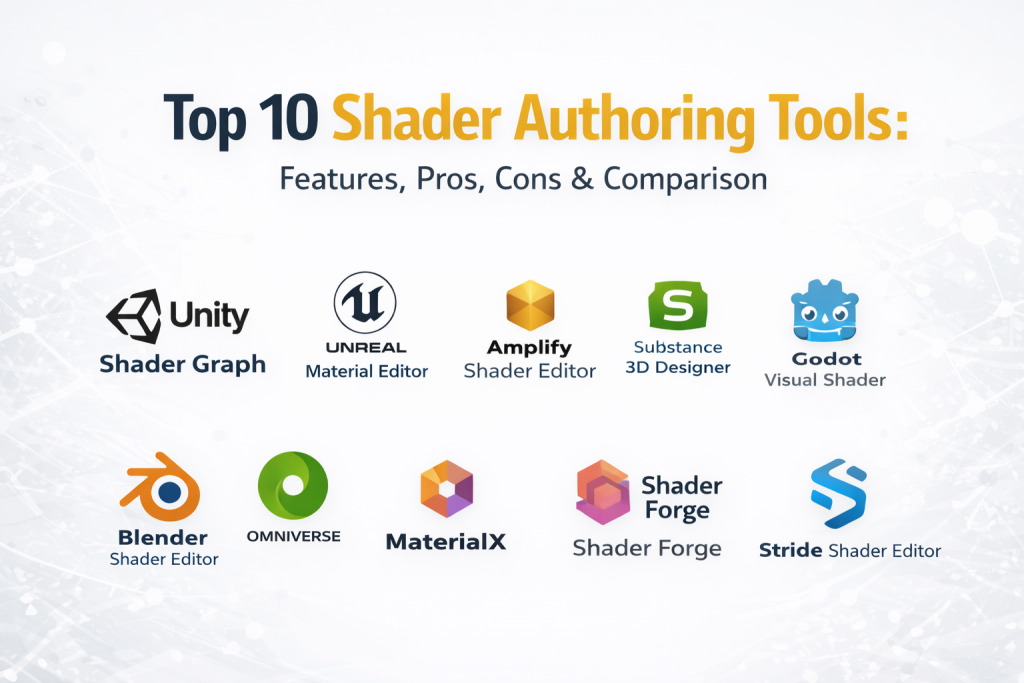
Top 10 Shader Authoring Tools
1 — Unity Shader Graph
A node-based shader creation tool built into Unity for real-time shader development without manual coding.
Key Features
- Visual node-based shader editor
- Real-time preview and debugging
- HDRP and URP compatibility
- PBR workflow support
- Custom function and code injection
- GPU-optimized rendering pipeline
- Cross-platform deployment
Pros
- Easy for artists and developers
- Deep Unity ecosystem integration
Cons
- Limited outside Unity engine
- Complex shaders may still require code
Platforms / Deployment
Windows / macOS — Self-hosted
Security & Compliance
Not publicly stated
Integrations & Ecosystem
Integrated tightly with Unity rendering pipeline and asset workflow.
- Unity Editor
- Visual Studio
- Unity Render Pipelines
- Version control systems
Support & Community
Large developer community, strong documentation, frequent updates.
2 — Unreal Engine Material Editor
A powerful node-based shader and material authoring system inside Unreal Engine.
Key Features
- Advanced node-based material system
- Real-time rendering preview
- Ray tracing and Lumen support
- Procedural material generation
- Shader debugging tools
- High-end cinematic rendering support
- Visual scripting integration
Pros
- Industry-grade rendering quality
- Deep control over materials and lighting
Cons
- Steep learning curve
- Heavy resource usage
Platforms / Deployment
Windows / macOS / Linux — Self-hosted
Security & Compliance
Not publicly stated
Integrations & Ecosystem
Works within Unreal rendering and asset ecosystem.
- Unreal Engine tools
- Quixel assets
- Visual Studio
- Source control
Support & Community
Extensive documentation and strong global developer community.
3 — Amplify Shader Editor
A visual shader authoring plugin for Unity offering deeper shader customization than built-in tools.
Key Features
- Node-based shader editing
- Custom shader templates
- Real-time shader preview
- High performance optimization
- Extensive node library
- Support for advanced rendering effects
Pros
- More flexible than standard Shader Graph
- Optimized shader generation
Cons
- Paid tool
- Unity-dependent
Platforms / Deployment
Windows / macOS — Self-hosted
Security & Compliance
Not publicly stated
Integrations & Ecosystem
Designed for Unity workflow integration.
- Unity Engine
- Shader libraries
- Custom shader templates
Support & Community
Active developer community and good documentation.
4 — Substance 3D Designer
A procedural material and shader authoring tool widely used in gaming and film industries.
Key Features
- Node-based material authoring
- Procedural texture generation
- Physically based rendering workflow
- Real-time preview
- Shader and material customization
- Cross-engine material export
- Automation tools
Pros
- Industry standard for material creation
- Highly flexible procedural system
Cons
- Complex for beginners
- Resource intensive
Platforms / Deployment
Windows / macOS — Self-hosted
Security & Compliance
Not publicly stated
Integrations & Ecosystem
Works with major rendering engines and pipelines.
- Unreal Engine
- Unity
- Blender
- Rendering engines
Support & Community
Strong industry adoption and extensive tutorials.
5 — Godot Visual Shader
A node-based shader editor built into the Godot engine for real-time shader creation.
Key Features
- Visual shader editing
- Real-time preview
- Lightweight engine integration
- Cross-platform shader deployment
- Custom shader code support
- Built-in debugging
Pros
- Open-source and free
- Easy for beginners
Cons
- Less advanced than AAA tools
- Smaller ecosystem
Platforms / Deployment
Windows / macOS / Linux — Self-hosted
Security & Compliance
Not publicly stated
Integrations & Ecosystem
Works within Godot engine workflow.
- Godot Engine
- Script extensions
- Asset system
Support & Community
Active open-source community and improving documentation.
6 — Blender Shader Editor
Node-based shader and material editor used for rendering, animation, and real-time workflows.
Key Features
- Node-based material system
- Cycles and Eevee rendering support
- Real-time shader preview
- PBR material support
- Procedural shader creation
- Texture and material linking
Pros
- Free and open-source
- Powerful rendering integration
Cons
- Not game-engine native
- Performance depends on hardware
Platforms / Deployment
Windows / macOS / Linux — Self-hosted
Security & Compliance
Not publicly stated
Integrations & Ecosystem
Used widely across rendering and content pipelines.
- Rendering engines
- Asset pipelines
- External tools
Support & Community
Large community and extensive learning resources.
7 — NVIDIA Omniverse Material Graph
A modern material and shader authoring system for real-time collaborative 3D workflows.
Key Features
- Real-time collaborative shader editing
- Physically based rendering support
- GPU-accelerated rendering
- MaterialX compatibility
- AI-assisted rendering workflows
- Real-time ray tracing
Pros
- Enterprise-grade rendering
- Collaborative design workflows
Cons
- Requires powerful GPU
- Complex setup
Platforms / Deployment
Windows / Linux — Cloud / Hybrid
Security & Compliance
Not publicly stated
Integrations & Ecosystem
Designed for large 3D production pipelines.
- Omniverse platform
- USD workflow
- Rendering pipelines
Support & Community
Growing enterprise adoption and strong technical documentation.
8 — MaterialX
An open standard for material and shader authoring used across rendering platforms.
Key Features
- Cross-platform shader standard
- Node-based material description
- Real-time rendering compatibility
- Engine-agnostic workflow
- Physically based rendering support
- Pipeline interoperability
Pros
- Cross-engine compatibility
- Open and extensible
Cons
- Requires integration with engines
- Not a full standalone editor
Platforms / Deployment
Varies / N/A
Security & Compliance
Not publicly stated
Integrations & Ecosystem
Used across rendering pipelines and tools.
- Rendering engines
- Production pipelines
- Shader systems
Support & Community
Industry adoption growing with strong technical ecosystem.
9 — Shader Forge
A visual shader editor for Unity enabling node-based shader creation.
Key Features
- Visual shader editing
- Real-time shader preview
- Custom shader building
- Node-based workflow
- Unity material integration
Pros
- Easy shader creation
- Flexible workflow
Cons
- Legacy tool
- Limited updates
Platforms / Deployment
Windows / macOS — Self-hosted
Security & Compliance
Not publicly stated
Integrations & Ecosystem
Works inside Unity ecosystem.
- Unity Engine
- Shader templates
Support & Community
Limited support but still used in legacy projects.
10 — Stride Shader Editor
A shader authoring system built into the Stride game engine for real-time graphics.
Key Features
- Visual shader editing
- Real-time rendering preview
- PBR material workflow
- Cross-platform rendering
- Shader debugging tools
Pros
- Integrated engine workflow
- Real-time shader preview
Cons
- Smaller ecosystem
- Less mainstream adoption
Platforms / Deployment
Windows — Self-hosted
Security & Compliance
Not publicly stated
Integrations & Ecosystem
Part of Stride engine ecosystem.
- Stride Engine
- Rendering pipeline
Support & Community
Moderate community with growing documentation.
Comparison Table (Top 10)
| Tool Name | Best For | Platform(s) Supported | Deployment | Standout Feature | Public Rating |
|---|---|---|---|---|---|
| Unity Shader Graph | Game development | Windows, macOS | Self-hosted | Node-based shader design | N/A |
| Unreal Material Editor | AAA rendering | Windows, macOS, Linux | Self-hosted | High-end real-time rendering | N/A |
| Amplify Shader Editor | Unity advanced shaders | Windows, macOS | Self-hosted | Optimized shader generation | N/A |
| Substance 3D Designer | Procedural materials | Windows, macOS | Self-hosted | Procedural shader system | N/A |
| Godot Visual Shader | Indie development | Windows, macOS, Linux | Self-hosted | Lightweight shader editor | N/A |
| Blender Shader Editor | Rendering & animation | Windows, macOS, Linux | Self-hosted | Node-based materials | N/A |
| NVIDIA Omniverse | Enterprise rendering | Windows, Linux | Hybrid | Real-time collaborative shaders | N/A |
| MaterialX | Cross-engine workflows | Varies | Varies | Shader standardization | N/A |
| Shader Forge | Unity shaders | Windows, macOS | Self-hosted | Visual shader editing | N/A |
| Stride Shader Editor | Real-time graphics | Windows | Self-hosted | Integrated shader system | N/A |
Evaluation & Scoring of Shader Authoring Tools
| Tool Name | Core | Ease | Integrations | Security | Performance | Support | Value | Weighted Total |
|---|---|---|---|---|---|---|---|---|
| Unity Shader Graph | 9 | 8 | 9 | 6 | 9 | 9 | 8 | 8.6 |
| Unreal Material Editor | 10 | 6 | 9 | 6 | 10 | 9 | 8 | 8.7 |
| Amplify Shader Editor | 8 | 8 | 8 | 5 | 8 | 7 | 8 | 7.9 |
| Substance Designer | 10 | 6 | 9 | 6 | 9 | 9 | 7 | 8.5 |
| Godot Visual Shader | 7 | 9 | 7 | 5 | 7 | 8 | 9 | 7.8 |
| Blender Shader Editor | 9 | 7 | 8 | 5 | 9 | 9 | 10 | 8.5 |
| NVIDIA Omniverse | 10 | 6 | 9 | 6 | 10 | 8 | 7 | 8.6 |
| MaterialX | 8 | 6 | 10 | 5 | 8 | 7 | 9 | 8.0 |
| Shader Forge | 7 | 8 | 7 | 5 | 7 | 6 | 8 | 7.2 |
| Stride Shader Editor | 7 | 7 | 7 | 5 | 7 | 6 | 8 | 7.1 |
How to interpret scores:
Scores are comparative within this category. Higher core scores indicate stronger shader capabilities. Ease reflects learning curve. Integration shows compatibility across pipelines. Weighted totals help shortlist tools but final selection depends on workflow, engine, and team needs.
Which Shader Authoring Tool Is Right for You?
Solo / Freelancer
Use Blender Shader Editor or Godot Visual Shader for flexibility and low cost.
SMB
Unity Shader Graph or Amplify Shader Editor provide strong performance with manageable complexity.
Mid-Market
Substance Designer and Unreal Material Editor offer deeper shader control and production-grade tools.
Enterprise
NVIDIA Omniverse and Unreal Material Editor are best for large-scale, high-end rendering pipelines.
Budget vs Premium
Budget: Blender, Godot, MaterialX
Premium: Unreal, Substance, Omniverse
Feature Depth vs Ease of Use
Ease: Unity Shader Graph, Godot
Depth: Unreal Material Editor, Substance Designer
Integrations & Scalability
Best integration: Unity, Unreal, Omniverse
Cross-engine standard: MaterialX
Security & Compliance Needs
Enterprise environments should evaluate Omniverse and production pipeline controls.
Frequently Asked Questions (FAQs)
1.What are shader authoring tools used for?
They create visual effects, materials, and lighting behavior in real-time graphics and rendering pipelines.
2.Are shader tools only for games?
No. They are widely used in film, simulation, VR/AR, and digital visualization.
3.Do I need programming skills?
Not always. Many modern tools use node-based visual systems, though coding helps for advanced shaders.
4.Which tool is best for beginners?
Unity Shader Graph and Blender Shader Editor are beginner-friendly.
5.Are these tools free?
Some are free or open-source, while others require paid licenses or engine ecosystems.
6.Can shader tools improve performance?
Yes. Optimized shaders reduce GPU load and improve rendering speed.
7.Do shader tools support real-time rendering?
Most modern tools support real-time preview and optimization.
8.Can I switch between shader tools?
Yes, but compatibility depends on rendering engines and shader formats.
9.Are shader standards emerging?
Yes, cross-engine shader standards like MaterialX are improving interoperability.
10.What is the biggest mistake beginners make?
Ignoring performance optimization and creating overly complex shaders.
Conclusion
Shader authoring tools are essential for modern graphics, enabling realistic rendering, performance optimization, and visual creativity. The right choice depends on your engine, workflow, team size, and rendering needs. Shortlist two or three tools, test them in your pipeline, and validate performance, integration, and usability before finalizing.

Best Cardiac Hospitals Near You
Discover top heart hospitals, cardiology centers & cardiac care services by city.
Advanced Heart Care • Trusted Hospitals • Expert Teams
View Best Hospitals