Introduction
Travel Management Software is a specialized digital platform designed to help organizations plan, book, and manage business travel while simultaneously tracking expenses and ensuring policy compliance. In a modern corporate landscape where distributed teams and global client meetings are the norm, these tools serve as the central nervous system for mobility. They replace the fragmented process of manual bookings and paper receipts with a unified, automated workflow that provides real-time visibility into company spend.
The importance of these platforms has surged recently due to a heightened focus on duty of care and the need for granular financial control. Companies are no longer satisfied with just booking a flight; they require systems that can predict costs, ensure traveler safety in volatile regions, and integrate seamlessly with complex accounting ecosystems. Modern use cases include automating bleisure trip splits, managing carbon offset programs for ESG goals, and providing instant AI-driven rebooking during major travel disruptions. When evaluating these tools, buyers should look for global inventory access, mobile-first design, robust reporting, automated policy triggers, 24/7 human support availability, and multi-currency handling.
Best for: Finance departments seeking spend control, HR teams focused on employee safety, and frequent business travelers in mid-to-large enterprises or high-growth startups.
Not ideal for: Solopreneurs with infrequent travel needs who can manage with consumer apps, or very small local businesses where travel is a negligible expense that does not justify a subscription cost.
Key Trends in Travel Management Software
- Predictive AI Personalization: Systems now learn individual traveler preferences for aisles, hotel brands, and transit times to surface the best options instantly.
- Sustainability and Carbon Tracking: Real-time data on the environmental impact of specific flights or hotels is now a standard requirement for corporate responsibility reporting.
- NDC and Direct Content: Platforms are moving beyond traditional Global Distribution Systems (GDS) to pull direct pricing from airlines, ensuring the lowest possible fares.
- Integrated Fintech Features: The lines are blurring between travel booking and corporate credit cards, with instant reconciliation upon the swipe of a physical or virtual card.
- Hyper-Automated Policy Enforcement: Instead of post-trip audits, modern software uses hard blocks to prevent out-of-policy bookings before they happen.
- Real-Time Risk Intelligence: Integration with global security feeds allows platforms to send push notifications to travelers during local emergencies or weather events.
- Frictionless Re-shopping: Automated bots continuously monitor booked fares and rebook the same itinerary if the price drops, returning savings to the company.
- Mobile-First Itinerary Management: The shift away from desktop-centric booking to full-lifecycle management entirely within a mobile application.
How We Selected These Tools (Methodology)
The selection of the following tools was based on a rigorous evaluation process designed to identify the most reliable and feature-rich options in the market. The methodology included:
- Evaluation of market mindshare and adoption rates among Fortune 500 and high-growth technology companies.
- Assessment of feature completeness, specifically the ability to handle both booking and expense management natively.
- Analysis of reliability and uptime signals to ensure the platforms perform during peak travel seasons.
- Verification of security posture signals, including the presence of industry-standard encryption and data privacy frameworks.
- Review of the integration ecosystem, prioritizing tools that connect with major ERP and HRIS systems.
- Examination of customer fit across various segments, from small businesses to global conglomerates.
- Checking the depth of global inventory, including regional airlines and rail providers.
- Reviewing the quality of 24/7 support infrastructure, specifically the availability of human agents.
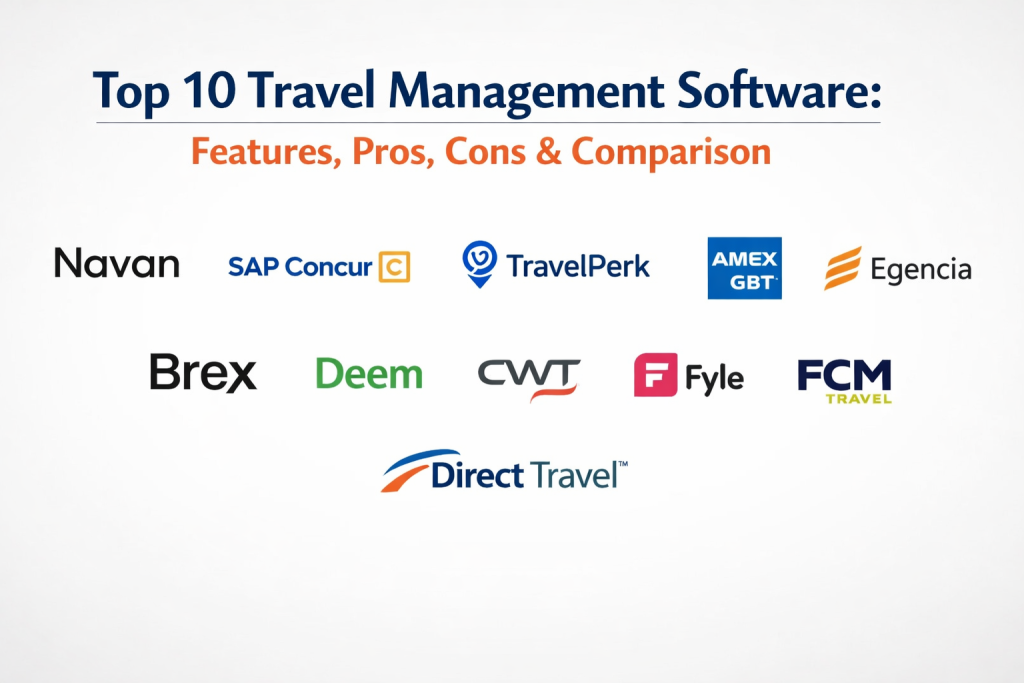
Top 10 Travel Management Software Tools
1.Navan
Navan is a unified travel, corporate card, and expense management platform designed to simplify the entire process for travelers and finance teams. It utilizes a modern, cloud-native architecture to provide a consumer-grade experience for business users.
Key Features
- AI-Powered Personalization: Learns traveler behavior to provide tailored search results that align with company policy.
- Unified T&E Platform: Combines travel booking and expense management into a single interface.
- Direct Inventory Access: Connects directly to suppliers and NDC content for competitive pricing.
- Automated Reconciliation: Expenses are captured and categorized automatically when using Navan corporate cards.
- Real-Time Reporting: Dashboards provide instant visibility into travel spend and traveler locations.
Pros
- Exceptional user interface that requires almost zero employee training.
- Strong incentive programs that reward employees for choosing cost-effective options.
Cons
- May be more expensive than standalone booking tools for very small teams.
- Advanced customization of the expense module can be complex to set up.
Platforms / Deployment
- Web / iOS / Android
- Cloud
Security & Compliance
- SSO/SAML, MFA, RBAC, Encryption
- SOC 2, GDPR, PCI DSS
Integrations & Ecosystem
Navan provides a robust set of integrations that allow it to fit into modern tech stacks. It connects deeply with accounting and HR software to ensure data consistency.
- NetSuite
- Sage Intacct
- Workday
- Slack
- Okta
Support & Community
Navan offers 24/7 global human support via chat, phone, and email. They provide an extensive help center and dedicated account managers for enterprise clients.
2.SAP Concur Travel
SAP Concur Travel is an enterprise-grade solution that focuses on deep policy compliance and integration with the broader SAP ecosystem. It is widely considered the industry standard for large, global organizations with complex requirements.
Key Features
- Global Scalability: Supports massive organizations across hundreds of countries and dozens of languages.
- Deep Policy Configuration: Allows for highly granular travel rules based on department, seniority, or project.
- Integrated Ecosystem: Works natively with SAP ERP and other SAP financial products.
- Sustainability Insights: Provides data to help companies meet environmental and social governance goals.
- Duty of Care Tools: Integrated traveler tracking and emergency communication features.
Pros
- Unrivaled for handling complex international tax and compliance regulations.
- Massive marketplace of third-party apps and service extensions.
Cons
- The user interface is often described as clunky and dated compared to newer SaaS competitors.
- Implementation can be a lengthy and resource-intensive process.
Platforms / Deployment
- Web / iOS / Android
- Cloud
Security & Compliance
- SSO/SAML, MFA, Encryption, Audit Logs, RBAC
- ISO 27001, SOC 1 & 2, HIPAA, GDPR, FedRAMP
Integrations & Ecosystem
As part of the SAP family, this tool has the most extensive integration library in the category.
- SAP S/4HANA
- Oracle
- Microsoft Dynamics
- Salesforce
- ADP
Support & Community
SAP Concur provides 24/7 enterprise-level support. They have a massive global user community, extensive certification programs, and professional services for implementation.
3.TravelPerk
TravelPerk is a travel management platform that prioritizes a seamless booking experience and flexible cancellation options. It is particularly popular with growing businesses that want an easy-to-use self-service tool.
Key Features
- FlexiPerk: Unique feature allowing users to cancel any booking for any reason up to two hours before departure for a partial refund.
- Vast Inventory: Access to a wide range of flights, hotels, trains, and car rentals in one place.
- Group Bookings: Specialized tools for managing travel for large teams or company retreats.
- VAT Recovery: Automated tools to help businesses reclaim international VAT on travel expenses.
- Travel Care: Proactive 24/7 support with high response times during disruptions.
Pros
- Very intuitive search and booking flow similar to consumer travel sites.
- Fast setup time, often allowing companies to start booking within a single day.
Cons
- The expense management side is less robust than dedicated Travel and Expense platforms.
- Limited customization for very complex approval hierarchies.
Platforms / Deployment
- Web / iOS / Android
- Cloud
Security & Compliance
- SSO/SAML, Encryption, RBAC
- SOC 2, GDPR
Integrations & Ecosystem
TravelPerk integrates with major HR and finance tools to automate the flow of employee data and expenses.
- BambooHR
- Gusto
- Expensify
- Xero
- QuickBooks Online
Support & Community
TravelPerk is known for its no-bot support policy, offering 24/7 access to human travel experts. They provide a comprehensive help center and localized support in multiple languages.
4.Amex GBT Egencia
Egencia, now part of American Express Global Business Travel, combines a modern technology platform with the vast negotiating power of one of the world’s largest travel management companies.
Key Features
- Supplier Negotiating Power: Access to exclusive Amex corporate rates and benefits.
- Smart Mix: AI-driven search that balances cost-effectiveness with traveler convenience.
- Global Travel Counselors: Direct access to experienced travel agents for complex trip planning.
- Egencia Analytics+: Advanced data visualization for identifying savings opportunities.
- Duty of Care Central: A dedicated portal for managing traveler safety and risk.
Pros
- Strong balance between a self-service platform and professional travel agency support.
- Excellent global coverage, especially in terms of negotiated hotel rates.
Cons
- The platform can feel corporate-heavy for small, agile startups.
- Pricing models are often opaque and require direct consultation.
Platforms / Deployment
- Web / iOS / Android
- Cloud
Security & Compliance
- SSO/SAML, MFA, Encryption, Audit Logs
- ISO 27001, GDPR, PCI DSS
Integrations & Ecosystem
Leverages both its own API and the broader American Express GBT infrastructure.
- Workday
- Oracle NetSuite
- Microsoft Dynamics 365
- Slack
Support & Community
Provides 24/7 global support with access to highly experienced travel counselors. They offer a structured onboarding process and dedicated account management for large accounts.
5.Brex
Brex is primarily known as a fintech platform that has expanded into travel management. It offers a spend-first approach where travel is tightly integrated with corporate cards and credit limits.
Key Features
- Integrated Card & Travel: Booking travel automatically triggers spend controls and receipt capture.
- Global Card Issuance: Provides physical and virtual cards in multiple currencies.
- Real-Time Spend Visibility: Finance teams can see travel spending as it happens, not weeks later.
- Automatic Receipt Match: Receipts from major airlines and hotels are automatically pulled into the system.
- No Personal Guarantee: Offers corporate credit lines based on company cash flow rather than personal credit.
Pros
- The fastest swipe-to-reconcile workflow in the market.
- Modern, clean interface that appeals to technology-focused teams.
Cons
- The travel inventory is not as deep as dedicated travel management companies (TMCs).
- Primarily focused on venture-backed startups and larger tech companies.
Platforms / Deployment
- Web / iOS / Android
- Cloud
Security & Compliance
- SSO/SAML, MFA, Encryption, RBAC
- SOC 2, GDPR
Integrations & Ecosystem
Focuses on deep accounting and ERP integrations for automated bookkeeping.
- QuickBooks
- Xero
- NetSuite
- Sage Intacct
- Slack
Support & Community
Brex provides 24/7 support through chat and phone. They have a strong reputation for responsiveness and offer a helpful online resource library.
6.Deem
Deem, a part of the Travelport family, focuses on a mobile-first approach to travel management. Its platform, Etta, is designed to provide a highly accessible and inclusive booking experience.
Key Features
- Etta Experience: A mobile-centric interface that guides travelers through the entire trip lifecycle.
- Safety Check: Real-time location-based safety information during the booking process.
- Sustainability Data: Displays CO2 emissions for flights and provides eco-friendly hotel options.
- Accessibility First: Designed with high standards for ADA compliance and inclusive design.
- Deep TMC Integration: Plugs into major travel management companies to provide fulfillment.
Pros
- Very high scores for usability and accessibility.
- Strong focus on traveler safety and local intelligence.
Cons
- Requires a separate expense software solution as it focuses strictly on booking.
- Inventory in certain emerging markets can be less comprehensive.
Platforms / Deployment
- Web / iOS / Android
- Cloud
Security & Compliance
- SSO/SAML, Encryption, RBAC
- SOC 2, GDPR
Integrations & Ecosystem
Deem is built to be agnostic, integrating with various expense providers and travel agencies.
- SAP Concur (Expense)
- Workday
- Chrome River
- Oracle
Support & Community
Deem provides robust online training for travel managers and 24/7 support for travelers. They are known for their collaborative approach with travel management companies.
7.CWT
CWT is a traditional global powerhouse that has pivoted toward a digital-first model via its myCWT platform. It excels in managing large-scale global travel programs.
Key Features
- myCWT Platform: Seamless booking across web, mobile app, and even messaging services.
- CWT Solutions Group: Specialized consultancy services to help companies optimize their travel spend.
- Real-Person Messaging: Allows travelers to text a real person to change flights or solve issues.
- Analytics Hub: Comprehensive dashboards for tracking travel ROI and supplier performance.
- Global Presence: Local experts and support in nearly every country worldwide.
Pros
- The ability to text an agent for flight changes is a major favorite for frequent travelers.
- Unrivaled global footprint for companies with offices in every region.
Cons
- Pricing is typically geared toward large corporate contracts and is not transparent.
- The technology stack can sometimes feel more traditional compared to software-native tools.
Platforms / Deployment
- Web / iOS / Android / Messaging (SMS/WhatsApp)
- Cloud / Hybrid
Security & Compliance
- SSO/SAML, MFA, Encryption, Audit Logs
- ISO 27001, GDPR, PCI DSS Level 1
Integrations & Ecosystem
CWT integrates with a variety of enterprise back-office systems and risk management providers.
- International SOS
- Workday
- SAP
- Various ERPs
Support & Community
CWT operates a high-touch model with 24/7 access to counselors. They offer industry-leading consultancy and a global network of local travel experts.
8.Fyle
Fyle is an expense management software that focuses on making the reporting process omnipresent by allowing users to track expenses directly from the apps they already use.
Key Features
- Inside-the-App Tracking: Report expenses directly from Gmail, Outlook, Slack, or WhatsApp.
- Real-Time Credit Card Feed: Connects directly with any Visa or Mastercard corporate card.
- Automated Audit: AI-driven checks for policy violations and duplicate receipts.
- Digital Audit Trails: Comprehensive logs for every transaction to ensure tax compliance.
- Express ACH: Fast reimbursement process for out-of-pocket employee expenses.
Pros
- The most flexible platform for capturing receipts from various digital channels.
- Strong focus on automating the boring parts of expense reporting.
Cons
- Does not have a native travel booking engine; requires integration with a booking tool.
- Advanced reporting features are sometimes limited in the lower-tier plans.
Platforms / Deployment
- Web / iOS / Android / Browser Extensions
- Cloud
Security & Compliance
- SSO/SAML, MFA, Encryption, RBAC
- SOC 2, GDPR
Integrations & Ecosystem
Fyle excels at connecting with accounting software to eliminate manual data entry.
- Sage Intacct
- Microsoft Dynamics
- QuickBooks Desktop & Online
- NetSuite
- Slack
Support & Community
Fyle offers strong onboarding support and 24/7 customer service. They maintain a growing user base and a very helpful blog on expense management best practices.
9.FCM Travel
FCM Travel is a global travel management company that positions itself as the alternative for businesses looking for a more personalized and flexible approach to global travel.
Key Features
- FCM Platform: A customizable portal that adapts to the specific needs of the business and the traveler.
- Sam Digital Assistant: An AI-powered assistant that provides itinerary updates and travel alerts.
- Regional Support Model: High-touch service from local teams who understand regional travel nuances.
- FCM Consulting: Data-driven insights to help improve procurement and travel policy.
- Flexible Inventory: Access to a wide range of local and global travel content.
Pros
- Excellent regional support with a local feel even for international trips.
- The Sam AI assistant is highly proactive and useful during travel.
Cons
- The platform interface can vary slightly by region due to localized customizations.
- May be overkill for companies that only travel domestically.
Platforms / Deployment
- Web / iOS / Android
- Cloud
Security & Compliance
- SSO/SAML, Encryption, Audit Logs
- ISO 27001, GDPR, PCI DSS
Integrations & Ecosystem
FCM provides a robust API for custom integrations alongside standard connections.
- Workday
- SAP Concur
- Various Expense Tools
- HRIS Systems
Support & Community
FCM is known for its high-touch service model. They provide dedicated account teams and 24/7 global support with a focus on human interaction.
10.Direct Travel
Direct Travel provides mid-market and enterprise organizations with a customized approach to travel management, focusing on high-level service and integrated technology.
Key Features
- DirectView Analytics: Real-time data processing for identifying travel trends and savings.
- Direct2U Mobile: A feature-rich mobile app for booking and managing trips on the go.
- Risk Management: Integrated traveler tracking and automated security alerts.
- Profile Management: Centralized traveler preferences and loyalty data synchronization.
- Customized Portals: Corporate booking pages tailored to specific company branding and policies.
Pros
- Strong focus on the mid-market segment, providing enterprise-level tools with more agility.
- High level of personalized service from dedicated travel teams.
Cons
- Less global brand recognition compared to Amex or SAP.
- The technology suite is powerful but may require more setup time than plug-and-play tools.
Platforms / Deployment
- Web / iOS / Android
- Cloud / Hybrid
Security & Compliance
- SSO/SAML, Encryption, RBAC
- SOC 2, GDPR
Integrations & Ecosystem
Direct Travel connects with leading third-party tools to ensure a cohesive travel program.
- Chrome River
- SAP Concur
- Expensify
- Workday
Support & Community
They offer 24/7 support via multiple channels and emphasize a partnership-based approach with their clients. Support is handled by experienced travel professionals.
Comparison Table (Top 10)
| Tool Name | Best For | Platform(s) Supported | Deployment | Standout Feature | Public Rating |
|---|---|---|---|---|---|
| Navan | High-growth startups | Web, iOS, Android | Cloud | Unified T&E + Rewards | 4.7/5 |
| SAP Concur Travel | Global enterprises | Web, iOS, Android | Cloud | Deep ERP Integration | 4.0/5 |
| TravelPerk | Growing businesses | Web, iOS, Android | Cloud | FlexiPerk Cancellation | 4.6/5 |
| Amex GBT Egencia | Large corporations | Web, iOS, Android | Cloud | Negotiating Power | N/A |
| Brex | Tech-focused teams | Web, iOS, Android | Cloud | Instant Reconciliation | 4.8/5 |
| Deem | Mobile-first users | Web, iOS, Android | Cloud | Accessibility/Safety | N/A |
| CWT | Global large scale | Web, App, Messaging | Hybrid | Human-led Messaging | N/A |
| Fyle | Multi-app reporting | Web, Mobile, Apps | Cloud | Tracking via Slack/Email | 4.6/5 |
| FCM Travel | Flexible global travel | Web, iOS, Android | Cloud | Sam AI Assistant | N/A |
| Direct Travel | Mid-market companies | Web, iOS, Android | Hybrid | Personalized Service | N/A |
Evaluation & Scoring of Travel Management Software
| Tool Name | Core (25%) | Ease (15%) | Integrations (15%) | Security (10%) | Performance (10%) | Support (10%) | Value (15%) | Weighted Total |
|---|---|---|---|---|---|---|---|---|
| Navan | 9 | 10 | 9 | 9 | 9 | 9 | 8 | 9.05 |
| SAP Concur Travel | 10 | 6 | 10 | 10 | 9 | 8 | 7 | 8.55 |
| TravelPerk | 8 | 10 | 8 | 9 | 9 | 9 | 9 | 8.70 |
| Amex GBT Egencia | 9 | 7 | 8 | 9 | 9 | 9 | 7 | 8.15 |
| Brex | 8 | 10 | 9 | 9 | 10 | 8 | 9 | 8.90 |
| Deem | 7 | 9 | 7 | 9 | 9 | 8 | 8 | 7.95 |
| CWT | 9 | 7 | 8 | 9 | 8 | 10 | 7 | 8.15 |
| Fyle | 7 | 10 | 9 | 9 | 9 | 9 | 9 | 8.55 |
| FCM Travel | 8 | 8 | 8 | 9 | 8 | 9 | 8 | 8.15 |
| Direct Travel | 8 | 8 | 8 | 9 | 8 | 9 | 8 | 8.15 |
How to Interpret the Scores
- Core Features: Measures the depth of booking inventory and expense automation.
- Ease of Use: Evaluates the user interface and the learning curve for employees.
- Integrations: Reflects the strength of the API and pre-built connections to ERP/HRIS.
- Security: Assesses compliance certifications and data protection measures.
- Weighted Total: The final score is a balanced view of the tool’s overall capability. These scores are comparative; a 6 in Ease of Use does not mean the tool is broken, but rather that it is significantly more complex than the category leaders.
Which Travel Management Software Tool Is Right for You?
Solo / Freelancer
For individuals, dedicated corporate travel management software is often unnecessary. However, if you manage multiple clients and need strict billable tracking, a tool like Fyle can be helpful for receipt capture, or TravelPerk (using their free tier) can help organize itineraries without a heavy subscription fee.
SMB
Small and medium businesses should prioritize ease of adoption and cost transparency. TravelPerk and Navan are excellent choices here because they require minimal IT involvement and offer intuitive interfaces that employees will actually use, reducing leakage to consumer sites.
Mid-Market
Companies in the mid-market segment often have more complex approval workflows but still value agility. Direct Travel or Brex (if the company is tech-focused) offer a great balance of professional oversight and modern technology.
Enterprise
For global organizations with thousands of travelers, SAP Concur Travel and Amex GBT Egencia are the primary contenders. They offer the necessary scale, deep compliance reporting, and global support networks required to manage multi-million dollar travel budgets.
Budget vs Premium
If budget is the primary concern, look for platforms that offer per-trip or free tiers like TravelPerk. For premium needs where service is paramount, CWT or FCM Travel provide a high-touch experience that justifies a higher cost through personalized counseling and crisis management.
Feature Depth vs Ease of Use
SAP Concur Travel represents maximum feature depth but with a lower ease-of-use score. Conversely, Navan and Brex represent the modern shift toward extreme ease of use while still providing significant (though perhaps slightly less granular) feature depth.
Integrations & Scalability
If your company lives inside the SAP or Oracle ecosystem, SAP Concur Travel is almost a mandatory choice due to the native data flow. If you use modern tools like Slack, Gusto, and NetSuite, Navan and Brex will offer a more seamless integration experience.
Security & Compliance Needs
Organizations in highly regulated industries (Finance, Healthcare, Government) should prioritize tools with the most certifications. SAP Concur Travel and CWT typically lead in this area, offering FedRAMP or HIPAA compliance options that newer startups may not yet possess.
Frequently Asked Questions (FAQs)
What is the typical pricing model for travel management software?
Most platforms use a transaction-based fee (a set price per booking), a subscription-based fee (monthly cost per user), or a hybrid model. Some modern tools offer free software but generate revenue through supplier commissions or card processing fees.
How long does it take to implement a new travel platform?
Simple SaaS tools like TravelPerk or Brex can be set up in a few hours or days. Enterprise solutions like SAP Concur or Egencia may take several months due to the complexity of integrating with existing ERPs and global travel policies.
Can these tools help reduce my company’s total travel spend?
Yes, they reduce spend by providing access to negotiated corporate rates, enforcing travel policies at the point of purchase, and using AI to rebook flights when prices drop. They also eliminate manual processing costs in the finance department.
Does travel management software replace a traditional travel agency?
Not necessarily. Many of these tools (like CWT or FCM) are built by travel agencies to provide a digital interface for their services. Other software-only tools provide a platform but still offer 24/7 human agent support for emergencies.
How do these platforms handle traveler safety and duty of care?
Modern platforms include real-time traveler tracking, heat maps of employee locations, and integrated communication tools. They can send automated alerts to travelers if an incident occurs near their hotel or flight path.
Can I integrate my existing corporate credit cards?
Most top-tier platforms allow you to bring your own card (BYOC) and will pull transaction data via direct bank feeds. However, using the platform’s native cards (like Brex or Navan) often provides a more seamless, real-time reconciliation experience.
Is it difficult to migrate from a legacy travel system?
The main challenge in migration is data transfer (traveler profiles and loyalty data) and change management. Most modern providers offer implementation specialists to help map your existing policies into the new digital workflow.
What happens if a flight is canceled and the traveler is stuck?
Top platforms provide 24/7 support via mobile app chat or phone. Some use AI to automatically suggest alternative flights, while high-touch services like CWT allow travelers to text an agent who can handle the rebooking immediately.
Do these tools support international rail and ground transportation?
Yes, leading global platforms integrate with major rail providers like Amtrak, Eurostar, and Renfe, as well as car rental agencies and ride-sharing services like Uber or Lyft for a complete door-to-door itinerary.
How does the software ensure employees stay within policy?
Policies are embedded directly into the search results. Out-of-policy options can be hidden entirely, flagged with a warning, or required to go through a manager’s approval before the ticket can be issued.
Conclusion
Selecting the right Travel Management Software is a strategic decision that impacts both your company’s bottom line and your employees’ well-being. Whether you prioritize the enterprise-grade compliance of SAP Concur Travel, the modern ease of Navan, or the high-touch human service of CWT, the goal remains the same: to make business travel as frictionless as possible while maintaining total financial visibility. The best tool is the one that aligns with your specific company size, technical ecosystem, and travel culture. As a next step, we recommend shortlisting two or three tools based on your segment and requesting a pilot to validate their integration capabilities and support responsiveness.

Best Cardiac Hospitals Near You
Discover top heart hospitals, cardiology centers & cardiac care services by city.
Advanced Heart Care • Trusted Hospitals • Expert Teams
View Best Hospitals