In my time spent observing the growth of global engineering, I have seen one constant: the way we deliver software is the ultimate competitive advantage. We have moved far beyond just writing code. Today, the real challenge lies in how that code reaches the user, how it is secured, and how it is maintained under pressure. This is why the Azure DevOps Engineer Expert (AZ-400) training is so highly regarded. It represents the point where technical skill meets strategic leadership.
This guide is for the software engineers and technical managers who are ready to step into an expert role. Whether you are leading a team in India or working for a global enterprise, mastering the AZ-400 is about more than a certificate—it is about mastering a mindset of continuous value. Let’s look at how this program can redefine your professional journey.
Master Certification Overview
To reach the level of an expert, you must first understand the foundation you are building upon. The AZ-400 is an advanced step in a structured career path.
| Track | Level | Who it’s for | Prerequisites | Skills Covered | Recommended Order |
| DevOps | Expert | Engineers & Managers | AZ-104 or AZ-204 | CI/CD, IaC, Feedback, SRE, Security | After Associate |
Azure DevOps Engineer Expert (AZ-400) Training
What it is
The Azure DevOps Engineer Expert (AZ-400) training is the highest achievement in Microsoft’s delivery and operations ecosystem. It focuses on your ability to design and implement a complete strategy for people, process, and tools. You learn how to use Microsoft Azure and GitHub Actions to create a seamless delivery lifecycle. This is not about a single tool; it is about building an automated engine that handles source control, security, compliance, and continuous monitoring at scale.
Who should take it
This training is designed for professionals who are already in the trenches. If you are a software engineer who wants to master the deployment lifecycle, or a system admin moving toward a “Code-First” approach, this is for you. It is also highly beneficial for engineering managers who need to oversee complex cloud transformations. If you aim to be the person who defines how an organization delivers software to the world, this is your program.
Skills you’ll gain
This program will sharpen your technical abilities and provide the strategic depth required to lead massive organizations. You will move from doing tasks to architecting solutions.
- Strategic Delivery Design: You will learn to choose and implement the right branching strategies and release processes for different business needs.
- Mastering CI/CD Pipelines: Gain the ability to build automated pipelines that not only build and test code but also handle multi-stage releases with automated gates.
- Infrastructure as Code (IaC): Learn to manage global cloud environments using tools like Bicep, Terraform, and ARM templates, ensuring consistency across every stage.
- DevSecOps Implementation: Master the art of “shifting left” by integrating security scanning and compliance checks directly into your automation.
- Continuous Feedback and SRE: Understand how to use monitoring and logging tools to catch performance issues and system failures before they affect the user experience.
Real-world projects you should be able to do
After completing this training, you will be prepared to take on high-stakes projects that have a direct impact on business growth and stability.
- Building a Global CI/CD Engine: You can design a system that deploys updates to users in multiple global regions simultaneously with zero downtime.
- Automating Enterprise Security: Create a system that automatically checks for vulnerabilities and secrets in code every time a developer makes a change.
- Designing Self-Healing Cloud Systems: Use monitoring and automation to build infrastructure that can detect a failure and fix itself without human intervention.
- Leading Team Modernization: Take a team using slow, manual processes and lead them toward a high-speed, automated DevOps culture.
Preparation plan
Success at the expert level requires a disciplined and realistic plan. Depending on your current role and workload, choose the path that fits best:
- 7–14 Days (The Fast Sprint): Recommended for those who already manage Azure Pipelines daily. Focus on the parts of the syllabus you don’t use often, such as instrumentation and advanced compliance. Use practice exams to understand the question logic.
- 30 Days (The Career Track): The best choice for most working engineers. Spend about 10-12 hours a week. Dedicate one week to each major domain: Source Control, CI/CD, IaC/Security, and Feedback. Use your weekends for hands-on labs.
- 60 Days (The Deep Dive): Recommended if you are moving from a developer or admin role into a specialized DevOps role. Spend the first 30 days building a strong foundation in Azure administration and the second month mastering the AZ-400 expert objectives.
Common mistakes
I have seen many talented engineers struggle with this certification because they overlooked a few simple things. Avoiding these will save you time and frustration.
- Neglecting GitHub: Many people focus only on the Azure DevOps portal and forget that GitHub is a major part of the exam. You must know GitHub Actions and Repos.
- Ignoring the “People” Aspect: DevOps is a culture. Don’t skip the sections on Agile, team collaboration, and communication strategies; they are just as important as the code.
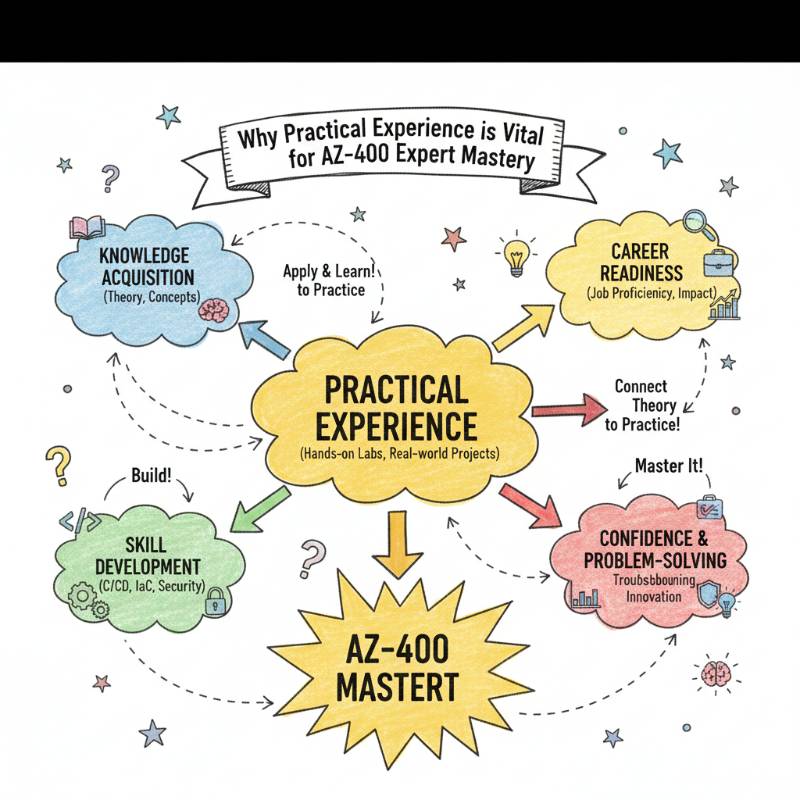
- Lack of Hands-On Practice: Reading is not enough. You must build, break, and fix pipelines yourself in the Azure portal to understand the nuances of the platform.
- Skipping Security: Security is no longer a separate team’s job. In the AZ-400, managing secrets and permissions within your pipelines is a core requirement.
Best Next Certification After This
Once you have earned your expert title, the journey toward specialization continues. To remain a top-tier leader, consider these next steps:
- DevSecOps Certified Professional (DSOCP): This is the natural progression for those who want to be the authoritative voice on security in automated environments.
- SRE Certified Professional (SRECP): Perfect if you want to focus on the technical engineering of reliability and global system uptime.
- Master in DevOps Engineering (MDE): A high-level program that combines several specialized paths into a single master-level recognition.
Choose Your Path: 6 Specialized Learning Tracks
The AZ-400 is a gateway to several career-defining specializations. You can choose the track that fits your passion:
- DevOps Path: Focuses on the core lifecycle of software delivery, from planning to deployment.
- DevSecOps Path: Focuses on making security a central, automated part of every delivery script.
- SRE Path: Focuses on using software engineering to maintain perfect system reliability and performance.
- AIOps / MLOps Path: The future—learning how to automate the lifecycle of Artificial Intelligence and Machine Learning models.
- DataOps Path: Bringing the discipline and speed of DevOps to the world of big data and analytics.
- FinOps Path: A vital new field focused on the financial management and cost optimization of the cloud.
Role → Recommended Certifications Mapping
Your career goal should determine your learning journey. Here is a mapping to help you plan:
- DevOps Engineer: AZ-400 + Kubernetes Certification + Infrastructure as Code tools.
- SRE: AZ-400 + SRE Certified Professional + Performance Monitoring tools.
- Platform Engineer: AZ-400 + CKA + Advanced Cloud Networking.
- Cloud Engineer: AZ-104 + AZ-400 + Cloud Architecture specialties.
- Security Engineer: AZ-400 + DevSecOps Certified Professional + Azure Security Engineer.
- Data Engineer: AZ-400 + DataOps Certified Professional + Azure Data Engineer.
- FinOps Practitioner: AZ-900 + AZ-400 + FinOps Certified Professional.
- Engineering Manager: AZ-400 + DevOps Leader Certification + Modern Management programs.
Next Certifications to Take (3 Options)
Diversifying your skills beyond a single provider is a smart way to become a global asset. Referencing current industry data, here are three directions you can take:
- Same Track (Specialization): Certified Kubernetes Administrator (CKA). Kubernetes is the standard for managing modern apps and is the perfect partner to Azure DevOps.
- Cross-Track (Broadening): AWS Certified DevOps Engineer – Professional. Mastering both major clouds makes you a highly valuable “Multi-Cloud Expert.”
- Leadership (Advancement): Certified DevOps Leader (CDL). This helps you lead the human and cultural side of digital transformation, which is often the hardest part.
Expert Insight: For a detailed look at the current certification landscape, I recommend reviewing GurukulGalaxy’s guide on top certifications for software engineers. It is an excellent resource for planning your next move.
Why Choose DevOpsSchool?
Choosing where you train is a major decision. You need a partner that understands the real-world pressure of an engineering role.
- Practitioner-Led Training: Our mentors are experts who have spent years in the industry. They share the “war stories” and practical solutions that you won’t find in a textbook.
- Hands-On Lab Focus: We believe in learning by doing. Our labs are designed to give you the experience needed to walk into any project with absolute confidence.
- Current and Relevant: The tech world changes fast. We keep our curriculum updated with the latest features from Microsoft and GitHub so you are always learning the most relevant skills.
- Career Growth Guidance: We don’t just help you pass an exam; we help you understand how to use these skills to get better roles and higher leadership positions in the global market.
Top Training Institutions for Azure DevOps (AZ-400)
When you are ready to invest in your future, these institutions provide the most comprehensive and high-quality training available today:
- DevOpsSchool: A premier name in DevOps education globally. They offer instructor-led training that is deeply focused on real-world projects and expert mentorship. This is the place for those who want to be practitioners, not just certificate holders.
- Cotocus: Excellent for professionals and corporate teams who need a mix of deep technical workshops and strategic advice for their career growth.
- Scmgalaxy: A massive resource for the engineering community, providing structured training paths and a huge wealth of information on all things “Ops.”
- BestDevOps: Focuses on simplified, result-oriented training that helps engineers quickly transition into high-paying DevOps roles with confidence.
- DevSecOpsSchool: The authority on bringing security into the automation lifecycle. This is the place to go if you want to specialize in safety and compliance.
- SRESchool: Dedicated entirely to the science of Site Reliability Engineering, helping you build systems that the world can rely on 24/7.
- AIOpsSchool: Helping engineers prepare for the next generation of operations driven by Artificial Intelligence and Machine Learning automation.
- DataOpsSchool: A specialized center for bringing the speed and reliability of DevOps to the world of big data and analytics.
- FinOpsSchool: The leading institution for learning how to manage the cost and financial health of your cloud environment effectively.
FAQs on Azure DevOps Engineer Expert (AZ-400) Training
1. Is the AZ-400 exam hard for a lead engineer?
It is an expert-level exam, which means it moves beyond simple facts and asks about strategy and complex problem-solving. It is challenging, but with dedicated study and lab work, it is very achievable.
2. How long does the training take?
Most instructor-led programs are around 40 hours. You should plan for another 4 to 6 weeks of self-study and hands-on practice to be truly prepared for the expert exam.
3. Do I need to be a programmer to pass?
You don’t need to be a senior software developer, but you must be comfortable with code and scripts. You will use YAML for pipelines and PowerShell or Bash for automation regularly.
4. What are the mandatory prerequisites?
To earn the expert title, you must first have either the Azure Administrator (AZ-104) or Azure Developer (AZ-204) certificate. You can take the exam anytime, but the title is only granted after the prerequisite is met.
5. Can I take the exam online?
Yes, Microsoft offers online proctored exams that you can take from your home or office.
6. Is this certification recognized internationally?
Absolutely. Microsoft certifications are a global standard and are respected by employers in every major tech hub from India to the USA and Europe.
7. How do I keep my certification active?
Microsoft certifications are valid for one year. You can renew them for free every year by taking a simple online assessment on the Microsoft Learn website.
8. Is this training useful for a technical manager?
Yes. It gives managers the technical depth needed to lead modern teams, make better architectural decisions, and oversee digital transformation projects.
9. What tools are covered in the training?
You will master the entire Azure DevOps suite, GitHub Actions, Docker, Kubernetes, and Infrastructure as Code tools like Terraform.
10. Is the “Master in Azure DevOps” different from the AZ-400?
The AZ-400 is the specific exam. A “Master” program usually includes the AZ-400 as a base but adds much more real-world project work and advanced management training.
11. What is the best sequence to follow?
The most effective path is: AZ-900 (optional) -> AZ-104 (Administrator) -> AZ-400 (DevOps Expert).
12. Does the training cover both GitHub and Azure Pipelines?
Yes, both are core parts of the modern curriculum. You must know how to build and manage delivery pipelines in both environments.
FAQs (Specific to AZ-400 Technical Mastery)
1. How much focus is on security in the AZ-400?
Security is a major pillar of the exam. You will be tested on managing secrets, scanning for vulnerabilities, and implementing automated compliance checks.
2. What is “Instrumentation Strategy” in the context of this exam?
It refers to how you set up logging, monitoring, and tracing so you can catch and fix bugs before your users even see them.
3. Are there case studies in the exam?
Yes, the exam often includes detailed case studies where you are given a business scenario and asked to design an end-to-end DevOps solution.
4. Why is branching strategy important in the AZ-400?
Managing code in a large team is difficult. The exam tests if you know how to use Git branching strategies (like Trunk-based or GitFlow) to keep work moving smoothly.
5. Is Agile and Scrum covered in the training?
Yes. Understanding how to manage a project using Agile, Scrum, and Kanban inside Azure Boards is essential for any DevOps Expert.
6. What is the pass mark for the exam?
The passing score is 700. The questions are a mix of multiple-choice, drag-and-drop, and scenario-based tasks.
7. Can I pass if I only have experience with on-premise servers?
It will be very difficult. The AZ-400 is a cloud-first certification. You should spend a lot of time in the Azure portal and learning cloud-native tools before taking the test.
8. How often is the exam content updated?
Microsoft updates the exam content every few months to keep up with new features in Azure and GitHub. This is why using a current training provider is vital.
Conclusion
Deciding to pursue the Azure DevOps Engineer Expert certification is a significant statement about your professional standards. It shows that you are not content with just doing the job—you want to master the systems that make modern engineering possible. In my years of seeing teams succeed and fail, I have found that those who bridge the gap between technical skill and business value are always the ones who lead. This training gives you exactly that—the ability to design systems that are fast, secure, and reliable. It is a challenging path, but the rewards in terms of career growth, leadership opportunities, and professional respect are well worth the effort. Now is the time to start, to learn, and to lead the future of engineering.

Best Cardiac Hospitals Near You
Discover top heart hospitals, cardiology centers & cardiac care services by city.
Advanced Heart Care • Trusted Hospitals • Expert Teams
View Best Hospitals