On a bustling Friday evening, the front desk of a restaurant can feel like mission control during launch. Phones ring incessantly for last-minute tables, walk-in parties crowd the entryway, servers weave around bottlenecks, and hosts scramble to track which two-top is finishing dessert. For restaurant operators and general managers, this friction carries a steep cost. When front-of-house restaurant operations break down, it doesn’t just mean a chaotic shift—it leads to longer wait times, frustrated guests, overwhelmed floor staff, and lost revenue from unseated tables.
Streamlining front-of-house (FOH) workflows is not about rushing diners out the door. It is about removing friction from the guest journey—from the moment a reservation is booked to the second the check is settled. By balancing strategic floor planning, structured communication, and purpose-built digital tools, operators can run calmer shifts while consistently increasing daily covers.
The True Cost of Front-of-House Inefficiencies
Front-of-house friction rarely stems from a lack of effort. More often, it is the result of outdated, disconnected systems trying to keep pace with dynamic dining room demand.
1. Bottlenecks at the Host Stand
When guest arrivals, reservation books, and waitlists are managed manually—or split across disconnected platforms—the host stand becomes a choke point. Staff spend crucial minutes cross-referencing notes, checking table statuses physically across the floor, or answering phone calls during peak seating windows. Every minute a party stands waiting past their reservation time lowers overall guest satisfaction scores.
2. Underutilized Seating Capacity
Empty chairs generate zero revenue. A classic front-of-house pitfall is seating a two-top party at a four-top table because the floor status wasn’t clear, effectively cutting capacity for larger parties later in the service. Without real-time visibility into table availability and duration pacing, operators routinely leave 10% to 20% of their floor unused during peak hours.
3. Server Overload and Uneven Section Flow
When table assignments are haphazard, one server might get seated with three large parties within ten minutes while another stands idle. Uneven pacing degrades service quality, slows down ticket times in the kitchen, and stretches table turn times unnecessarily.
4 Pillars for Modernizing Front-of-House Workflows
To build an efficient front-of-house system, operators must align physical layout, operational pacing, and guest communications into a cohesive workflow.
1. Dynamic Floor Plan and Table Allocation
Static floor plans rarely adapt well to real service conditions. High-performing venues configure their layouts to allow quick adjustments based on the day’s booking profile.
- Use modular seating: Ensure two-top tables can be joined or separated without blocking primary server service paths or exit routes.
- Assign turns based on party size: Establish baseline turn times based on real data rather than arbitrary estimates (e.g., 60 minutes for a two-top lunch, 90 minutes for a four-top dinner, 120 minutes for parties of six or more).
- Designate dedicated holding zones: Keep the main host station clear by designating an area for guests waiting for their tables, ideally near the bar to encourage pre-dinner beverage sales.
2. Real-Time Waitlist and Flow Management
Relying on pen-and-paper clipboards for walk-in traffic frequently leads to walkouts. When guests are given vague estimates like “about twenty minutes,” their anxiety rises, and many wander off permanently.
Digitizing the waitlist gives hosts accurate insight into expected clearing times based on current dining stages (drinks served, entrées delivered, check dropped). Providing clear, automated SMS updates allows guests the freedom to wait comfortably without hovering around the host stand, reducing congestion at the door.
3. Shift Communication and Pre-Service Briefings
Technology only works when the team is aligned. A structured, 10-minute pre-shift lineup should cover:
- VIP guests, returning regulars, and special dietary notes.
- Pacing limits for kitchen throughput (e.g., capping reservations at 25 covers per 15-minute slot).
- Section assignments and station cut orders for the end of service.
4. Direct Bookings vs. Third-Party Dependency
Third-party booking portals can help drive initial discovery, but relying on them exclusively eats into operational margins through recurring cover fees. Developing a strong channel for direct bookings allows operators to retain full ownership of their guest data, build repeat customer profiles, and reduce booking friction without third-party commission overhead.
Upgrading the Host Stand: Modern Reservation & Floor Management
Eliminating front-of-house bottlenecks requires tools designed specifically for the daily tempo of restaurant service. Disconnected systems—where phone bookings live in a paper book, online reservations live on one tablet, and walk-ins are tracked on a separate sheet—create blind spots that guarantee service delays.
Guest Journey Touchpoint:
Direct Booking Online ➔ Real-Time Floor Allocation ➔ Seamless Arrival / Check-in ➔ Optimized Turn Time
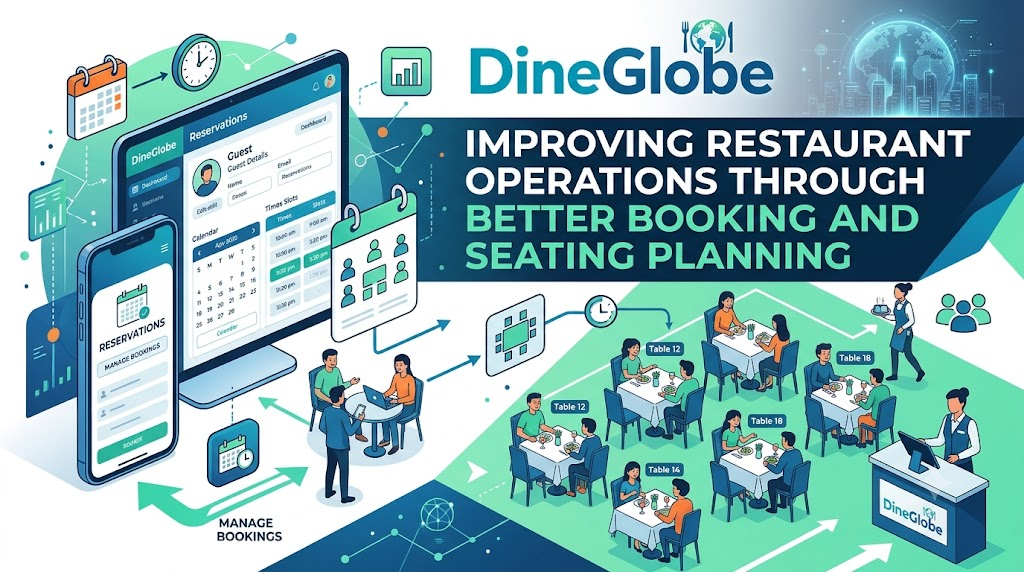
This is where a unified hospitality management platform becomes invaluable. Solutions like DineGlobe help restaurants centralize their front-of-house operations into a single interface. By combining direct booking tools with dynamic floor plan configuration, real-time waitlists, and guest arrival tracking, platforms in this space allow hosts and floor managers to:
- Protect Profit Margins: Capture direct reservations without paying per-cover commissions to third-party marketplaces.
- Track Live Table Statuses: Monitor table availability and dining phases in real time across the entire floor plan.
- Streamline Walk-In Traffic: Maintain a centralized waitlist that automatically updates table readiness, reducing wait times and host stand friction.
- Manage Pacing: Balance incoming covers evenly across server sections and kitchen firing capacities.
Equipping front-of-house staff with real-time operational clarity frees them from administrative tasks, allowing them to focus on hospitality and delivering exceptional guest experiences.
Actionable Steps to Improve Table Turnover Without Rushing Diners
Increasing table turnover does not mean pushing guests out the door; it means eliminating “dead time” between stages of the meal.
| Phase | Common Delay Point | Operational Fix |
| Arrival | Host searching for an open table | Real-time digital floor map showing tables in check-out phase |
| Ordering | Guest waiting for drink/appetizer order | Immediate water service and prompt drink orders within 2 minutes |
| Payment | Waiting for the server to process credit cards | Mobile checkout or clear check-dropping protocols upon plate clearance |
| Bussing | Dirty table sitting unoccupied | Automated host notification when a table is cleared and reset |
Focusing on these micro-moments can comfortably trim 8 to 12 minutes off an average turn time. Across a 40-table venue over an evening service, those recaptured minutes translate directly into additional seatings and higher daily revenue.
Frequently Asked Questions (FAQs)
What is front-of-house restaurant operations?
Front-of-house (FOH) operations encompass every aspect of the restaurant that interacts directly with guests. This includes reservation booking, host stand management, guest greeting, table seating, waitlist coordination, food and beverage service, and payment processing.
How does a digital floor plan improve table turnover?
A digital floor plan gives floor managers and hosts a live, visual layout of the dining room. It highlights which tables are currently seated, which have received their checks, and which are clean and ready for new guests. This visibility eliminates gaps between seatings, allowing staff to seat parties faster without walking the floor.
Why should restaurants prioritize direct bookings over third-party platforms?
Third-party booking platforms often charge high per-cover or subscription fees and typically retain ownership of guest contact details. Direct reservations keep guest data in-house for marketing purposes, eliminate third-party commission fees, and allow restaurants to set their own booking rules and cancellation policies.
What is the most effective way to manage walk-in waitlists during peak hours?
An effective waitlist system tracks party sizes and estimated wait times digitally. Using automated SMS notifications allows guests to step away from a crowded entryway while keeping them informed of their table status, significantly cutting down walkout rates.
How do you balance kitchen capacity with front-of-house seating?
Front-of-house systems should use reservation pacing controls to limit the number of covers seated within specific intervals (e.g., every 15 minutes). Spreading guest seating evenly avoids overwhelming kitchen cook lines and prevents service slowdowns.
Conclusion
Running an efficient front-of-house operation comes down to clarity. When hosts know precisely which tables are turning, servers receive balanced covers, and guests experience a smooth transition from arrival to seating, the entire restaurant operates at a higher standard. By reviewing your floor plan, training staff on service pacing, and implementing dedicated reservation and floor management tools, you can replace chaotic shifts with steady, profitable dining services. If you want to reduce host stand bottlenecks and run a more efficient dining room, explore how DineGlobe’s front-of-house management platform can help you manage direct bookings, optimize floor plans, and improve table availability.

Best Cardiac Hospitals Near You
Discover top heart hospitals, cardiology centers & cardiac care services by city.
Advanced Heart Care • Trusted Hospitals • Expert Teams
View Best Hospitals