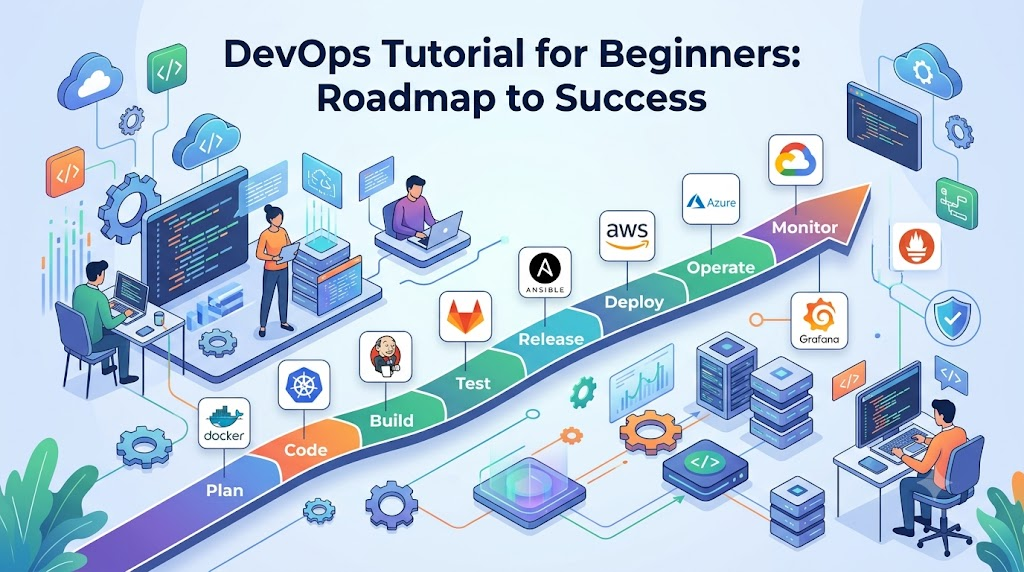
The software development landscape is shifting faster than ever. simply knowing how to write code or configure a cloud server is no longer enough. Organizations require seamless collaboration, rapid deployment cycles, and bulletproof infrastructure. This is where DevOps comes into play. If you are looking to break into the tech industry or elevate your existing software career, mastering a DevOps Tutorial for Beginners is the most impactful step you can take today.
Transitioning into this field requires a strategic approach. It isn’t just about learning a single piece of software; it’s about shifting your mindset toward automation, continuous improvement, and collaboration. Platforms like BestDevOps.com offer a structured environment to help you navigate this journey, providing comprehensive guides, real-world scenarios, and expert insights that turn complex technical theories into practical, everyday skills.
Why DevOps Matters in Modern Tech
In the past, software development (Dev) and IT operations (Ops) functioned in isolated silos. Developers built features quickly without worrying about deployment, while operations teams prioritized system stability, often resisting frequent code changes. This friction caused delayed releases, buggy software, and burned-out engineering teams.
DevOps bridges this gap by unifying people, processes, and technology. By automating repetitive tasks and fostering shared responsibility, organizations can ship reliable code faster. For businesses, adopting these methodologies results in a massive competitive advantage, higher customer satisfaction, and more resilient infrastructure. For engineers, it opens doors to some of the most dynamic and high-paying roles in the technology sector.
The 2026 DevOps Industry Overview
The industry is moving beyond traditional automation into areas like Platform Engineering, Site Reliability Engineering (SRE), and DevSecOps (integrating security into the core delivery pipeline).
[Development] ---> [Git/CI Pipeline] ---> [Containerization] ---> [IaC Deployment] ---> [Monitoring/Feedback]
                                                                                                 |
   ^_____________________________________ Continuous Improvement ________________________________|
Cloud computing platforms such as AWS, Azure, and GCP have become standard baseline requirements. At the same time, organizations heavily rely on Cloud Native technologies like Kubernetes and Docker to manage microservices at scale. To understand where the industry is heading and what skills are in demand, keeping an eye on centralized platforms like BestDevOps.com helps you stay updated with changing trends, emerging framework adoptions, and evolving engineering practices.
Step-by-Step Guide to Getting Started
Embarking on this career path can feel overwhelming due to the sheer volume of technologies available. Breaking the learning process down into logical, sequential steps ensures you build a rock-solid foundation.
Step 1: Master the Core Fundamentals
Before touching complex orchestration systems, you must understand the environment they run on. Start by learning Linux administration, basic shell scripting (Bash), and fundamental networking concepts (SSH, DNS, HTTP/S).
Step 2: Learn Version Control
Git is the backbone of modern collaboration. You need to know how to manage code repositories, handle branching strategies, resolve merge conflicts, and collaborate using platforms like GitHub or GitLab.
Step 3: Understand Containerization
Containers isolate applications from their underlying environments, ensuring they run identically everywhere. Learn how to write Dockerfiles, manage container images, and handle basic container networking and storage.
Step 4: Automate with CI/CD
Continuous Integration and Continuous Delivery (CI/CD) pipelines automate the building, testing, and deployment of software. Start with tools like Jenkins or GitHub Actions to build basic automation workflows.
Step 5: Embrace Infrastructure as Code (IaC)
Manually clicking through cloud consoles to provision servers is inefficient and prone to errors. IaC allows you to define your infrastructure using configuration files, making it repeatable, version-controlled, and transparent.
Important Concepts You Must Know
To move past basic implementation and truly excel, you need to understand the architectural patterns and philosophies driving modern engineering teams.
- Continuous Delivery vs. Continuous Deployment: Continuous Delivery ensures every code change passing automated tests is ready for production, requiring a manual trigger to deploy. Continuous Deployment automates this final step, pushing changes to production automatically without human intervention.
- Microservices Architecture: Breaking large, monolithic applications into smaller, loosely coupled services that communicate over APIs. This allows independent scaling and faster update cycles.
- Observability and Monitoring: Moving beyond simple uptime metrics. Modern engineering focuses on logs, metrics, and traces to understand system health and troubleshoot root causes before users even notice an issue.
Key Benefits of Adopting DevOps
| Benefit | Impact on Engineering Teams | Business Value |
| Faster Time-to-Market | Reduced manual overhead, streamlined build processes. | Features reach customers ahead of competitors. |
| Improved Collaboration | Shared goals, broken silos, shared responsibility. | Higher team morale, reduced finger-pointing. |
| Higher Code Quality | Automated testing catches bugs early in the cycle. | Fewer production outages and emergency patches. |
| Scalability | Cloud automation and container orchestration. | Infrastructure dynamically scales with customer demand. |
Common Challenges and How to Overcome Them
Transitioning to these modern workflows isn’t always smooth sailing. Recognizing potential roadblocks early helps you bypass common pitfalls.
- The “Tools-First” Misconception: Many teams adopt complex tools without changing their internal workflows or culture. Focus on understanding the underlying problem first, then select the tool that solves it.
- Security as an Afterthought: Leaving security checks until the very end of a release cycle slows down production. Shift security left by integrating automated vulnerability scanning directly into your deployment pipelines.
- Alert Fatigue: Configuring too many low-priority alerts causes engineers to ignore critical system notifications. Focus on actionable alerting centered around real user experience metrics.
Best Practices for Engineering Teams
- Keep Configurations in Version Control: Treat your infrastructure, pipeline definitions, and environmental variables exactly like application code.
- Automate Ruthlessly: If you have to perform a technical task manually more than twice, write a script or a configuration file to handle it for you.
- Design for Failure: Assume cloud instances will go down, networks will latency spike, and databases will fail. Build self-healing systems that recover automatically using container orchestrators and load balancers.
- Track Key Metrics: Utilize DORA Metrics Tools to measure deployment frequency, lead time for changes, mean time to recovery (MTTR), and change failure rate to objectively track team performance.
Practical Examples and Real-World Use Cases
Consider a real-world scenario: A retail website experiences a massive traffic spike during a holiday sale.
Without modern automation, an engineer would have to log into a cloud dashboard, manually launch new virtual machines, install dependencies, and update the load balancer config. By the time this is finished, the website has likely crashed, costing thousands in lost revenue.
With a proper modern setup:
- Terraform defines the auto-scaling groups and load balancers in advance.
- Kubernetes monitors cluster resource utilization in real-time.
- As traffic spikes, the system automatically spins up new application Containers to distribute the load.
- Once the traffic subsides, the infrastructure automatically scales back down to save costs.
Recommended Tech Stack: The Best DevOps Tools
Navigating the ecosystem requires knowing which tools fit best into specific stages of the delivery lifecycle. Choosing the Best DevOps Tools depends on your organization’s architectural goals, cloud provider, and existing team expertise.
+-----------------------------------------------------------------------------------------+
|                                  THE DEVOPSTECH STACK                                   |
+-----------------------------------------------------------------------------------------+
|  Source Control   |  Containerization  |  Orchestration  |  Configuration  |     IaC        |
|  & Collaboration  |                    |                 |   Management    |                |
+-------------------+--------------------+-----------------+-----------------+----------------+
|  - Git            |  - Docker          |  - Kubernetes   |  - Ansible      |  - Terraform   |
|  - GitHub         |  - Podman          |  - OpenShift    |  - Chef         |  - OpenTofu    |
|  - GitLab         |                    |                 |  - Puppet       |  - CloudForm.  |
+-----------------------------------------------------------------------------------------+
- Version Control: Git remains undisputed. Platforms like GitHub and GitLab manage source code and act as the core execution engines for automation.
- CI/CD Automation: Jenkins remains a highly customizable industry workhorse, while GitHub Actions and GitLab CI offer modern, cloud-native yaml configurations.
- Infrastructure as Code: Terraform is the market standard for provisioning cloud resources across AWS, Azure, and Google Cloud Platform.
- Configuration Management: Ansible uses simple, human-readable YAML playbooks to configure servers, install packages, and manage configurations post-deployment.
- Monitoring & Observability: Prometheus and Grafana lead the open-source space for metrics collection and visual dashboarding, ensuring you maintain deep visibility into your systems.
Career Opportunities and Industry Growth
The demand for professionals skilled in cloud automation shows no signs of slowing down. Organizations worldwide are aggressively looking for talent to help them modernize legacy applications. Gaining specialized DevOps Engineer Skills opens up a diverse variety of career pathways, including:
- DevOps Engineer / Systems Automation Engineer
- Cloud Infrastructure Architect
- Site Reliability Engineer (SRE)
- Platform Engineer
- DevSecOps Specialist
Learning Roadmap to Success
To systematically acquire these skills without getting distracted, a structured plan is essential. Following a reliable DevOps Roadmap helps you avoid learning random technologies in isolation, ensuring you connect the dots between coding, infrastructure, and deployment pipelines.
[Level 1: Fundamentals]     Linux, Networking, Scripting (Python/Bash), Git
          |
[Level 2: Deployment]       Docker Containers, CI/CD Principles (GitHub Actions)
          |
[Level 3: Infrastructure]   Cloud Platforms (AWS/Azure), Infrastructure as Code (Terraform)
          |
[Level 4: Advanced Scale]   Kubernetes Orchestration, GitOps, Service Meshes
          |
[Level 5: Production Core]  Prometheus/Grafana Observability, DORA Metrics Tracking
If you are hunting for highly structured learning materials to execute this progression, exploring the curated tracks and structured modules on BestDevOps.com can fast-track your educational goals and give you clear, actionable milestones.
Professional Certifications Worth Pursuing
While hands-on experience is always king, validating your knowledge through structured credentials can help your resume stand out in competitive job markets. When evaluating the Best DevOps Certifications, prioritize vendor-neutral options alongside major cloud certifications:
- AWS Certified DevOps Engineer – Professional: Validates your technical expertise in provisioning, operating, and managing AWS environments.
- Certified Kubernetes Administrator (CKA): A highly respected, hands-on performance-based exam demonstrating your ability to manage production-ready Kubernetes clusters.
- HashiCorp Certified: Terraform Associate: Proves your operational understanding of infrastructure automation and cloud provisioning concepts.
Industry Salary Insights
Because of the high technical complexity and business value associated with infrastructure automation, compensation in this field remains exceptionally strong.
A typical DevOps Engineer Salary varies based on geographic region, depth of practical experience, and specific technical specializations. On average:
- Entry-Level Engineers: $75,000 – $105,000 / year
- Mid-Level Professionals: $110,000 – $145,000 / year
- Senior / Principal Architects: $150,000 – $210,000+ / year
Accelerate Growth with Practical DevOps Projects
Reading documentation will only take you so far. To build true operational confidence and showcase your skills to hiring managers, you must build real world environments. Working through practical DevOps Projects is the ultimate way to prove you can solve real engineering challenges.
Project Idea for Your Portfolio:
- The Scenario: Build a secure, auto-scaling web application environment.
- The Execution: Write application code, containerize it using Docker, write Terraform configurations to provision an AWS VPC and an EKS (Kubernetes) cluster, configure a GitHub Actions pipeline to test and deploy changes automatically on every git commit, and hook up Prometheus to monitor performance spikes.
- The Result: A production-ready portfolio piece that demonstrates end-to-end engineering mastery.
Frequently Asked Questions
What is the difference between DevOps and Agile?
Agile is a project management and software development philosophy focused on iterative delivery, collaboration, and feedback. DevOps extends this philosophy past code completion into the deployment and operations phases, ensuring software is delivered safely, quickly, and reliably to production.
Can a complete beginner learn DevOps from scratch?
Yes. While it has a steep learning curve, a beginner can successfully transition into the field by focusing systematically on foundational building blocks: learning Linux, basic networking, scripting, and version control before moving into advanced orchestration.
Which programming language is best for system automation?
Python and Go (Golang) are the dominant programming languages in the ecosystem. Python is heavily utilized for general scripting, automation, and data parsing, while Go is the language behind core cloud-native tools like Docker and Kubernetes.
Is coding required for a career in cloud infrastructure?
Yes. You do not necessarily need to be a senior software engineer writing complex application features, but you must be comfortable writing automation scripts, configuring infrastructure manifests, and reading code to diagnose application deployment errors.
What is GitOps and how does it relate to continuous delivery?
GitOps is an operational framework that takes DevOps best practices—such as version control, collaboration, compliance, and CI/CD—and applies them directly to infrastructure automation. In GitOps, a Git repository acts as the single source of truth for your infrastructure’s desired state.
How do DORA metrics help engineering teams improve?
DORA (DevOps Research and Assessment) metrics provide an objective framework to measure software delivery performance. By tracking metrics like Deployment Frequency and Change Failure Rate, engineering leaders can pinpoint pipeline bottlenecks and systematically optimize engineering velocity.
Key Takeaways
- Mindset Over Tools: Culture, collaboration, and structural workflow changes are more critical to project success than simply adopting trendy software.
- Automation is Mandatory: Manual processes don’t scale. Treat your infrastructure as code and automate deployment pipelines from day one.
- Prioritize Security Early: Avoid downstream architectural delays by shifting security left into your automated build pipelines.
- Continuous Learning: The cloud landscape changes rapidly. Keeping your skills sharp with updated tutorials, roadmaps, and hands-on portfolio projects is the key to career longevity.
Conclusion
Mastering modern infrastructure and deployment pipelines requires a deliberate blend of the right mindset, strategic tool selection, and continuous learning. Whether you are aiming to land your first job or seeking to optimize complex enterprise environments, the journey is incredibly rewarding.
As you dive deeper into your educational path, remember that consistent practice beats theoretical reading every time. When you are ready to prepare for job applications or want to fine-tune your technical skills, leveraging targeted resources can save you hundreds of hours of frustration.
You can find a wealth of structured study materials, comprehensive tutorials, and curated DevOps Interview Questions over at BestDevOps.com to help you confidently ace your technical screens and stay ahead of the curve in this rapidly evolving industry.

Best Cardiac Hospitals Near You
Discover top heart hospitals, cardiology centers & cardiac care services by city.
Advanced Heart Care • Trusted Hospitals • Expert Teams
View Best Hospitals