Introduction
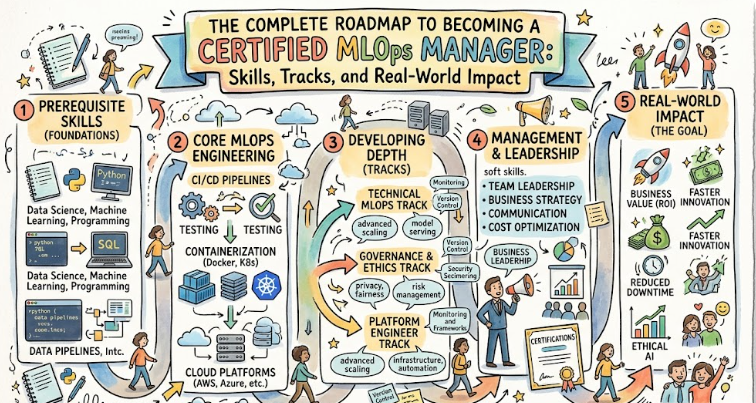
The transition from traditional software development to machine learning requires a robust operational framework that ensures reliability and scalability. A Certified MLOps Manager plays a pivotal role in bridging the gap between data science teams and IT operations to deliver production-grade AI systems. This guide is specifically crafted for professionals looking to master the complexities of managing machine learning life cycles within the broader context of DevOps and platform engineering. By pursuing this path at AIOps School, engineers can gain the necessary insights to navigate the technical and managerial challenges of the modern enterprise. This roadmap helps individuals understand the strategic importance of MLOps and provides a clear trajectory for career advancement in a competitive global market.
What is the Certified MLOps Manager?
The Certified MLOps Manager designation represents a comprehensive validation of an individual’s ability to oversee the entire machine learning lifecycle from data ingestion to model monitoring. Unlike theoretical courses, this program emphasizes practical, production-focused learning designed to solve real-world engineering bottlenecks. It exists to standardize the way organizations deploy and manage AI models, ensuring that the principles of automation, testing, and continuous integration are applied to data science. By aligning with modern enterprise workflows, this certification ensures that practitioners can handle large-scale deployments while maintaining the high standards expected in professional software environments.
Who Should Pursue Certified MLOps Manager?
This program is ideally suited for a wide range of professionals, including DevOps engineers, Site Reliability Engineers (SREs), and cloud architects who are increasingly tasked with managing AI workloads. Data scientists who wish to understand the operational side of their models and engineering managers overseeing data-driven teams will find immense value in this curriculum. Beginners with a strong foundation in cloud computing can use this to specialize, while experienced professionals can validate their expertise in a niche but high-demand field. Both the Indian tech ecosystem and the global market are seeing a surge in demand for leaders who can harmonize data engineering with traditional operations.
Why Certified MLOps Manager is Valuable and Beyond
The demand for specialized MLOps leadership is growing rapidly as enterprises realize that deploying a single model is easy, but managing hundreds of models at scale is incredibly difficult. This certification provides long-term career longevity by teaching fundamental principles of automation and governance that remain relevant even as specific tools evolve. Organizations are moving toward heavy adoption of AI-native applications, creating a persistent need for managers who understand the nuances of model drift and data versioning. Investing time in this certification offers a high return on investment by positioning professionals at the forefront of the next major wave in technical infrastructure.
Certified MLOps Manager Certification Overview
The program is delivered via the official Certified MLOps Manager curriculum and is hosted on the AIOps School platform. It offers a structured approach to learning, beginning with foundational concepts and moving into complex management strategies that involve cost optimization and security. The assessment process is rigorous, focusing on the ability to design and implement MLOps pipelines rather than just memorizing terminology. This ownership-centric approach ensures that graduates are capable of taking full responsibility for an organization’s machine learning infrastructure and operational health.
Certified MLOps Manager Certification Tracks & Levels
The certification is divided into distinct levels to cater to different stages of professional experience, ranging from foundational knowledge to expert-level management. The foundation level focuses on the basic building blocks of machine learning pipelines, while the professional level dives into advanced automation and CI/CD for ML. Finally, the advanced level is designed for those aiming for leadership roles, focusing on strategic planning, budgeting, and team orchestration across various domains like FinOps and SRE. These levels are designed to align perfectly with a professional’s career progression, allowing for steady growth from a contributor to a decision-maker.
Complete Certified MLOps Manager Certification Table
| Track | Level | Who it’s for | Prerequisites | Skills Covered | Recommended Order |
| Core Operations | Foundation | Aspiring MLOps Engineers | Basic Python & Cloud | ML Lifecycle, Docker, Git | First |
| Management | Professional | Senior Engineers, Leads | 2+ Years DevOps/Data | CI/CD for ML, Kubernetes | Second |
| Strategy | Advanced | Engineering Managers | Professional Cert | Governance, ROI, Scaling | Third |
| Specialized | Expert | Architects, Directors | Advanced Cert | Multi-cloud ML, Security | Optional |
Detailed Guide for Each Certified MLOps Manager Certification
Certified MLOps Manager – Foundation
What it is
This level validates a candidate’s understanding of the basic concepts of machine learning operations and their ability to integrate ML models into a standard DevOps pipeline. It acts as the entry point for those transitioning from software engineering or data science into the operational management of models.
Who should take it
This is designed for junior cloud engineers, software developers, and fresh graduates who want to build a career in the intersection of AI and infrastructure. It is also suitable for technical project managers who need to understand the jargon and workflows of their engineering teams.
Skills you’ll gain
- Understanding the difference between DevOps and MLOps.
- Version control for data and experiments.
- Basic containerization of machine learning models.
- Setting up automated testing for model code.
Real-world projects you should be able to do
- Create a basic automated pipeline to retrain a model upon data updates.
- Containerize a simple ML model using Docker and deploy it to a cloud provider.
Preparation plan
- 7-14 days: Focus on understanding the core terminology and the ML lifecycle steps.
- 30 days: Complete hands-on labs involving Git and basic Docker configurations.
- 60 days: Review real-world case studies of small-scale ML deployments.
Common mistakes
- Underestimating the importance of data versioning compared to code versioning.
- Focusing too much on the model’s accuracy and not enough on the deployment stability.
Best next certification after this
- Same-track option: Certified MLOps Manager – Professional.
- Cross-track option: Certified SRE Professional.
- Leadership option: Technical Team Lead Certification.
Certified MLOps Manager – Professional
What it is
This certification validates the ability to build and manage complex, automated pipelines that handle large datasets and sophisticated model architectures. It focuses on the “Ops” part of MLOps, ensuring that models are reliable, scalable, and secure in production environments.
Who should take it
Experienced DevOps engineers and data engineers with at least two years of experience should pursue this level to solidify their expertise. It is also ideal for senior developers who are responsible for the infrastructure of AI-driven products within their organization.
Skills you’ll gain
- Advanced CI/CD for machine learning (CT – Continuous Training).
- Managing model registries and feature stores at scale.
- Orchestrating ML workloads with Kubernetes and Kubeflow.
- Implementing robust monitoring and alerting for model performance.
Real-world projects you should be able to do
- Design a fully automated system that detects model drift and triggers an automatic rebuild.
- Manage a centralized feature store that serves multiple production models simultaneously.
Preparation plan
- 7-14 days: Study the architecture of specialized tools like Kubeflow or MLflow.
- 30 days: Build a multi-stage pipeline that includes automated data validation.
- 60 days: Focus on security best practices for ML models and data privacy.
Common mistakes
- Ignoring the cost implications of scaling ML infrastructure in the cloud.
- Failing to implement proper logging for inference requests.
Best next certification after this
- Same-track option: Certified MLOps Manager – Advanced.
- Cross-track option: Certified DevSecOps Professional.
- Leadership option: Certified Engineering Manager.
Certified MLOps Manager – Advanced
What it is
The advanced level focuses on the strategic management of MLOps programs within an enterprise, including team leadership and organizational design. It validates the skills required to oversee multiple MLOps teams and ensure that AI initiatives align with broader business goals.
Who should take it
This is tailored for engineering managers, directors of AI, and principal architects who are responsible for the long-term roadmap of machine learning infrastructure. Candidates should have a deep understanding of both technical implementation and business strategy.
Skills you’ll gain
- Strategic planning for enterprise-wide MLOps adoption.
- Financial management and cost optimization for ML (FinOps for ML).
- Defining governance, compliance, and ethical AI standards.
- Leading cross-functional teams of data scientists and engineers.
Real-world projects you should be able to do
- Develop a three-year roadmap for an organization’s MLOps maturity model.
- Audit an existing AI infrastructure for security vulnerabilities and cost inefficiencies.
Preparation plan
- 7-14 days: Focus on leadership frameworks and strategic decision-making.
- 30 days: Analyze enterprise-level case studies on MLOps digital transformation.
- 60 days: Develop a mock business case for MLOps investment for a board of directors.
Common mistakes
- Focusing solely on technology while neglecting the cultural changes needed for MLOps.
- Over-engineering solutions for small-scale business problems.
Best next certification after this
- Same-track option: Expert MLOps Architect.
- Cross-track option: Certified FinOps Leader.
- Leadership option: CTO / V.P. of Engineering Program.
Choose Your Learning Path
DevOps Path
Professionals coming from a DevOps background should focus on applying their existing knowledge of CI/CD to the unique challenges of machine learning. This path emphasizes the integration of data pipelines into standard deployment workflows and the automation of model retraining. By mastering these skills, DevOps engineers can transition into MLOps roles where they manage the lifecycle of models just as they manage software services. This path is perfect for those who want to stay close to the infrastructure while expanding their domain expertise into AI.
DevSecOps Path
In the DevSecOps path, the primary focus is on securing the machine learning lifecycle, which includes protecting sensitive training data and ensuring model integrity. Security professionals learn how to implement automated security scans for ML code and monitor for adversarial attacks on production models. This path is critical for organizations in regulated industries like finance or healthcare where data privacy is paramount. By combining security with MLOps, practitioners become invaluable assets in ensuring that AI is both powerful and safe.
SRE Path
Site Reliability Engineers focusing on MLOps will concentrate on the availability, latency, and performance of machine learning services. This path involves building robust monitoring systems that can detect when a model’s predictions are no longer accurate or when the inference engine is slowing down. SREs learn to apply their “error budget” philosophy to ML, ensuring that model updates do not compromise the overall stability of the platform. This is the ideal route for engineers who enjoy troubleshooting complex distributed systems and ensuring high uptime.
AIOps Path
The AIOps path is distinct as it focuses on using artificial intelligence and machine learning to improve IT operations themselves. Professionals on this track learn how to implement models that can predict infrastructure failures, automate root cause analysis, and optimize resource allocation. While MLOps focuses on managing ML models, AIOps uses those models to make the manager’s life easier and the systems more self-healing. It is a highly specialized path for those interested in the cutting edge of autonomous IT management and intelligent automation.
MLOps Path
The pure MLOps path is designed for those who want to become specialists in the intersection of data science and operational engineering. This track focuses heavily on the mechanics of the machine learning pipeline, including data versioning, model experimentation, and the management of model artifacts. Practitioners learn how to use specialized tools to bridge the gap between a notebook-based environment and a production-grade microservices architecture. It is the core path for anyone wanting to hold the title of MLOps Engineer or MLOps Manager within a modern tech company.
DataOps Path
DataOps focuses on the delivery of high-quality data to the machine learning models that need it, emphasizing data pipeline reliability and speed. Professionals on this path learn how to manage data lakes, implement data quality checks, and automate the ingestion process to ensure consistency. Since a model is only as good as the data it is trained on, the DataOps path is a fundamental pillar of any successful MLOps strategy. This route is excellent for data engineers who want to specialize in the operational aspects of the data life cycle.
FinOps Path
The FinOps path within the MLOps context addresses the often-overlooked challenge of managing the high costs associated with training and running ML models. Practitioners learn how to track cloud spending, optimize GPU utilization, and implement chargeback models for different business units. As ML projects scale, cost management becomes a top priority for leadership, making FinOps specialists highly sought after. This path is perfect for those with an analytical mindset who want to balance technical performance with financial responsibility.
Role → Recommended Certified MLOps Manager Certifications
| Role | Recommended Certifications |
| DevOps Engineer | Foundation, Professional |
| SRE | Professional, Advanced |
| Platform Engineer | Foundation, Professional |
| Cloud Engineer | Foundation, Professional |
| Security Engineer | DevSecOps specialized MLOps tracks |
| Data Engineer | Foundation, DataOps specialized tracks |
| FinOps Practitioner | Advanced (FinOps focus) |
| Engineering Manager | Advanced |
Next Certifications to Take After Certified MLOps Manager
Same Track Progression
After completing the manager-level certifications, professionals should look toward expert or architect roles that focus on the technical depth of specialized frameworks. This might involve deep dives into specific cloud provider ML tools or advanced container orchestration for large-scale distributed training. Continuing in this track ensures that you remain the go-to expert for technical implementation details as the field matures. Deep specialization is often the path taken by those who wish to remain in individual contributor roles at a principal or staff level.
Cross-Track Expansion
Broadening your skillset by pursuing certifications in SRE, DevSecOps, or FinOps can make you a more versatile leader. For example, an MLOps manager with a strong background in FinOps can better argue for budget increases by demonstrating clear cost optimizations. Cross-training allows you to see the “big picture” of how AI fits into the entire organizational infrastructure, making you more effective at collaborating with other departments. This versatility is often the key to moving into senior leadership positions where you must manage diverse technical teams.
Leadership & Management Track
For those looking to transition fully into executive leadership, certifications in strategic management and organizational psychology can be beneficial. Understanding how to build a culture of experimentation and how to navigate the politics of digital transformation is just as important as knowing the technical stack. These programs help you move from managing a technical process to leading people and setting the long-term vision for the entire company’s AI capabilities. This is the natural progression for those aiming for roles like VP of Engineering or Chief Technology Officer.
Training & Certification Support Providers for Certified MLOps Manager
DevOpsSchool
DevOpsSchool is a prominent leader in the training industry, offering a wide array of programs that cater to various aspects of modern engineering. They provide extensive resources for professionals looking to master the intricacies of DevOps and its integration with emerging technologies. Their curriculum is designed by industry experts who bring real-world scenarios into the classroom, ensuring that students are not just learning theory but are prepared for actual job challenges. With a strong community and a history of successful placements, they are a reliable choice for foundational and advanced learning.
Cotocus
Cotocus specializes in providing high-end consulting and training services that focus on niche technical domains including cloud-native technologies and specialized operations. They are known for their intensive bootcamps and hands-on laboratory sessions that push engineers to solve complex architectural problems. Their approach is highly personalized, often tailoring content to meet the specific needs of corporate clients or individual career goals. By focusing on the latest tools and methodologies, Cotocus helps professionals stay ahead of the curve in a rapidly changing technological landscape, making them an excellent partner for career growth.
Scmgalaxy
Scmgalaxy serves as a comprehensive resource hub for software configuration management and DevOps practitioners globally. They provide a wealth of tutorials, community forums, and certification guides that are essential for anyone looking to understand the history and future of operational engineering. Their training programs are deeply rooted in the practicalities of build and release management, which are foundational to successful MLOps implementation. By leveraging their vast library of documentation and expert-led webinars, professionals can gain a deeper understanding of the toolchains that power modern software delivery pipelines.
BestDevOps
BestDevOps focuses on delivering high-quality, streamlined training for those looking to achieve certifications in the shortest possible time without sacrificing depth. Their programs are specifically designed to align with industry-standard certification exams, providing candidates with the confidence and knowledge needed to succeed. They offer a variety of formats, including self-paced learning and instructor-led sessions, to accommodate the busy schedules of working professionals. Their emphasis on exam readiness and practical application makes them a popular choice for engineers who need to validate their skills quickly for career advancement.
devsecopsschool.com
DevSecOpsSchool is a specialized platform dedicated to the integration of security into the development and operations lifecycle. As AI and ML become more prevalent, the security challenges they present become more complex, and this provider addresses those needs specifically. Their training covers everything from secure coding practices to automated threat modeling for machine learning pipelines. By focusing on the “security first” mindset, they prepare professionals to build resilient systems that can withstand the evolving landscape of cyber threats, ensuring that AI initiatives remain safe and compliant.
sreschool.com
SRESchool focuses on the principles of Site Reliability Engineering, teaching professionals how to build and maintain highly available and scalable systems. Their curriculum is essential for anyone looking to manage the operational health of machine learning models in a production environment. They emphasize the use of automation to reduce toil and the application of data-driven decision-making to improve system reliability. Students learn how to manage service level objectives (SLOs) and how to handle incident response effectively, which are critical skills for any MLOps manager overseeing mission-critical AI services.
aiopsschool.com
AIOpsSchool is the primary provider for certifications focused on the intersection of artificial intelligence and IT operations. They offer specialized tracks that help professionals understand how to apply ML to optimize infrastructure and how to manage the models themselves. Their programs are uniquely positioned to bridge the gap between data science and traditional systems engineering, providing a holistic view of the AI-driven enterprise. With a focus on modern frameworks and real-world implementation, they are the go-to source for anyone looking to earn the Certified MLOps Manager designation and excel in the field.
dataopsschool.com
DataOpsSchool provides targeted training on the management of data pipelines and the operational aspects of data engineering. They recognize that data is the fuel for machine learning and that its delivery must be as reliable as the software itself. Their courses cover data quality, versioning, and the automation of data workflows, which are all vital components of a successful MLOps strategy. By training professionals to treat data with the same rigor as code, they help organizations build a solid foundation for their AI and analytics initiatives, ensuring long-term success.
finopsschool.com
FinOpsSchool addresses the critical need for financial accountability in the cloud-native and AI era. They provide training on how to manage and optimize cloud spending, which is often one of the largest expenses for companies running large-scale machine learning models. Their curriculum teaches professionals how to align technical decisions with business value, ensuring that AI projects are not only technically successful but also financially sustainable. As organizations look to scale their ML capabilities, the skills taught at FinOpsSchool become increasingly important for managers who need to justify their budgets and maximize ROI.
Frequently Asked Questions (General)
- How difficult is the Certified MLOps Manager exam?
The exam is moderately difficult as it requires a blend of technical knowledge and management perspective, focusing on practical application. - What are the prerequisites for the foundation level?
A basic understanding of Python, Linux commands, and cloud computing fundamentals is generally sufficient for the starting level. - How long does it take to complete the entire certification?
Most professionals complete each level within 2 to 4 months, depending on their prior experience and study schedule. - Is there a high demand for MLOps Managers in India?
Yes, the Indian tech sector is rapidly adopting AI, creating a significant shortage of professionals who can manage the operational lifecycle of models. - Does this certification help with career transitions?
Absolutely, it provides a structured path for software engineers or data scientists to move into high-paying operational leadership roles. - Are the labs included in the training program?
Most reputable providers include hands-on lab environments where you can practice building and deploying pipelines in a safe setting. - How does MLOps differ from standard DevOps?
MLOps involves additional complexities like data versioning, model drift monitoring, and hardware optimization that are not present in traditional software. - Is the certification recognized globally?
Yes, the principles taught are based on industry-standard practices used by major tech companies worldwide, ensuring global portability of your skills. - Can I skip the foundation level if I have experience?
While possible, it is recommended to review the foundation syllabus to ensure there are no gaps in your understanding of specific ML operational concepts. - What kind of salary increase can I expect?
While it varies by region, certified professionals often see a significant bump in compensation due to the specialized nature of the role. - Do I need to be a math expert to be an MLOps Manager?
No, while you need to understand the ML process, the focus is on the operations, infrastructure, and management rather than deep algorithm development. - How often do I need to recertify?
Most certifications recommend a refresh every two to three years to stay current with the latest tools and industry shifts.
FAQs on Certified MLOps Manager
- What specific tools are covered in the Certified MLOps Manager program?
The program covers a variety of industry-standard tools including Kubernetes for orchestration, Docker for containerization, and specialized platforms like MLflow or Kubeflow for managing the machine learning lifecycle. The focus is on the principles of these tools so you can adapt to any specific stack your company uses. - How does the program handle multi-cloud MLOps strategies?
The curriculum includes modules on designing architecture that is cloud-agnostic or spans multiple providers, ensuring that you can manage models across AWS, Azure, and Google Cloud Platform. This is vital for enterprise resilience and avoiding vendor lock-in. - Is there a focus on ethical AI and governance?
Yes, the management levels include extensive training on how to implement governance frameworks that ensure models are fair, explainable, and compliant with international data regulations like GDPR. - Does the certification cover the automation of data cleaning?
While it touches on data engineering, the focus is on the automation of those cleaning pipelines within the MLOps workflow to ensure consistent data quality for retraining. - How much coding is required for the manager level?
You should be comfortable reading and writing Python and shell scripts, as well as understanding YAML for configuration, though you won’t be writing core ML algorithms. - Are there any group projects in the training?
Many provider programs offer collaborative capstone projects that mimic real-world team environments, allowing you to practice leadership and communication skills alongside technical tasks. - How does the certification address the cost of GPU resources?
Specific modules in the professional and advanced tracks focus on resource scheduling and cost optimization to prevent runaway cloud bills during model training. - Can this certification help me lead a team of data scientists?
Yes, it provides the technical vocabulary and process understanding needed to effectively communicate with data scientists and translate their needs into operational requirements.
Final Thoughts: Is Certified MLOps Manager Worth It?
If you are looking to future-proof your career in an era where AI is becoming the backbone of every enterprise, the answer is a resounding yes. The role of an MLOps manager is one of the most critical yet undersupplied positions in the current market, offering both high compensation and the opportunity to work on cutting-edge technology. However, it is important to remember that the certification is a starting point, not a destination. Success in this field requires a commitment to continuous learning and a genuine passion for solving the “messy” real-world problems that occur when data meets production systems. By choosing a structured learning path through a reputable provider, you are giving yourself the best possible foundation to lead the next generation of engineering teams. Focus on the principles, build your hands-on experience, and stay curious about how technology can solve business problems.

Best Cardiac Hospitals Near You
Discover top heart hospitals, cardiology centers & cardiac care services by city.
Advanced Heart Care • Trusted Hospitals • Expert Teams
View Best Hospitals