Introduction
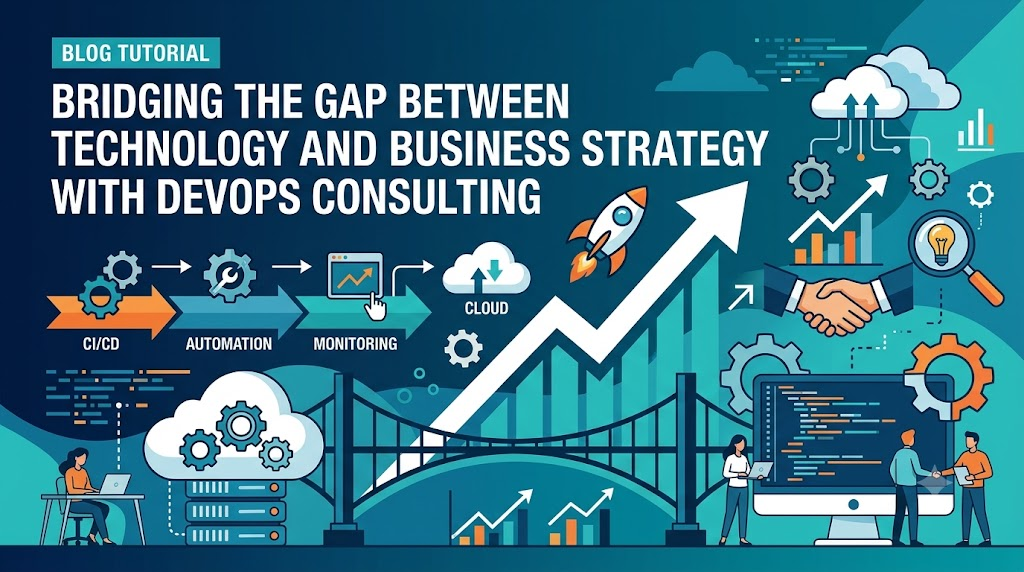
In today’s fast-moving business world, continuous innovation is essential for survival, yet many enterprises struggle to scale software delivery due to disconnected development teams, slow manual testing, and complex legacy systems that delay valuable features. Professional DevOps consulting bridges this gap between technology and business goals by analyzing an organization’s unique culture, processes, and architecture to eliminate delivery bottlenecks and introduce scalable automation. Rather than simply implementing tools, experienced advisors guide companies past common growth pain points and accelerate change—a transformation made seamless by partnering with specialized learning and strategic advisory ecosystems like DevOpsSchool, which provide the deep architectural insights and team training needed to shift from slow legacy operations to a fast, highly competitive, cloud-native model.
What Is DevOps Consulting?
DevOps consulting is a professional service that helps businesses assess, design, implement, and optimize their software delivery pipelines and operational infrastructure. The core objective is to break down traditional barriers between software development and IT operations. This alignment enables organizations to release high-quality software faster, safer, and more reliably.
A common misunderstanding is that consulting and technical implementation are exactly the same thing. While implementation focused on the hands-on configuration of tools, consulting provides the foundational strategy, architectural design, and cultural coaching required for long-term success.
+-------------------------------------------------------------+
|                     DEVOPS CONSULTING                       |
|  (Strategy, Assessment, Culture Alignment & Architecture)   |
+---------------------------------+---------------------------+
                                  |
                                  v
+-------------------------------------------------------------+
|                   DEVOPS IMPLEMENTATION                     |
|  (CI/CD Pipelines, IaC Scripts, Tooling & Monitoring Setup)  |
+-------------------------------------------------------------+
To understand this difference clearly, look at the distinct focus areas of each role:
- DevOps Consulting: Focuses on evaluating the current delivery workflow, identifying communication gaps between teams, calculating return on investment (ROI), designing cloud architecture, and defining long-term governance policies.
- DevOps Implementation: Focuses on writing Infrastructure as Code scripts, configuring continuous integration servers, setting up monitoring dashboards, and building specific automation pipelines.
Organizations hire external consultants because internal teams are often tied down by daily maintenance tasks or lack exposure to diverse cloud-native patterns. A consultant brings broad industry experience, helping companies avoid costly mistakes and adopt proven deployment strategies quickly.
Why Innovation at Scale Matters
When a small startup tests a new feature, the risk is minimal. However, when an enterprise with millions of users wants to innovate, the complexity rises significantly. Innovation at scale means continuously introducing new features, updates, and business value across a massive organization without interrupting daily operations or lowering security standards.
Achieving this scale requires high business agility. Organizations must adapt immediately to shifting market trends, consumer demands, and competitive moves. For instance, a traditional retail enterprise must scale its digital channels rapidly during peak holiday shopping seasons. If their infrastructure cannot scale or if releasing code updates takes weeks, they lose revenue to faster competitors. Scaling innovation helps businesses meet customer expectations for seamless, modern digital experiences while maintaining a strong position against global competition.
How DevOps Consulting Drives Innovation
True innovation requires an environment where software engineers can experiment freely without fear of breaking production environments. DevOps consulting enables this freedom by transforming operational workflows across several key areas:
- Process Optimization: Consultants review the entire software development lifecycle to eliminate redundant approval steps, minimize manual handoffs, and speed up delivery.
- Automation: By automating repetitive tasks like provisioning servers and running regression tests, engineers gain more time to focus on coding new features.
- Team Collaboration: Consultants help break down organizational silos, bringing developers, operations teams, and security specialists together under shared goals.
- Continuous Improvement: By establishing feedback loops, teams can rapidly deploy small changes, gather real-time performance data, and fix bugs instantly.
- Data-Driven Decision Making: Consultants set up clear dashboards tracking performance metrics, ensuring that business decisions are backed by hard operational data rather than guesswork.
Core Areas of DevOps Consulting
A comprehensive DevOps strategy covers several technical and cultural practices. The table below outlines the core pillars of a consulting engagement:
| Consulting Area | Purpose | Business Value |
| DevOps Assessment | Analyzes current workflows, tooling, and team culture to find delivery bottlenecks. | Provides a clear, practical roadmap for digital transformation. |
| CI/CD Strategy | Automates building, testing, and deploying code to reduce manual errors. | Accelerates time-to-market and lowers code failure rates. |
| Cloud Migration | Moves on-premises workloads to scalable public, private, or hybrid clouds. | Lowers data center costs and improves resource scalability. |
| Infrastructure as Code | Manages hardware and cloud resources using clear configuration files. | Ensures repeatable environments and prevents configuration drift. |
| Platform Engineering | Builds internal developer platforms with easy self-service tools. | Improves developer productivity and standardizes environments. |
| DevSecOps | Integrates automated security scanning directly into the build pipeline. | Reduces compliance risks and catches vulnerabilities early. |
| Monitoring & SRE | Tracks application performance and automates incident responses. | Guarantees high system availability and honors SLAs. |
Enterprise DevOps Transformation Roadmap
Transforming an enterprise software delivery model requires a structured, multi-phase plan. Moving too fast without proper planning can confuse teams and lead to tool fatigue.
+------------------+     +-----------------+     +-----------------+
| 1. Assessment    | --> | 2. Goal & Tool  | --> | 3. Process      |
|    & Discovery   |     |    Definition   |     |    Redesign     |
+------------------+     +-----------------+     +-----------------+
                                                                  |
                                                                  v
+------------------+     +-----------------+     +-----------------+
| 6. Optimization  | <-- | 5. Enterprise   | <-- | 4. Pilot        |
|    & Scaling     |     |    Rollout      |     |    Project      |
+------------------+     +-----------------+     +-----------------+
Phase 1: Current State Assessment & Discovery
Consultants interview engineering leads, analyze source control repositories, and map out the current deployment process. This step highlights manual bottlenecks and cultural blockers.
Phase 2: Goal Definition & Tooling Strategy
The business establishes key performance indicators (KPIs), such as deployment frequency and mean time to recovery (MTTR). The consulting team then selects an appropriate tool stack based on the company’s existing technology investments.
Phase 3: Process Redesign & Architecture Planning
Monolithic systems are reviewed for microservices migration, deployment pipelines are planned on paper, and automated security checkpoints are designed directly into the engineering workflow.
Phase 4: Pilot Project Implementation
The updated DevOps patterns are applied to a single, non-critical application. This allows a small team to test the new pipelines, build confidence, and iron out initial technical issues without risking core business operations.
Phase 5: Enterprise-Wide Rollout
With the pilot project successful, the consulting team documents standard operating procedures and rolls out the new platforms, tools, and workflows across all business units.
Phase 6: Continuous Optimization
The organization continuously monitors its production metrics, holds regular retro reviews, and refines automation routines to ensure long-term efficiency and software quality.
CI/CD Strategy Implementation
Continuous Integration (CI) and Continuous Delivery/Deployment (CD) form the operational foundation of any modern DevOps strategy.
- Continuous Integration: Developers commit code changes to a central repository multiple times a day. Every commit triggers an automated build and test sequence, catching integration bugs early.
- Continuous Delivery: Code changes automatically build, test, and prepare for a production release. The final deployment to production requires manual business approval.
- Continuous Deployment: Validated changes go directly from the developer’s workstation to the live production environment without manual intervention.
[ Developer Commit ]
       │
       ▼
┌──────────────────────────────┐
│  Continuous Integration      │ -> Automated Build & Unit Tests
└──────────────┬───────────────┘
               │
               ▼
┌──────────────────────────────┐
│  Continuous Delivery         │ -> Staging Deployment & Integration Tests
└──────────────┬───────────────┘
               │
               ▼
┌──────────────────────────────┐
│  Continuous Deployment       │ -> Automated Production Release & Verification
└──────────────────────────────┘
Modern organizations rely on specialized orchestration platforms to manage these pipelines securely:
- Jenkins: A highly flexible, open-source automation server ideal for complex enterprise environments that require extensive custom plugin integrations.
- GitHub Actions: A modern, developer-friendly tool built directly into GitHub, making it easy to automate workflows based on repository events.
- GitLab CI/CD: A unified platform that combines source code management, security scanning, and deployment tracking in a single application.
- Azure DevOps: A comprehensive Microsoft cloud suite designed for large enterprise resource planning, work item tracking, and multi-cloud delivery.
Cloud-Native Modernization
True business innovation requires moving away from rigid, on-premises physical hardware. Cloud-native modernization helps organizations design applications specifically to leverage the flexibility and scale of the cloud.
+------------------------------------------------------------+
|                  CLOUD-NATIVE ARCHITECTURE                 |
+------------------------------------------------------------+
|  [ Microservices API ]  [ Worker Node ]  [ Caching Node ]  |
|  --------------------------------------------------------  |
|            [ Managed Kubernetes Cluster (EKS/GKE) ]        |
|  --------------------------------------------------------  |
|                [ Infrastructure as Code ]                  |
+------------------------------------------------------------+
Consultants guide companies through this transformation using several core building blocks:
- Containerization: Packaging applications and their exact configurations into lightweight containers ensures software runs identically across development, staging, and production environments.
- Kubernetes Orchestration: Managing thousands of application containers manually is impossible. Kubernetes automates container scheduling, scaling, and networking across server clusters.
- Microservices Architecture: Breaking large, complex applications into smaller, independent services allows individual teams to update specific features without redeploying the whole system.
- Serverless Computing: Running code without managing underlying virtual servers lowers operational overhead, as cloud providers automatically handle scaling and resource allocation based on demand.
Infrastructure as Code (IaC)
Managing cloud environments manually using web consoles leads to configuration drift, security holes, and deployment mistakes. Infrastructure as Code (IaC) solves this problem by defining networks, databases, and servers entirely in written configuration files.
Using IaC brings distinct operational advantages to an organization:
- Repeatable Deployments: Testing, staging, and production environments can be built using the exact same code, eliminating configuration mismatches.
- Version-Controlled Systems: Because infrastructure is defined as text files, changes can be tracked, reviewed, and audited within git repositories.
- Multi-Cloud Consistency: Teams can deploy resources across multiple cloud providers simultaneously using standard configuration syntaxes.
Consultants typically implement three main tools to manage modern environments:
- Terraform: An open-source, vendor-neutral tool used to provision cloud infrastructure across providers like AWS, Azure, and Google Cloud Platform.
- Ansible: A configuration management engine focused on automating software installation and OS settings on running servers.
- AWS CloudFormation: A specialized, built-in service used to define and manage infrastructure specifically within the Amazon Web Services ecosystem.
Platform Engineering and Developer Experience
As cloud architecture grows more complex, developers can become overwhelmed by having to manage networks, security settings, and deployment pipelines on top of writing code. This friction slows down delivery. Platform Engineering solves this issue by creating dedicated Internal Developer Platforms (IDPs).
+-------------------------------------------------------------+
|                DEVELOPERS / ENGINEERING TEAMS                |
+-------------------------------------------------------------+
                               |
                               v (Self-Service API / CLI)
+-------------------------------------------------------------+
|                 INTERNAL DEVELOPER PLATFORM                 |
|    (Golden Paths, Automated Guardrails, Provisioning UI)     |
+-------------------------------------------------------------+
                               |
                               v (Automated Orchestration)
+-------------------------------------------------------------+
|           CLOUD INFRASTRUCTURE & KUBERNETES CLUSTERS        |
+-------------------------------------------------------------+
Consultants design these platforms to provide standardized, self-service infrastructure. Instead of waiting days for a ticket to be resolved, a developer can click a button or run a simple command to spin up a secure, compliant environment. This approach establishes clear “golden paths”—pre-approved, automated workflows that let developers safely move code from their laptops to production without deep operations expertise.
DevSecOps Integration
In older software delivery models, security checks occurred at the very end of the release cycle. If a vulnerability was found, the release was delayed, causing friction between security teams and developers. DevSecOps fixes this by introducing a “Shift-Left” approach, integrating automated security testing from the absolute start of development.
[ Code ] -> [ Automated SAST ] -> [ Container Scan ] -> [ Compliant Release ]
                │                      │
                ▼                      ▼
        (Flaws Blocked)        (Vulnerabilities Caught)
Consultants inject automated security tools directly into the CI/CD pipeline:
- Static Application Security Testing (SAST): Scans raw source code for security flaws before compilation.
- Software Composition Analysis (SCA): Scans third-party open-source libraries for known vulnerabilities and licensing compliance issues.
- Policy as Code: Code-based rules that block the creation of insecure cloud infrastructure, such as unencrypted databases or open public network ports.
Monitoring, Observability, and SRE
You cannot optimize what you do not measure. Traditional monitoring tells you when a server crashes, but modern observability helps you understand why a complex, distributed application is behaving poorly.
Site Reliability Engineering (SRE) combines software engineering principles with infrastructure operations to build highly resilient systems. Consultants install integrated tool stacks to capture three vital types of telemetry data:
- Metrics: Numeric tracking data (such as CPU load and memory usage) analyzed using Prometheus and visualized on Grafana dashboards.
- Logs: Structured text output from applications, collected by tools like the ELK Stack (Elasticsearch, Logstash, Kibana) to help troubleshoot errors.
- Traces: End-to-end maps of network requests as they move through microservices, tracked with systems like Jaeger to resolve latency bottlenecks.
Real-World DevOps Consulting Engagement
A professional DevOps consulting engagement follows a clear, structured framework to ensure measurable business results:
[ 1. Discovery Assessment ] ──> [ 2. Architecture Review ] ──> [ 3. Bottleneck Analysis ]
                                                                        │
                                                                        ▼
[ 6. Continuous Growth ]   <── [ 5. Team Enablement ]    <── [ 4. Pilot Project ]
1. Business Discovery Assessment
The consultant meets with business stakeholders to understand production pain points, delivery delays, and growth objectives.
2. Technical Architecture Review
The consultant reviews current code repositories, network diagrams, cloud environments, and deployment processes.
3. Pipeline Bottleneck Analysis
The consultant creates a map of the software delivery lifecycle, identifying manual approvals, slow test suites, and configuration gaps.
4. Pilot Implementation Setup
The consulting team builds a modern, automated pipeline for a single application to demonstrate the new strategy in action.
5. Hands-On Team Enablement
The consultant conducts workshops and training sessions, teaching internal engineers how to maintain the new tools and cloud infrastructure independently.
6. Continuous Organizational Growth
The modern patterns are scaled across all remaining departments, supported by automated compliance rules and executive dashboards.
Benefits of DevOps Consulting
Partnering with an expert consultant brings rapid, measurable returns across an enterprise:
- Faster Innovation Cycles: Automated testing and delivery let businesses release new customer features in hours instead of months.
- Lower Operational Costs: Smart cloud scaling and automated tasks reduce cloud waste and eliminate manual engineering work.
- Higher Deployment Frequency: Teams shift from high-risk quarterly updates to small, stress-free daily deployments.
- Improved System Reliability: Automated monitoring and self-healing infrastructure catch and fix runtime errors before they impact customers.
- Stronger Team Collaboration: Developers and operations engineers share tools, targets, and language, breaking down organizational silos.
Common Challenges
| Transformation Challenge | Root Cause | Consulting Solution |
| Legacy Technical Debt | Monolithic code bases that are tightly coupled and hard to change. | Step-by-step application refactoring using containerized microservices. |
| Organizational Resistance | Staff comfortable with old working patterns resisting new methods. | Cultural coaching, workshops, and early wins with pilot projects. |
| Internal Skill Gaps | Existing engineers lacking experience with cloud-native architectures. | Structured training programs and collaborative code development. |
| Multi-Cloud Complexity | Difficulty managing resources across different cloud platforms. | Implementing vendor-neutral Infrastructure as Code with Terraform. |
| Security Bottlenecks | Security teams acting as a manual gatekeeper at the end of releases. | Automating security scans directly inside the active CI/CD pipelines. |
Best Practices for Successful DevOps Consulting
To ensure a successful transformation, consultants follow these core delivery rules:
- Align with Business Goals: Never introduce a tool just because it is popular. Technology choices must solve actual business problems, like reducing downtime or accelerating feature releases.
- Focus on Culture First: Tools mean nothing if developers and operations teams refuse to communicate. Build shared goals and mutual accountability first.
- Automate in Stages: Avoid trying to automate everything at once. Begin by automating manual builds, then add automated testing, and finally scale out production deployments.
- Track Clear Metrics: Keep a close eye on industry standard metrics—like deployment frequency, lead time for changes, MTTR, and change failure rates—to measure success transparently.
- Invest in Long-Term Learning: Ensure internal teams receive thorough training so they can confidently run and scale the platform after the consultants leave.
Internal Team vs. DevOps Consulting
| Comparison Feature | Internal Engineering Team | External DevOps Consulting |
| Core Specialization Focus | Deep operational knowledge of the company’s internal product suite. | Broad exposure to various cloud architectures across multiple industries. |
| Transformation Speed | Slower, as daily production support and bug fixes take priority. | Fast, as the team is focused solely on modernizing delivery pipelines. |
| Enterprise Architecture View | Can sometimes fall into fixed routines due to organizational silos. | Brings fresh perspectives and verified industry patterns. |
| Scalability & Resource Scope | Limited by the immediate size and skills of the existing staff. | Can easily adjust scale to manage large migration projects. |
| Strategic Cost Efficiency | High fixed costs over time via permanent salaries and training. | Focused, project-based investment yielding clear infrastructure ROI. |
| Structured Knowledge Transfer | Documentation is frequently delayed due to urgent feature deadlines. | Delivers formal runbooks, architectural designs, and training. |
Popular Tools Recommended by DevOps Consultants
Modern consultants configure an ecosystem of highly specialized tools to build an enterprise platform:
- Jenkins: Used to coordinate complex build systems across older enterprise infrastructure setups.
- GitHub Actions: Ideal for modern teams wanting clean cloud-native automation built into their repositories.
- GitLab CI/CD: Perfect for security-focused organizations that want planning, source code, and security in one platform.
- Terraform: The standard choice for managing multi-cloud architecture securely using code files.
- Kubernetes: The primary tool used to scale, network, and orchestrate containerized applications.
- Docker: The base standard used to package application code into clean, isolated runtimes.
- Ansible: A simple, agentless configuration tool used to set up servers and maintain OS policies.
- Prometheus: A powerful metrics engine used to track cluster performance data in real time.
- Grafana: The leading dashboard UI used to visualize operational data and system health.
- Argo CD: A specialized GitOps deployment tool that syncs Kubernetes clusters with Git repositories automatically.
+-----------------------------------------------------------------------+
|                       ENTERPRISE TOOL ECOSYSTEM                       |
+-----------------------------------------------------------------------+
|  [ Source & Pipeline ]      │  [ Infrastructure ]   │  [ Runtime ]    |
|  GitHub Actions / GitLab    │  Terraform / Ansible  │  Docker / K8s   |
|  ---------------------------┴───────────────────────┴───────────────  |
|  [ Monitoring & GitOps ] -> Prometheus + Grafana / Argo CD            |
+-----------------------------------------------------------------------+
| Tool Name | Core Purpose | Learning Difficulty | Best Use Case Scenario |
| Jenkins | Custom Pipeline Orchestration | Medium to High | Legacy monolithic systems requiring custom enterprise plugins. |
| GitHub Actions | Cloud Native CI/CD Workflows | Low to Medium | Teams looking for fast, built-in automation within GitHub. |
| GitLab CI/CD | All-in-One DevSecOps Delivery | Low to Medium | Single-platform product code management and vulnerability tracking. |
| Terraform | Declarative Cloud Infrastructure | Medium | Provisioning multi-cloud environments reliably using code files. |
| Kubernetes | Container Orchestration at Scale | High | Managing massive, distributed microservices in production. |
| Docker | Application Containerization | Low | Standardizing development runtimes across engineering laptops. |
| Ansible | Application & Server Config | Low to Medium | Automating routine operating system patches and server setup steps. |
| Prometheus | Time-Series Cluster Monitoring | Medium | Tracking time-series health metrics inside Kubernetes clusters. |
| Grafana | Unified Enterprise Dashboards | Low | Creating beautiful, shared operational dashboards for systems teams. |
| Argo CD | GitOps Deployment Automation | Medium | Automating Kubernetes deployments directly from Git changes. |
Industries Benefiting from DevOps Consulting
Banking & Financial Services
Financial enterprises deal with strict compliance rules and legacy databases. Consultants help them build secure pipelines that automate audit tracking, run automated compliance scans, and safely speed up payment feature updates.
Healthcare Services
Healthcare organizations must protect patient data while providing modern digital care tools. DevOps advisors help them build secure, encrypted cloud environments that comply with strict global data regulations.
Retail & E-Commerce
E-commerce sites face huge traffic spikes during holiday sales. Consultants introduce automated cloud scaling, ensuring the shopping platform automatically scales up during high traffic and scales down to save costs when traffic drops.
Telecommunications
Telecom providers manage massive network loads and complex hardware. Consulting teams introduce container orchestration tools like Kubernetes to help them manage high-speed data applications reliably.
Manufacturing Logistics
Logistics operations rely on real-time data tracking systems. Implementing automated infrastructure ensures their global inventory applications stay highly available across regional data warehouses.
SaaS Companies
Software-as-a-Service firms live and die by feature delivery speed. Consultants help them build automated deployment pipelines so they can release daily updates without disrupting active users.
Government Institutions
Public sector systems need high security and long-term uptime. Consulting teams introduce predictable, code-based infrastructure setups that eliminate manual management errors and lower public operational costs.
Enterprise IT Software
Large corporate IT groups run hundreds of different applications simultaneously. Platform engineering helps them standardize developer environments, reduce internal support tickets, and speed up project delivery.
Career Opportunities
As organizations realize that automation directly impacts profitability, the global demand for skilled professionals continues to grow rapidly.
                  +-----------------------------------+
                  |        Enterprise Architect       |
                  +-----------------+-----------------+
                                    ^
                                    │ (Advanced Strategy)
+-----------------------------------+-----------------------------------+
|    DevOps Consultant / SRE        │    DevSecOps / Platform Engineer  |
+-----------------------------------┴-----------------------------------+
                                    ^
                                    │ (Core Skills Path)
                  +-----------------+-----------------+
                  |      Associate Cloud Engineer     |
                  +-----------------------------------+
Engineering professionals can pursue several well-defined career paths:
- DevOps Consultant: Evaluates organizational workflows, plans cloud modernization roadmaps, and designs automated deployment pipelines.
- Cloud Consultant: Focuses on cloud migration strategies, cost optimization, and multi-cloud architecture setups.
- Platform Engineer: Builds and maintains internal self-service platforms to improve developer productivity.
- Enterprise Architect: High-level strategist designing long-term technology stacks, data policies, and digital systems for the entire organization.
- SRE Consultant: Specializes in infrastructure reliability, system availability, rapid incident response, and setting up system performance metrics.
- DevSecOps Consultant: Specializes in injecting automated compliance rules and security scans directly into active software pipelines.
Required Skills & Growth
Succeeding in this field requires a mix of technical skills (like Kubernetes, Terraform, and CI/CD tools) and soft skills (like clear communication, problem-solving, and team coaching). The career potential is excellent, with salaries reflecting the high value these professionals add to business operations.
Certifications & Learning Paths
Earning respected industry certifications is an excellent way to validate your skills and advance your career.
| Professional Certification | Best Target Profile | Technical Skill Level | Core Technical Focus Area |
| AWS Certified DevOps Engineer | Cloud Infrastructure Engineers | Advanced | Managing infrastructure automation inside Amazon Web Services. |
| Certified Kubernetes Admin (CKA) | Systems Administrators | Intermediate to High | Managing, scaling, and configuring container clusters. |
| HashiCorp Certified Terraform | Infrastructure Developers | Intermediate | Writing and deploying multi-cloud Infrastructure as Code. |
| Certified DevSecOps Professional | Security Architects | Advanced | Injecting automated security tools directly into pipelines. |
Building a career in consulting requires more than just self-study; it demands structured, real-world training. Engaging with a dedicated educational ecosystem like DevOpsSchool gives you access to comprehensive training paths, hands-on lab environments, and expert guidance. This comprehensive training helps engineers master the deep architectural skills needed to guide enterprises through major digital transformations.
Common Beginner Mistakes
When starting out with infrastructure automation, avoid these five common mistakes:
- Focusing Only on Tools: Adopting tools like Kubernetes without changing broken team communication patterns will not solve your delivery problems.
- Ignoring Business Objectives: Building automated pipelines without aligning them to concrete goals like reducing system downtime or accelerating feature releases.
- Underestimating Culture Change: Forcing development and operations teams onto new software platforms without providing proper training or addressing cultural resistance.
- Skipping Automation Planning: Trying to write complex automation scripts before mapping out manual steps clearly on paper.
- Poor Stakeholder Communication: Failing to share progress, pipeline metrics, and system efficiency improvements clearly with business leaders.
Future of DevOps Consulting
The industry is evolving rapidly, driven by emerging technologies that help businesses innovate even faster:
- AI-Powered DevOps: Artificial intelligence engines are being used to review source code, write documentation, and automatically optimize cloud resource allocations.
- Growth of Platform Engineering: Organizations are moving away from custom individual pipelines toward centralized, self-service developer platforms.
- GitOps Delivery Models: Using Git as the single source of truth for cloud infrastructure and application deployments, ensuring clusters auto-sync with code repositories.
- AIOps Tooling: Using machine learning to analyze system logs in real time, allowing systems to predict and resolve performance issues before they cause downtime.
FAQs (15 Questions)
1. What is DevOps consulting?
It is an expert strategic service that evaluates an organization’s software delivery process, architecture, and team culture to design automated, highly efficient deployment pipelines.
2. Why do companies hire DevOps consultants?
Businesses bring in consultants to get an objective look at their workflows, fix delivery bottlenecks, adopt cloud technologies safely, and train internal teams using proven industry patterns.
3. How does DevOps consulting enable innovation?
By automating manual tasks like system configuration and testing, consultants give developers more time to focus on writing and experimenting with new business features.
4. What industries benefit the most from these services?
Any industry running digital software—including banking, healthcare, retail, SaaS, telecom, manufacturing, and government—benefits immensely from modern delivery practices.
5. How long does an enterprise DevOps transformation take?
A pilot project can show great results in 2 to 3 months, but a full enterprise-wide transformation across multiple departments typically takes 9 to 18 months.
6. What tools do consultants most frequently recommend?
Consultants regularly implement a stack including Jenkins, GitHub Actions, GitLab, Terraform, Docker, Kubernetes, Ansible, Prometheus, and Grafana.
7. Is DevOps consulting suitable for small businesses?
Yes. Startups and small businesses use consulting to set up clean, affordable automated foundations early, helping them avoid costly technical debt as they grow.
8. Is DevOps consulting a good career path?
Absolutely. The global demand for experts who understand both software development and system operations remains exceptionally high, offering great salary potential and career growth.
9. What is the difference between DevOps and Platform Engineering?
DevOps focuses on cultural alignment and automating delivery pipelines between teams. Platform Engineering builds the actual self-service developer platforms that host those automated workflows safely.
10. How does DevSecOps differ from traditional security?
Traditional security checks software manually at the very end of the release cycle. DevSecOps runs automated security scans continuously inside the active build pipeline.
11. What are the four core DORA metrics?
The four core metrics are Deployment Frequency, Lead Time for Changes, Mean Time to Recovery (MTTR), and Change Failure Rate.
12. Why is Infrastructure as Code (IaC) important?
IaC lets you manage networks and servers using clear code configuration files, ensuring repeatable environments and completely preventing configuration drift.
13. Can we implement DevOps without migrating to the cloud?
Yes. The principles of automated testing, continuous integration, and team collaboration apply perfectly to on-premises data centers and bare-metal environments.
14. What is Site Reliability Engineering (SRE)?
SRE is a discipline that applies software engineering principles directly to infrastructure operations to keep large, distributed systems highly reliable and available.
15. How do I start learning enterprise DevOps consulting?
Start by mastering core technologies like Git, Linux, CI/CD pipelines, and cloud systems, then join a comprehensive training ecosystem like DevOpsSchool to build advanced architectural skills.
Final Thoughts
Scaling innovation across a modern enterprise requires a balanced focus on both advanced technology and team culture. Tools alone cannot fix deep-seated organizational silos or broken delivery processes. Professional DevOps consulting provides the strategic outside perspective, architectural design, and training alignment needed to turn software development into a powerful engine for business growth.
True digital transformation does not happen overnight. It requires a commitment to continuous improvement, smart automation planning, and ongoing team education. Organizations that look past the technical hype and invest in structured delivery models are the ones best positioned to innovate smoothly, scale reliably, and lead their industries for years to come.

Best Cardiac Hospitals Near You
Discover top heart hospitals, cardiology centers & cardiac care services by city.
Advanced Heart Care • Trusted Hospitals • Expert Teams
View Best Hospitals