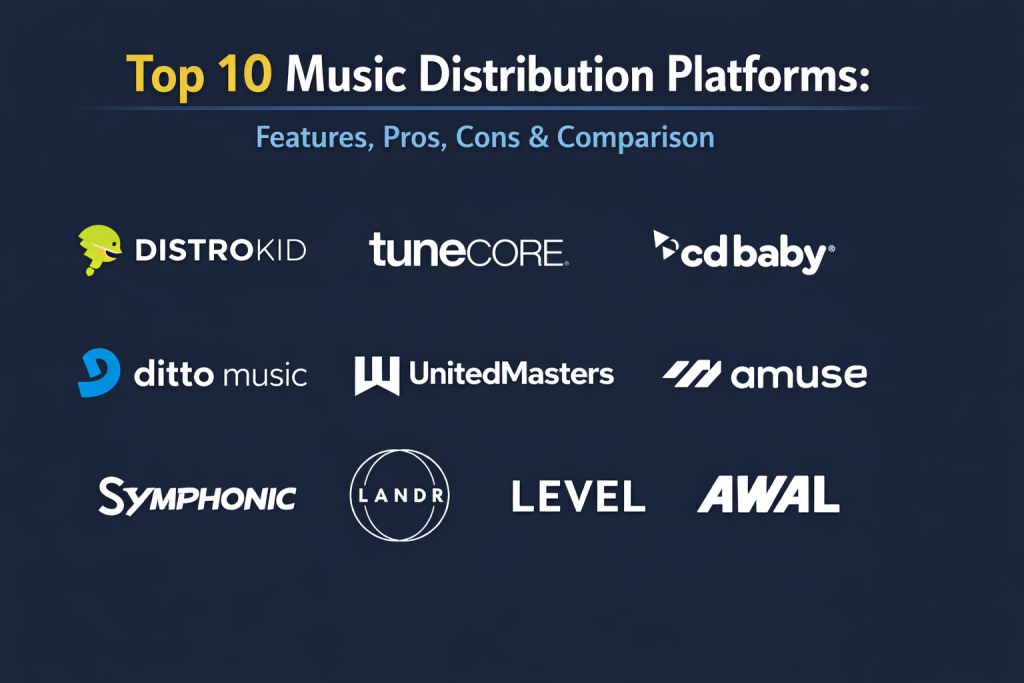
Introduction
Music distribution platforms are the essential digital bridge between an artist’s recording studio and the world’s major streaming services like Spotify, Apple Music, Amazon Music, and TikTok. In the past, getting music into stores required a physical record deal and a massive supply chain. Today, these platforms allow independent musicians, labels, and producers to upload their audio files, manage metadata, and distribute their work globally with a few clicks. These services handle the technical delivery of assets and ensure that royalties generated from streams and downloads are collected and paid out to the right creators.
In the landscape, the role of a distributor has expanded from simple delivery to a full-scale career management hub. With the rise of social media-driven hits and AI-curated playlists, a distribution partner is now a critical ally in data analytics, marketing, and rights management. For any modern artist, selecting the right platform is the first professional step toward building a sustainable business around their creative output.
Real-World Use Cases
- Independent Artist Launches: A solo musician releasing their debut single across all global platforms simultaneously to build an initial fan base.
- Record Label Operations: Managing multiple artist catalogs, automating split payments, and tracking cross-platform performance from a single dashboard.
- Social Media Monetization: Ensuring that original music used in viral short-form videos on platforms like Instagram and TikTok generates revenue for the creator.
- Legacy Catalog Management: Moving an existing discography from an older distributor to a more modern service with better analytics and royalty rates.
- Collaborative Releases: Automatically splitting earnings between singers, producers, and songwriters to avoid manual accounting errors.
Evaluation Criteria for Buyers
- Royalty Payout Percentage: Whether the platform takes a commission on your earnings or allows you to keep 100% of your royalties.
- Distribution Speed: How quickly the service can deliver your music to stores, especially for “waterfall” release strategies.
- Pricing Model: Choosing between an annual flat fee for unlimited uploads or a “pay-per-release” structure.
- Marketing & Discovery Tools: Availability of playlist pitching, pre-save links, and promotional “smart links.”
- Analytics Depth: The quality of real-time data regarding listener demographics, geographic reach, and playlist placements.
- Customer Support: Access to human assistance when dealing with copyright claims, store takedowns, or metadata corrections.
- Additional Services: Availability of physical distribution (CD/Vinyl), publishing administration, and sync licensing opportunities.
Best for: Independent musicians, bedroom producers, emerging bands, and boutique record labels seeking to monetize their audio content globally.
Not ideal for: Artists already signed to major labels with internal distribution arms, or casual hobbyists who do not intend to release their music on professional streaming services.
Key Trends in Music Distribution Platforms
- Automated Royalty Splitting: Platforms are making it standard to automatically pay multiple collaborators, reducing legal and accounting friction for indie teams.
- Direct-to-Fan Integration: Distributors are building tools to link streaming data directly with merchandise stores and concert ticket sales.
- AI-Powered Marketing Recommendations: Using machine learning to suggest the best release dates and target territories based on an artist’s current listener trends.
- Enhanced Rights Protection: Implementation of advanced fingerprinting technology to detect and stop unauthorized uploads and “fake” streaming activity.
- Social Media-First Distribution: Prioritizing delivery to short-form video platforms like TikTok and YouTube Shorts where modern hits often originate.
- In-Platform Financing: Some distributors are offering royalty advances to high-performing artists, acting as a “bank” for independent careers.
- Dolby Atmos & Spatial Audio Support: Expanding the ability for independent artists to distribute high-fidelity, immersive audio formats to premium streaming tiers.
- Content ID Management: Streamlined systems for claiming revenue from user-generated content across YouTube, Facebook, and Instagram.
How We Selected These Tools
To determine the top ten music distribution platforms, we analyzed the current market based on user trust, feature innovation, and payout reliability. Our methodology prioritized services that offer a balance between affordability and professional-grade features. We looked for platforms that have a proven track record of timely payments and high-quality customer service. We also considered the diversity of the artist’s journey, selecting tools that cater to everyone from the first-time uploader to the high-volume independent label. Factors like ease of use, the quality of the mobile interface, and the availability of advanced marketing tools played a significant role in the final ranking.
Top 10 Music Distribution Platforms
1. DistroKid
DistroKid is widely regarded as the most popular choice for independent artists due to its simple, unlimited upload model. It was one of the first to offer a flat annual fee, allowing artists to release as much music as they want without per-song charges.
Key Features
- Unlimited Uploads: Release an unlimited number of songs and albums for a single yearly price.
- Automatic Split Payments: Easily direct a percentage of earnings to collaborators and producers.
- Fast Delivery: One of the quickest platforms for getting music onto Spotify and Apple Music.
- HyperFollow: A free landing page tool for artists to gather pre-saves and email leads.
- Spotify Verified Checkmark: Streamlined process for getting an artist’s profile verified.
Pros
- Incredibly affordable for prolific artists who release music frequently.
- Simple, no-nonsense interface that gets the job done quickly.
Cons
- Customer support is primarily automated and can be slow for complex issues.
- Many features (like scheduling a specific release date) require a higher-tier subscription.
Platforms / Deployment
Web / iOS / Android — Cloud
Security & Compliance
Uses industry-standard encryption for financial data and secure payment gateways.
Integrations & Ecosystem
Strongest integration with Spotify for Artists and Apple Music for Artists for data syncing.
Support & Community
A massive community of users and an extensive library of self-help articles and forums.
2. TuneCore
TuneCore is a veteran in the distribution space, known for its professional approach and “keep 100% of your royalties” promise on their paid plans. It offers a more robust set of services, including publishing administration.
Key Features
- 100% Royalty Retention: Artists keep all their earnings from digital stores on most plans.
- Publishing Administration: Professional help in collecting songwriter royalties from around the world.
- Comprehensive Analytics: Detailed daily trend reports and geographic data for listeners.
- Store Automator: Automatically sends your new releases to every new store that joins the network.
- Social Platforms Plan: A free tier that allows distribution specifically to social media sites like TikTok.
Pros
- Highly reliable and established reputation in the music industry.
- Powerful tools for serious artists looking to manage their publishing rights.
Cons
- Higher costs for certain features compared to budget-friendly competitors.
- The interface can feel more corporate and less agile than newer platforms.
Platforms / Deployment
Web / iOS / Android — Cloud
Security & Compliance
Strict adherence to financial reporting standards and data protection laws.
Integrations & Ecosystem
Excellent connections with Gracenote for credit tracking and various professional marketing tools.
Support & Community
Professional support team with a long history of helping artists navigate the industry.
3. CD Baby
CD Baby is the go-to platform for artists who want a “pay-per-release” model without recurring annual fees. It is famous for its physical distribution capabilities and its deep focus on independent music education.
Key Features
- No Annual Fees: Pay once for a single or album, and it stays in stores forever.
- Physical Distribution: One of the few platforms that helps you sell physical CDs and Vinyl.
- Sync Licensing: Integrated program to get your music placed in films, TV shows, and ads.
- Show.co Marketing Tools: Access to professional digital marketing campaigns and banner ads.
- YouTube Content ID: Built-in management for collecting revenue from your music on YouTube.
Pros
- Perfect for artists who release music less frequently and want to avoid subscriptions.
- The best resource for physical media sales and professional sync opportunities.
Cons
- Takes a commission (usually 9%) on your digital earnings.
- The per-release cost can add up for highly prolific musicians.
Platforms / Deployment
Web — Cloud
Security & Compliance
Standard SOC compliance and robust rights management systems.
Integrations & Ecosystem
Deeply integrated with the DIY Musician ecosystem, including podcasts and conferences.
Support & Community
Known for having a very “human” approach to support with a massive educational blog.
4. UnitedMasters
UnitedMasters bridges the gap between a distributor and a creative agency. They focus heavily on brand partnerships and opportunities to get music featured in sports and high-end advertising.
Key Features
- Brand Partnerships: Unique opportunities to have music featured by brands like the NBA or ESPN.
- Selective Distribution: Focus on high-potential artists with a “Select” membership tier.
- Mobile-First Experience: One of the best mobile apps for managing a music career on the go.
- Beat Exchange: A marketplace for artists to buy and sell beats directly within the platform.
- Advance Payments: Qualified artists can access capital based on their streaming projections.
Pros
- Incredible opportunities for artists seeking brand alignment and commercial syncs.
- Extremely modern interface designed for the “creator economy” generation.
Cons
- Higher commission rates on the free tier compared to other services.
- Not as focused on wide, global catalog management for traditional labels.
Platforms / Deployment
Web / iOS / Android — Cloud
Security & Compliance
Strong focus on digital rights and secure artist identity verification.
Integrations & Ecosystem
Strongest ties to social media platforms and commercial sports networks.
Support & Community
A community-driven approach with a focus on urban and independent creator culture.
5. Ditto Music
Ditto Music is a UK-based platform that has grown into a global powerhouse. It offers unlimited distribution and a specialized “Ditto Plus” service for artists ready to move to the next level of their careers.
Key Features
- Unlimited Distribution: One price for unlimited releases to all major digital platforms.
- Chart Registration: Ensures your sales and streams are officially counted for the music charts.
- Label Services: Specialized support for independent labels including accounting and PR.
- Vevo Channel Creation: One of the easiest ways for artists to get an official Vevo channel.
- Coffee Shop Distribution: Unique partnerships to get music played in retail environments.
Pros
- Excellent support for independent labels and groups managing multiple artists.
- Strong international presence with localized support in many regions.
Cons
- Some users find the interface to be less intuitive than DistroKid.
- Processing times for certain stores can be slower than the industry leaders.
Platforms / Deployment
Web / iOS / Android — Cloud
Security & Compliance
Compliant with all major international digital music distribution standards.
Integrations & Ecosystem
Wide range of integrations with music industry tracking services and PR tools.
Support & Community
Very active in the global indie scene with frequent webinars and localized office support.
6. Amuse
Amuse started as a mobile-only “record label in your pocket” and has since evolved into a professional distribution tool. They are unique for their “discovery” model where they sign high-performing artists to their own label.
Key Features
- Free Distribution Tier: A basic way to get music into major stores at no cost.
- Pro Tier Features: Includes faster delivery, multiple artist profiles, and team access.
- Data-Driven Signing: Uses their own data to offer label deals to independent artists.
- Fast Forward: An AI-powered royalty advance system for high-performing tracks.
- Collaboration Splits: Built-in tools for managing payments to featured artists.
Pros
- Excellent mobile app that allows for full career management from a smartphone.
- The potential to be “discovered” and signed by their internal label.
Cons
- The free tier is quite limited in terms of stores and delivery speed.
- Lacks some of the deep publishing and physical tools found in CD Baby or TuneCore.
Platforms / Deployment
iOS / Android / Web — Cloud
Security & Compliance
Maintains high standards for data privacy and artist royalty security.
Integrations & Ecosystem
Highly focused on streaming data and mobile-first social media marketing.
Support & Community
A modern, digital-first support system with a focus on the “new wave” of indie artists.
7. Symphonic Distribution
Symphonic is a more boutique service that focuses on high-quality artists and labels. They provide more personalized attention than the “mass-market” distributors and are known for their strength in electronic music.
Key Features
- Curated Selection: They review artists before accepting them to ensure a high-quality catalog.
- Marketing & PR: Advanced services for playlist pitching and social media strategy.
- Sync & Licensing: A dedicated team focused on getting music into TV, games, and film.
- Neighboring Rights: Help in collecting performance royalties for master recording owners.
- Video Distribution: Services for getting music videos onto Vevo, Tidal, and Apple Music.
Pros
- Much more personalized “human” support than the large automated platforms.
- Strongest choice for professional independent labels and electronic producers.
Cons
- Not everyone is accepted into their distribution program.
- Commission-based model means they take a percentage of your success.
Platforms / Deployment
Web — Cloud
Security & Compliance
Enterprise-grade security and rights management for high-value catalogs.
Integrations & Ecosystem
Strongest ties to the electronic music world and high-end sync agencies.
Support & Community
Highly professional support with dedicated account managers for top-tier artists.
8. Landr
Landr began as an AI mastering service and has expanded into a full artist suite that includes distribution. It is an “all-in-one” platform for producers who want to go from a raw track to a global release in one place.
Key Features
- AI Mastering Integration: Master your track and distribute it without leaving the platform.
- Samples Marketplace: Access to millions of royalty-free samples to use in your music.
- Network & Collaboration: Tools to find and work with other musicians and vocalists.
- Unlimited Distribution: Flat-fee plans for consistent releasing.
- Professional Plugins: Access to a curated selection of virtual instruments and effects.
Pros
- The best “one-stop-shop” for producers who handle their own technical production.
- Excellent value if you already use their mastering or sample services.
Cons
- The distribution interface is less specialized than dedicated tools like TuneCore.
- Can be overwhelming for artists who only need simple distribution.
Platforms / Deployment
Web / Desktop App — Cloud
Security & Compliance
Standard encryption and secure asset management for audio files.
Integrations & Ecosystem
Deeply integrated with their own mastering and production tools.
Support & Community
A strong focus on the producer community and technical music creation.
9. Level
Level is a modern, streamlined distribution tool owned by Warner Music Group. It focuses on a clean, minimal user experience and providing essential tools for the modern independent artist.
Key Features
- Minimalist Interface: Designed to be the fastest way to upload a single or album.
- 100% Royalties: On their paid plans, artists keep all their earnings.
- Smart Links: Automatically generated landing pages for every release.
- Simple Analytics: Clear, easy-to-read charts on where your music is being heard.
- Early Access Features: Frequently tests new tools for social media integration.
Pros
- Very clean and modern design that avoids the “clutter” of older platforms.
- Backed by a major music group, providing professional-grade infrastructure.
Cons
- Lacks many of the deep publishing and sync features of competitors.
- Feature set is somewhat basic for high-volume record labels.
Platforms / Deployment
Web — Cloud
Security & Compliance
Backed by the security protocols of a major global music corporation.
Integrations & Ecosystem
Focuses heavily on the core streaming platforms like Spotify and Apple Music.
Support & Community
A modern help center with a focus on self-service and quick digital responses.
10. AWAL (Sony Music)
AWAL (Artists Without A Label) is a high-end, selective distribution service. It is designed for artists who already have significant momentum and need major-label style support while staying independent.
Key Features
- Selective Artist Roster: Requires an application and a certain level of existing success.
- Global Marketing Teams: Professional teams that help with worldwide strategy and radio.
- Advanced Funding: Access to significant capital for marketing and touring.
- A-List Sync Team: One of the best internal teams for high-level film and TV placements.
- Detailed Strategy Insights: Expert analysis of your data to guide your next career move.
Pros
- The closest thing to a major label deal while remaining independent.
- Incredible prestige and high-level marketing support.
Cons
- Extremely difficult for new or emerging artists to get accepted.
- Higher commission rates reflect the level of service provided.
Platforms / Deployment
Web / iOS / Android — Cloud
Security & Compliance
Operates under the high-end security and legal standards of Sony Music.
Integrations & Ecosystem
Deeply connected to the global Sony Music marketing and radio network.
Support & Community
Highly personalized support for a smaller, elite roster of independent artists.
Comparison Table (Top 10)
| Tool Name | Best For | Platform(s) Supported | Deployment | Standout Feature | Public Rating |
| 1. DistroKid | Prolific Indie Artists | Web, iOS, Android | Cloud | Unlimited Uploads | 4.6/5 |
| 2. TuneCore | Professional Growth | Web, iOS, Android | Cloud | Publishing Admin | 4.5/5 |
| 3. CD Baby | Physical Sales / Legacy | Web | Cloud | Pay-per-release | 4.4/5 |
| 4. UnitedMasters | Brand Partnerships | Web, iOS, Android | Cloud | NBA/ESPN Syncs | 4.3/5 |
| 5. Ditto Music | Independent Labels | Web, iOS, Android | Cloud | Chart Registration | 4.2/5 |
| 6. Amuse | Mobile-First Creators | iOS, Android, Web | Cloud | Fast Forward AI | 4.5/5 |
| 7. Symphonic | Boutique Labels / EDM | Web | Cloud | Human Marketing | 4.6/5 |
| 8. Landr | Music Producers | Web, Desktop | Cloud | AI Mastering | 4.4/5 |
| 9. Level | Minimalist / Simple | Web | Cloud | Clean Interface | 4.1/5 |
| 10. AWAL | High-Momentum Artists | Web, iOS, Android | Cloud | Label-style Support | 4.7/5 |
Evaluation & Scoring of Music Distribution Platforms
| Tool Name | Core (25%) | Ease (15%) | Integrations (15%) | Security (10%) | Perf (10%) | Support (10%) | Value (15%) | Total |
| 1. DistroKid | 9 | 10 | 9 | 8 | 9 | 6 | 10 | 8.8 |
| 2. TuneCore | 10 | 8 | 9 | 10 | 8 | 9 | 7 | 8.7 |
| 3. CD Baby | 10 | 7 | 8 | 10 | 7 | 10 | 8 | 8.5 |
| 4. UnitedMasters | 8 | 9 | 7 | 9 | 9 | 8 | 7 | 8.1 |
| 5. Ditto Music | 8 | 8 | 8 | 8 | 8 | 8 | 8 | 8.0 |
| 6. Amuse | 7 | 10 | 7 | 8 | 9 | 7 | 9 | 8.0 |
| 7. Symphonic | 9 | 6 | 9 | 9 | 8 | 9 | 6 | 7.8 |
| 8. Landr | 7 | 8 | 10 | 8 | 8 | 7 | 8 | 7.7 |
| 9. Level | 6 | 10 | 6 | 9 | 8 | 7 | 9 | 7.5 |
| 10. AWAL | 10 | 5 | 9 | 10 | 9 | 9 | 5 | 8.0 |
The evaluation reflects the tool’s utility in a professional music career. A high “Core” score indicates the platform’s reliability in payment and global delivery. “Ease” scores identify how quickly an artist can move from a finished track to an uploaded release. “Value” scores prioritize platforms that allow artists to retain the most revenue for their investment.
Which Music Distribution Platform Is Right for You?
Solo / Freelancer
If you are an independent musician who records and releases music often, DistroKid is the most cost-effective choice. Its unlimited model allows you to experiment with frequent releases without financial stress. For those who want to “set it and forget it,” CD Baby is better because you pay once and never have to worry about an annual renewal fee.
SMB
Small independent labels or management teams should look at Ditto Music or TuneCore. These platforms offer the robust multi-artist accounting and catalog management tools needed to run a professional business with multiple clients.
Mid-Market
Established independent artists with a growing fan base will benefit most from Symphonic Distribution. The personalized marketing attention and human-led playlist pitching can help break an artist into the mainstream more effectively than automated tools.
Enterprise
Top-tier independent artists with millions of streams should apply for AWAL. The level of data analysis, global marketing coordination, and advance funding is comparable to a major label partnership while allowing the artist to keep ownership of their masters.
Budget vs Premium
Amuse (on their free tier) and Level are excellent budget choices for getting started. TuneCore and AWAL represent the premium end of the market where you pay for more advanced rights management and marketing services.
Feature Depth vs Ease of Use
DistroKid and Level prioritize ease of use and speed. TuneCore and CD Baby offer much more feature depth, especially regarding physical sales, publishing administration, and complex royalty collections.
Integrations & Scalability
Landr is the winner for producers who want their creative tools integrated with their distribution. For global scalability, AWAL and Symphonic provide the best infrastructure for managing a worldwide artist brand.
Security & Compliance Needs
All platforms on this list meet professional standards, but Sony-backed AWAL and Warner-backed Level provide the extra peace of mind that comes with major corporate infrastructure and legal protection.
Frequently Asked Questions (FAQs)
1. How long does it take for my music to appear in stores?
Most platforms like DistroKid can get music into stores in 2-5 days, but it is always best to upload at least 3-4 weeks in advance to allow for playlist pitching.
2. Can I switch from one distributor to another?
Yes, you can move your music by using the same ISRC codes and metadata. This ensures your stream counts and playlist placements stay intact.
3. Do these platforms help me get on playlists?
Some boutique services like Symphonic provide human pitching. Most others provide “Smart Links” and data to help you pitch yourself through Spotify for Artists.
4. What is an ISRC code?
An ISRC (International Standard Recording Code) is a unique digital fingerprint for your song. It is how platforms track your streams and ensure you get paid.
5. Do I keep 100% of my royalties?
It depends on the plan. DistroKid and TuneCore (paid) allow you to keep 100%, while CD Baby and Symphonic take a small commission for their services.
6. Is a “free” distributor a good idea?
Free distributors are great for starting out, but they often take a larger commission and have slower delivery times and fewer marketing tools.
7. Can I release cover songs through these platforms?
Yes, but you usually need to pay for a mechanical license, which many of these platforms (like DistroKid) can handle for you for a small fee.
8. What is “Publishing Administration”?
This is a service that collects the royalties generated by the songwriter (the lyrics and melody), which is separate from the money generated by the recording itself.
9. How do I get my music on TikTok and Instagram?
Almost all major distributors now automatically send your music to social media libraries so users can feature your songs in their videos.
10. Do I need a record label to use these platforms?
No. These platforms were specifically created to allow independent artists to distribute their music without needing a record label deal.
Conclusion
Navigating the music distribution landscape is about finding the right balance between control, cost, and opportunity. In an era where independence is the goal for many creators, these ten platforms provide the essential infrastructure to reach a global audience. Whether you are a solo artist looking for the unlimited speed of DistroKid or a growing brand seeking the label-style support of AWAL, the right distributor acts as more than just a delivery service—it is a partner in your long-term success. As technology continues to blur the lines between creation and commerce, the most successful artists will be those who master these digital tools to build a sustainable, global career. I recommend reviewing your current release schedule and comparing the commission-free models of DistroKid versus the pay-per-release model of CD Baby. Choosing the one that fits your output frequency today will save you significant administrative headaches as your catalog grows.

Best Cardiac Hospitals Near You
Discover top heart hospitals, cardiology centers & cardiac care services by city.
Advanced Heart Care • Trusted Hospitals • Expert Teams
View Best Hospitals